TRENDING

Thursday, 24 September 2026
----------------------
13 Rabi' Al-Thani 1448 AH
As Venezuela grapples with recent seismic activity, nations globally are demonstrating how advanced engineering, early warning systems, and robust public preparedness can transform vulnerability into resilience against devastating earthquakes. This analysis explores the strategic shifts in disaster management across Japan, Chile, Mexico, and Canada, highlighting critical lessons for global stability.
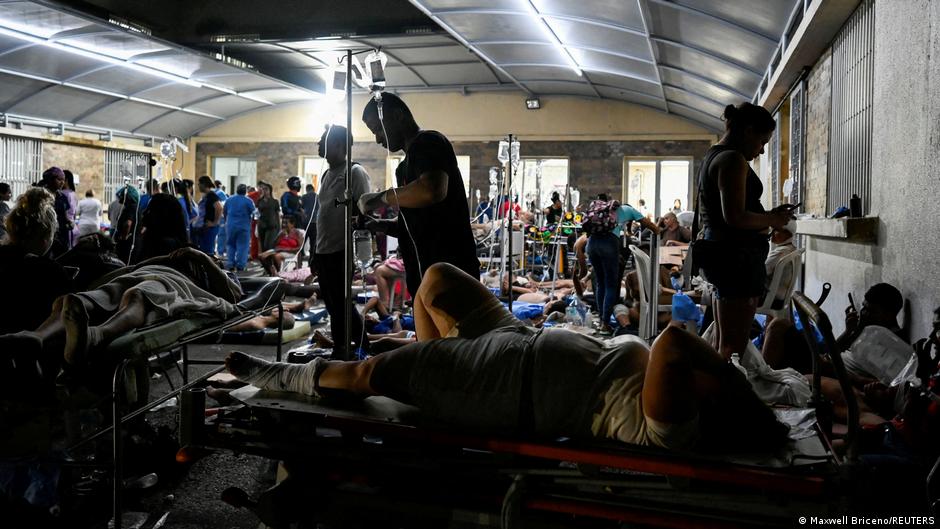
The recent seismic events in central Venezuela, where two major earthquakes with magnitudes of 7.2 and 7.5 struck seconds apart, resulting in at least 164 fatalities and extensive damage in Caracas and La Guaira, underscore the persistent global challenge posed by natural disasters. While strong earthquakes are unusual for Venezuela, despite its proximity to the South American and Caribbean tectonic plates, the incident highlights the critical need for robust disaster preparedness and resilience strategies worldwide. Many countries, particularly those situated along the seismically active Pacific Ring of Fire, have transformed their approaches to living with earthquakes, moving from reactive response to proactive prevention and mitigation.
Japan, one of the world's most earthquake-prone nations, exemplifies a comprehensive, multi-faceted approach to seismic resilience. Decades of experience have forged a system integrating advanced technology, architectural innovation, and widespread public preparedness. A cornerstone of this strategy is the Earthquake Early Warning system, operated by the Japan Meteorological Agency since 2007. This system utilizes over a thousand seismic sensors to detect the initial, weaker P-waves, providing crucial seconds of warning via phones, television, radio, and loudspeakers before stronger shaking commences. This brief window allows for critical actions, such as seeking shelter or stopping trains, significantly reducing casualties and secondary damage.
Architecturally, Japan's resilience is embedded in its stringent building codes. Following the devastating Great Kanto Earthquake of 1923, regulations were progressively strengthened, culminating in the 1981 Shin-Taishin standards that mandated stricter seismic requirements for all new constructions. Essential facilities now frequently incorporate seismic isolation systems, which allow structures to absorb and sway with seismic energy rather than rigidly resisting it. As Miho Mazereeuw of MIT's Urban Risk Lab explains, this approach centers on letting buildings move with the Earth. Beyond infrastructure, public preparedness is ingrained from a young age through regular earthquake drills, clearly marked evacuation routes, and the designation of parks and schoolyards as official gathering points, with Tokyo alone boasting over 240 regularly updated evacuation sites.
Chile, also located on the Pacific Ring of Fire, underwent a profound transformation in its disaster policies after the catastrophic 1960 Valdivia earthquake, the strongest ever recorded at magnitude 9.5. This event, and the subsequent tsunami, prompted sweeping changes, including the introduction of strict building regulations focused on seismic resilience. The efficacy of these reforms was dramatically demonstrated during the 2010 Maule earthquake (magnitude 8.8), where modern buildings largely withstood the intense shaking. Chile's evolution extended to national disaster management, with institutions like the Chilean National Disaster Prevention and Response Service (SENAPRED) established to coordinate risk reduction strategies across sectors and strengthen international ties. Alicia Cebrian Lopez, SENAPRED's national director, emphasizes the need for a combination of policy changes and capacity building tailored to specific community realities, with municipalities and schools playing crucial roles in local risk identification and preparedness.
Mexico's history with earthquakes, particularly its position atop multiple tectonic plates, has also driven significant advancements in resilience. The 8.0-magnitude earthquake that devastated Mexico City on September 19, 1985, exposed critical flaws in construction and emergency response, catalyzing a demand for change. In response, Mexico developed one of the world's first public earthquake early warning systems, launching the Mexican Seismic Alert System (SASMEX) in 1991. This system uses coastal sensors to provide up to a minute of warning to inland cities, enabling timely protective actions. The effectiveness of these measures was evident during the 7.1-magnitude quake on September 19, 2017, where improved buildings and faster response saved numerous lives. Today, September 19 is a national day of commemoration, marked by widespread earthquake drills in schools, businesses, and public institutions, reinforcing the imperative of constant readiness.
Along Canada's west coast, cities like Vancouver and Victoria are proactively preparing for potential seismic disasters from the Cascadia Subduction Zone. Recognizing that urban populations in high-risk areas are projected to double by 2050, the focus extends beyond structural integrity to community-level resilience. Jeff Birchall, an assistant professor at the University of Alberta, highlights the vital role of public gathering spaces—parks, sports fields, libraries, and public squares—for survival and recovery. Vancouver has implemented a network of disaster support hubs within community centers, parks, and libraries. These hubs, marked with yellow signs, are designed to serve as shelters, points for emergency supplies, medical assistance, and recovery coordination, strengthening the social fabric of community resilience.
The diverse experiences of these nations offer critical geopolitical insights. Firstly, national stability and governance are intrinsically linked to disaster resilience. Governments that proactively invest in robust early warning systems, stringent building codes, and public education not only protect their citizens but also bolster public trust and demonstrate effective governance. Secondly, economic security is profoundly impacted; while initial investments in resilience can be substantial, they significantly reduce the long-term economic costs of reconstruction, infrastructure damage, and business disruption. Thirdly, the global trend towards urbanization in seismically active zones necessitates integrated, multi-faceted strategies that consider both physical infrastructure and social cohesion. Finally, the sharing of best practices and technological advancements in disaster management fosters international cooperation and knowledge exchange, potentially enhancing diplomatic ties and collective global security against natural hazards. The journey from vulnerability to resilience is a continuous process, demanding sustained investment, adaptive policies, and a deeply embedded culture of preparedness to safeguard populations and ensure long-term national and regional stability.