TRENDING

Monday, 5 October 2026
----------------------
24 Rabi' Al-Thani 1448 AH
An egging incident in Kosovo's Parliament highlights a deep political crisis, revealing the fragility of its young democracy and the human cost of perpetual stalemate. The struggle for power jeopardizes governance and stability in Europe's newest nation.
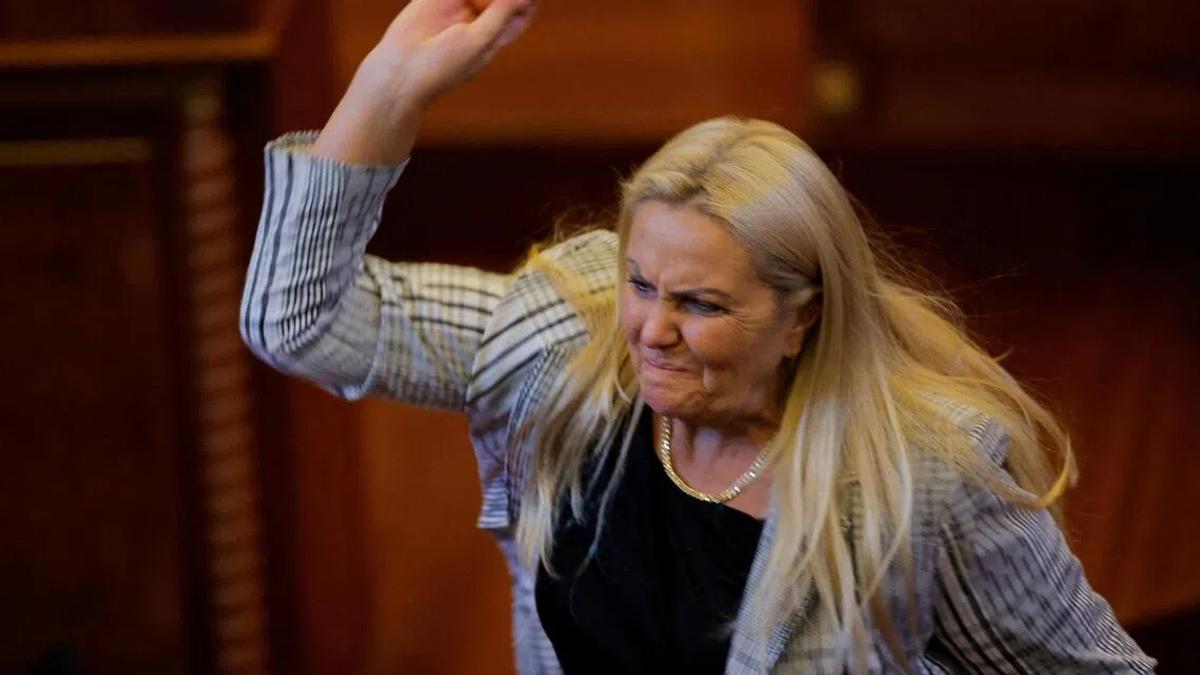
Kosovo's Parliament was abruptly suspended on August 8 after opposition lawmaker Time Kadrijaj threw eggs at caretaker Prime Minister Albin Kurti during a session. The incident occurred amidst a deepening political crisis, fueled by Kurti's Vetevendosje party's inability to secure the two-thirds majority required to elect a new president, leading to a prolonged stalemate with opposition parties and the expiration of a constitutional deadline.
The core of Kosovo's ongoing political instability lies in the structural power dynamics of its parliamentary system. While Prime Minister Kurti's Vetevendosje party secured the largest share of votes in the last election, the constitutional requirement for a two-thirds majority to elect a president grants significant leverage to the opposition. This mechanism, designed to foster broad consensus in a young, post-conflict state, has instead become a choke point, empowering minority factions to block governance and force repeated elections.
The egging incident, while seemingly chaotic, is a raw, physical manifestation of this power struggle. It signifies a breakdown of traditional parliamentary discourse, where symbolic acts of aggression replace negotiation. Kurti's own past, having used tear gas in parliament when in opposition, illustrates a deeply ingrained confrontational political culture where extreme tactics are normalized. This cycle of aggressive dissent and counter-dissent prevents the formation of stable governing coalitions, perpetuating a state of political flux that undermines the very institutions of Europe's youngest democracy.
The most significant cost of this political paralysis is borne by ordinary Kosovars. Each parliamentary suspension, each failed negotiation, and each potential snap election means critical legislative work is stalled. This directly impacts the government's ability to address pressing socio-economic challenges such as high unemployment, corruption, and the delivery of essential public services. The constant uncertainty deters foreign investment, which is crucial for a developing economy, and can lead to a brain drain as young, skilled individuals seek more stable opportunities abroad.
Furthermore, the repeated spectacle of political infighting erodes public trust in democratic institutions. Citizens become disillusioned with a political class perceived as prioritizing power struggles over the nation's welfare, fostering cynicism and disengagement from the democratic process. The financial burden of frequent elections also falls on taxpayers, diverting scarce public funds from vital development projects.
Beyond the immediate drama, what is often downplayed is the profound fragility of Kosovo's post-conflict state-building project. The promise of a stable, functional democracy, heavily supported by international actors, is continually challenged by internal political dysfunction. The normalization of extreme parliamentary behavior—from tear gas to eggs—signals a deeper systemic issue: a political culture that struggles to transition from protest and liberation movements to mature, consensus-driven governance.
Governments and official statements tend to focus on the immediate political maneuvering, omitting the long-term implications for democratic consolidation and the erosion of institutional decorum. The implicit pressure from international partners like the EU and the US, who have invested significantly in Kosovo's stability, is also often overlooked. This internal chaos undermines their efforts and raises fundamental questions about the viability of the state's democratic trajectory without constant external guidance or intervention. The incident is not just about an egg; it's about the systemic failure to uphold the deliberative process that underpins a healthy democracy.
The immediate focus will be on whether Kosovo's political factions can overcome their deadlock to elect a president and avoid another snap election. The ability to reconvene Parliament and find a consensus candidate will be a critical test of political maturity. Observers should also watch for reactions from key international partners, particularly the EU and the US, and whether they will intensify diplomatic pressure to encourage a resolution. The public's response to this ongoing instability, whether through increased protests or further political apathy, will also be a crucial indicator. Ultimately, the outcome will determine if Kosovo can break its cycle of fractured parliaments and move towards more stable governance, or if it will continue to grapple with the foundational challenges of its young statehood.
Source referenced: STRAITSTIMES
This brief was synthesized by our Editorial Engine and reviewed by The Ground Narrative team.