TRENDING

Monday, 5 October 2026
----------------------
24 Rabi' Al-Thani 1448 AH
A devastating Ebola outbreak in the Democratic Republic of Congo has claimed over 4,000 lives, becoming the nation's largest and deadliest, severely complicated by persistent conflict and insecurity in its eastern provinces.
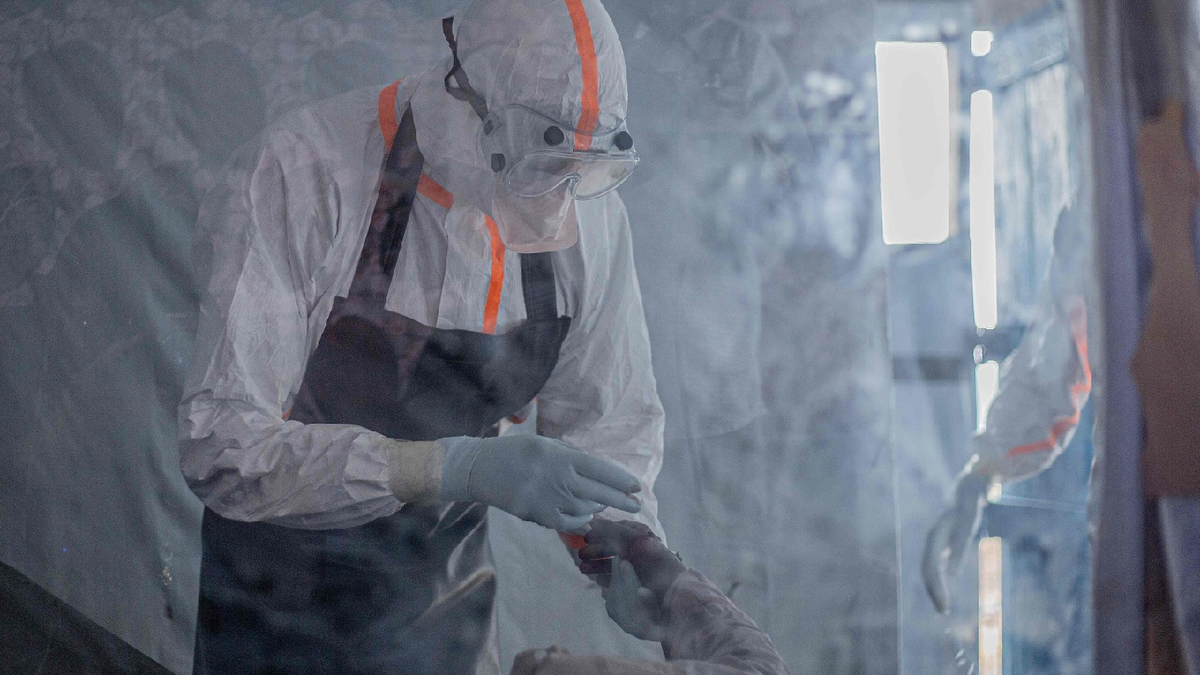
The Democratic Republic of Congo (DR Congo) is grappling with its largest and deadliest Ebola outbreak to date, with official figures reporting more than 4,000 deaths and over 8,300 confirmed cases across seven provinces. The outbreak, caused by the Bundibugyo virus, began in May 2026 and now stands as the world’s second-largest Ebola epidemic after the 2014–2016 West Africa crisis. Efforts to contain the virus have been severely hampered by escalating violence and deep-seated insecurity in the eastern regions, leading to the destruction of a key treatment center and the displacement of thousands, further complicating contact tracing and medical response.
The DR Congo Ebola crisis is not merely a public health emergency; it is a stark illustration of how deep-seated power imbalances and state fragility can turn a localized disease into a national catastrophe. At the heart of the crisis lies the DR Congo government's limited capacity to project authority and provide basic services, particularly in its vast, resource-rich eastern provinces. Decades of corruption, weak institutions, and a lack of investment in infrastructure have left the state unable to secure its borders, protect its citizens, or establish a robust public health system.
This vacuum of state power has been filled by a complex web of armed groups and militias, who exert significant control over local populations and critical mineral resources. These groups, often fueled by external actors and the illicit trade in minerals like coltan, gold, and diamonds, operate with impunity, frequently targeting civilians and humanitarian workers. Their power is disruptive and self-serving, directly hindering disease containment efforts by attacking health facilities, spreading misinformation, and forcing mass displacements. The fire that destroyed an Ebola treatment transit center and the subsequent flight of thousands from the Kigonze displacement camp are direct consequences of this pervasive insecurity, demonstrating how non-state actors can dictate the terms of a public health response.
International aid organizations, including Médecins Sans Frontières (MSF) and the United Nations, represent another layer of power. They bring essential expertise, funding, and personnel, but their effectiveness is severely constrained by the local security environment and the political will (or lack thereof) of the DR Congo government. Their power is one of intervention and mitigation, yet it remains secondary to the underlying political and military dynamics. The medical evacuation of an MSF staff member infected with the virus underscores the extreme risks faced by those on the front lines, highlighting the limits of external humanitarian power in the face of entrenched conflict.
Globally, the reactive nature of international health governance also plays a role. While the World Health Organization (WHO) and other bodies provide guidance and support, the initial response is often slow, and sustained commitment can waver. The global north's power often manifests in setting agendas and providing conditional aid, yet it struggles to address the root causes of instability that make such outbreaks recurrent in fragile states like the DR Congo. The economic trade-offs, where the pursuit of valuable resources by multinational corporations and regional powers indirectly fuels the conflict, further complicate the power dynamics, creating a vicious cycle where instability and disease reinforce each other.
The human cost of the DR Congo Ebola crisis is immeasurable, extending far beyond the devastating death toll. It is a story of profound suffering, displacement, and the erosion of trust in already vulnerable communities.
For every one of the 4,000 individuals lost to Ebola, there are families left grieving, often unable to perform traditional burial rites due to infection control protocols. This cultural disruption adds a layer of psychological trauma, fueling distrust and resistance to public health measures. Communities are torn apart, not only by disease but by the fear and suspicion that accompany it. The 8,300 confirmed cases represent individuals who have endured severe illness, and while over 2,000 have recovered, many face long-term health complications and the stigma associated with the virus.
The thousands who fled the Kigonze displacement camp after a fire destroyed an Ebola treatment center are among the most vulnerable. These individuals were already displaced by conflict, living in precarious conditions, and now face renewed upheaval. Their movement makes contact tracing virtually impossible, turning them into potential vectors for further transmission. Children, already traumatized by conflict, are particularly at risk of becoming orphans, losing access to education, and facing increased exploitation and abuse in the chaos of displacement.
Local and international healthcare workers are paying a heavy price. They operate in extremely dangerous environments, risking their lives daily to combat the virus. The infection and evacuation of an MSF staff member highlight the constant threat they face from both the disease and armed groups. Burnout, fear, and the emotional toll of witnessing such suffering are widespread, leading to a critical shortage of skilled personnel where they are needed most. Their dedication is often met with hostility and violence, a tragic consequence of the breakdown of trust.
The Ebola outbreak, exacerbated by conflict, cripples local economies. Restrictions on movement, fear of contagion, and the general instability disrupt agriculture, trade, and daily commerce. Farmers cannot tend their fields, markets struggle, and small businesses collapse. This economic devastation pushes already impoverished communities deeper into destitution, creating a cycle where poverty makes people more vulnerable to disease, and disease perpetuates poverty.
While official reports and international appeals focus on the immediate health crisis, they often downplay or entirely omit the deeper, systemic issues that transform a disease outbreak into a protracted catastrophe in the DR Congo. The true untold story lies in the profound intersection of perpetual conflict, resource exploitation, and global indifference.
Governments and aid organizations frequently cite
The current Ebola outbreak in the DR Congo is the nation's largest and deadliest, primarily exacerbated by persistent conflict and insecurity in its eastern provinces. Violence disrupts containment efforts, displaces populations, and prevents access to treatment, making it incredibly difficult to control the virus's spread.
Conflict directly hinders Ebola containment by causing mass displacement, which makes contact tracing nearly impossible. It also leads to attacks on health facilities and personnel, eroding community trust, and diverting resources from public health to security concerns, creating a vicious cycle of disease and instability.
The untold story is the deep connection between the Ebola crisis and the geopolitical struggle for DR Congo's vast mineral wealth. This resource exploitation fuels armed groups and perpetuates conflict, creating the very conditions that allow the virus to thrive, a systemic issue often downplayed by official narratives.
Source referenced: CGTN
This brief was synthesized by our Editorial Engine and reviewed by The Ground Narrative team.


