TRENDING

Monday, 5 October 2026
----------------------
24 Rabi' Al-Thani 1448 AH
Japan is grappling with a potent mix of rising prices and stagnant household spending, pushing its economy to a precarious edge. Policymakers face a difficult balancing act with limited tools.
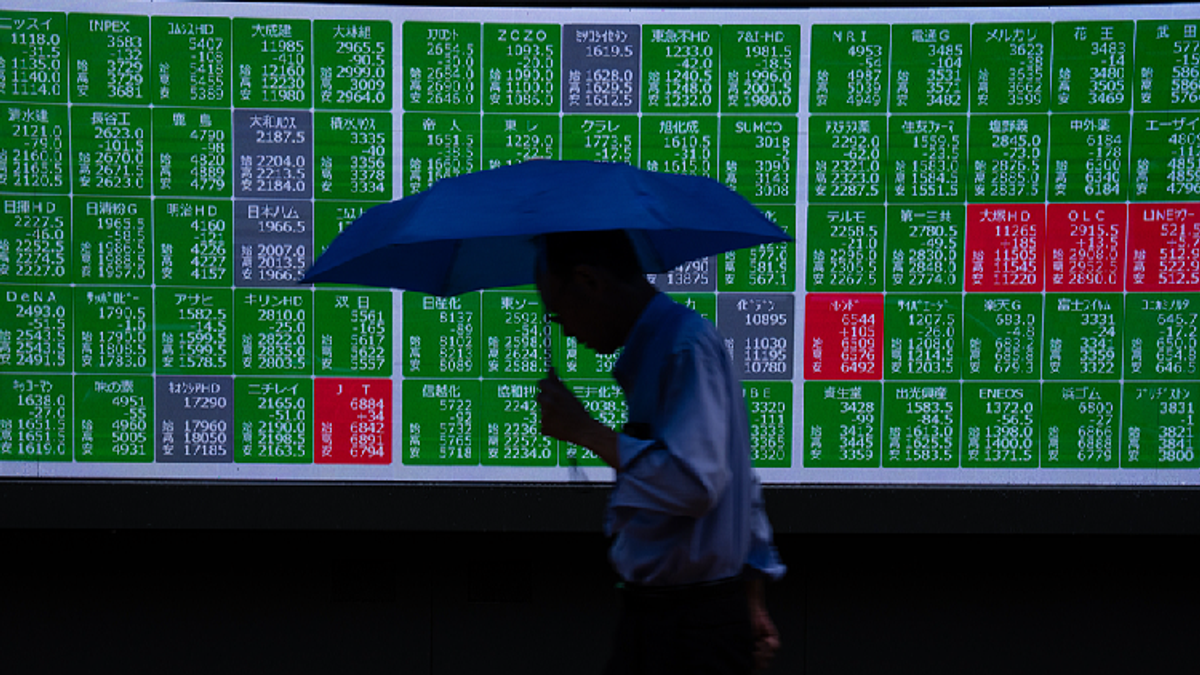
Japan is currently caught in a deepening economic bind, characterized by persistent inflation and a concerning slump in consumer spending. For the first time in decades, the everyday cost of living is noticeably rising across the archipelago, with over 3,000 food and beverage items slated for price hikes in October 2026 alone, contributing to an annual total expected to exceed 20,000. This inflationary pressure is evident in the consumer price index, which rose 2.6% year-on-year in August, surpassing the Bank of Japan's (BOJ) long-held 2% stability target. Simultaneously, private consumption, the bedrock of Japan's economy, remained flat in the second quarter, with inflation-adjusted household spending declining for eight consecutive months. This confluence of factors has placed Japan's economic policymakers in an increasingly tight spot, struggling to find a path forward amidst limited fiscal and monetary options.
The current economic predicament in Japan is a direct outcome of a complex interplay between decades of unique monetary policy, global economic shifts, and domestic political realities. For nearly three decades, the BOJ waged an unprecedented war against deflation, employing ultra-low interest rates, quantitative easing, and yield curve control. The goal was to stimulate demand and finally achieve a modest, stable inflation. Now, with global inflationary pressures — largely driven by energy and commodity prices, and exacerbated by a weak yen — Japan finds itself in a paradoxical situation: inflation is finally here, but it's not the 'good' demand-driven inflation policymakers sought.
The BOJ faces a severe policy dilemma. On one hand, a persistently weak yen inflates import costs, pushing domestic prices higher and further eroding purchasing power. This calls for monetary tightening, meaning raising interest rates to strengthen the currency and cool inflation. Indeed, the BOJ recently hiked its key interest rate to 1.25% in September. However, raising rates too aggressively risks stifling the already fragile consumption and pushing the economy into recession. The challenge is compounded by the US Federal Reserve's own tightening cycle; as the Fed raises rates, the interest rate differential between Japan and the United States often widens, making the yen less attractive to investors and maintaining selling pressure. Even a joint intervention in the currency market by Japan and the United States failed to provide a lasting rebound for the yen, highlighting the limits of direct market manipulation without fundamental policy alignment.
Adding to the monetary challenge is the precarious state of Japan's public finances. The nation holds the highest public debt-to-GDP ratio among developed economies, a legacy of decades of stimulus spending to counter deflation and support an aging population. Prime Minister Sanae Takaichi's government, while advocating for
Japan is facing 'bad' inflation driven by a weak yen and high import costs for energy and food, rather than strong domestic demand. This erodes household purchasing power, leading to reduced spending despite rising prices.
The BOJ must decide whether to raise interest rates further to combat inflation and strengthen the yen, risking a recession by dampening consumption, or maintain looser policy, allowing inflation to persist and the yen to weaken further.
Japan's massive government debt limits its fiscal options for stimulating the economy. As interest rates rise, the cost of servicing this debt increases significantly, consuming a larger portion of the national budget and reducing funds available for other public services or investments.
Editor's Note: Analysis is based on provided raw intelligence and established geopolitical/economic context for Japan.
Source referenced: CGTN
This brief was synthesized by our Editorial Engine and reviewed by The Ground Narrative team.