TRENDING

Tuesday, 6 October 2026
----------------------
25 Rabi' Al-Thani 1448 AH
Yemeni government forces have launched a significant offensive against Houthi-held territories, aiming to reclaim key coastal areas and ultimately the capital, Sanaa. This escalation follows recent Houthi gains and threatens to deepen the world's worst humanitarian crisis.
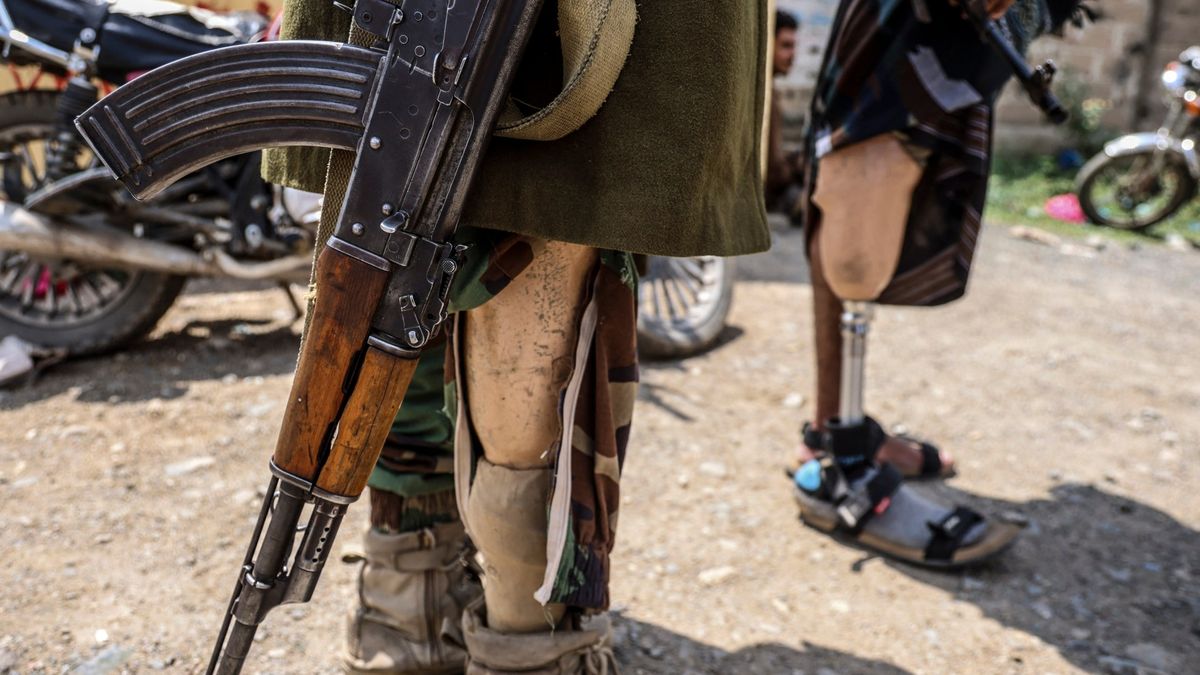
In early October 2026, forces aligned with Yemen's internationally recognized government, backed by the Saudi-led coalition, initiated a major military offensive. The declared objective is to recapture all territories lost to the Houthi movement, including the strategically vital capital, Sanaa. This push follows a period of renewed fighting that flared in July, culminating in a Houthi offensive in early September which saw the group make significant gains along the Red Sea coast, notably seizing the port city of Mocha and key positions near the Bab al-Mandeb strait. The government forces now claim to have reversed some of these recent Houthi advances, retaking Dhubab and Mocha, and are also attempting to push back Houthi incursions around the southwestern city of Taiz.
The latest offensive in Yemen is not merely a localized skirmish but a complex interplay of regional and international power dynamics, driven by entrenched interests and a desperate struggle for leverage. At its core, this is a renewed effort by the Saudi-led coalition and its allied Yemeni government to shift the balance of power after a period of relative calm and recent Houthi advances. For Saudi Arabia, the conflict in Yemen is existential; it views the Houthi movement, with its ties to Iran, as a direct threat to its southern border and regional influence. The current offensive is likely a calculated move by Riyadh to regain lost ground and strengthen its hand in any future negotiations, rather than a genuine belief in a swift military victory.
The Yemeni government forces, while seemingly unified under the Presidential Leadership Council (PLC) led by Rashad al-Alimi, are in reality a disparate collection of militias, tribal fighters, and southern separatist factions. These groups often have conflicting loyalties and objectives, making true operational and political integration a constant challenge. Analysts note that while these forces are
Yemeni government forces, backed by Saudi Arabia, have launched a new offensive in October 2026 to recapture territories from the Houthi movement, including key coastal areas and potentially the capital, Sanaa. This follows recent Houthi gains and marks a significant escalation.
The primary combatants are the internationally recognized Yemeni government forces, supported by a Saudi-led coalition, and the Houthi movement, which controls Sanaa and other northern territories and is allied with Iran. Various local militias and tribal groups also play significant roles.
The conflict has already created a severe humanitarian crisis, and renewed fighting will likely lead to more civilian casualties, displacement, food insecurity, and further strain on an already collapsed healthcare system. Millions of Yemenis are at risk of famine and disease.
Source referenced: ALJAZEERA
This brief was synthesized by our Editorial Engine and reviewed by The Ground Narrative team.


