TRENDING

Tuesday, 6 October 2026
----------------------
25 Rabi' Al-Thani 1448 AH
Brazilians head to the polls in a pivotal election, choosing between the Workers' Party legacy and the populist movement of the Bolsonaro family. The outcome will shape the nation's direction for years to come.
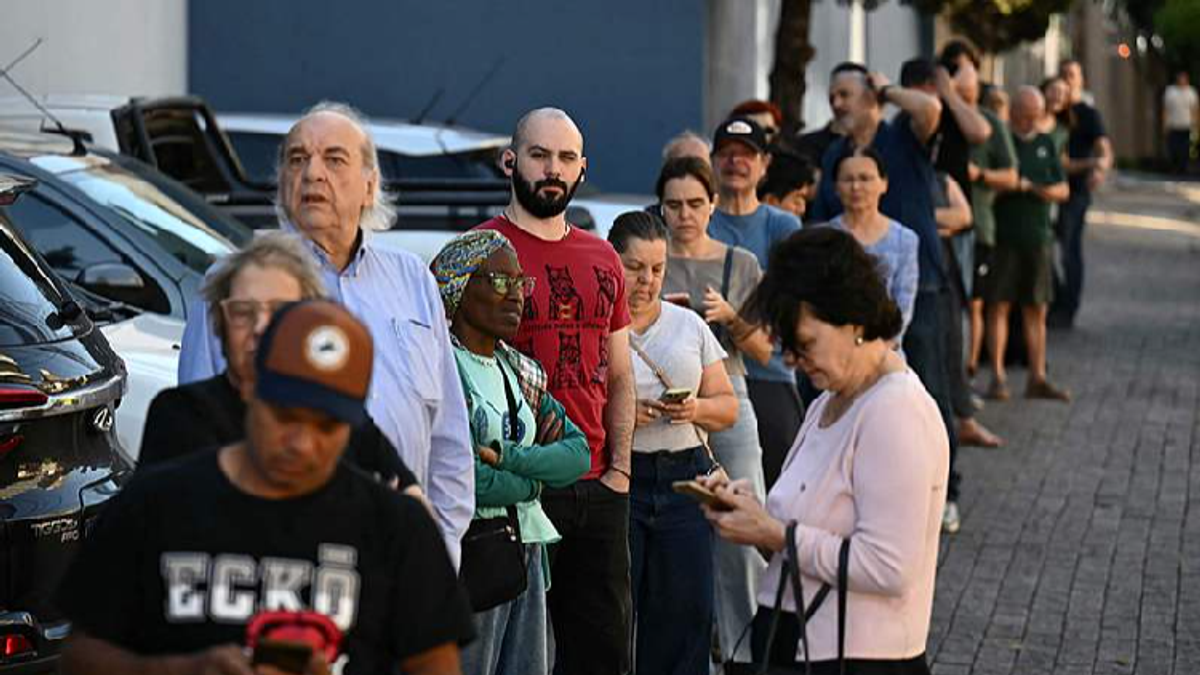
Voting has officially commenced in the first round of Brazil's 2026 presidential election. Citizens across the vast South American nation are casting their ballots, with polls indicating a tight race between two dominant figures. The incumbent, Luiz Inacio Lula da Silva of the Workers' Party, seeks to secure another term, facing a significant challenge from Flavio Bolsonaro, the presidential candidate for Brazil's Liberal Party and son of former President Jair Bolsonaro. Initial results are anticipated within hours of polling stations closing, setting the stage for what could be a deeply consequential political transition or a reaffirmation of the current course.
The 2026 Brazilian presidential election is not merely a contest between individuals; it is a battle for the very soul of the nation, reflecting deep-seated ideological divides and a struggle over Brazil's economic and social future. The power mechanics at play are complex, involving historical legacies, economic pressures, and the enduring influence of populist movements.
Lula da Silva represents a return to the social democratic principles and state-led development policies championed by the Workers' Party during its previous stints in power. His platform typically emphasizes social welfare programs, poverty reduction, and greater state intervention in the economy. For his supporters, Lula embodies a period of economic growth and social inclusion that lifted millions out of poverty, particularly during the commodity boom years. His political survival, despite past corruption allegations and imprisonment, speaks to a powerful base that views him as a champion of the working class and a bulwark against austerity. His power rests on mobilizing this base, appealing to historical nostalgia, and leveraging the established political machinery of the Workers' Party.
Conversely, Flavio Bolsonaro carries the torch of his father's populist, conservative movement. His appeal lies in a promise of law and order, a critique of traditional political elites, and an emphasis on individual liberties, often interpreted through a socially conservative lens. The Bolsonaro brand resonates with segments of the population disillusioned with perceived corruption, economic stagnation under previous administrations, and a desire for a strong leader. His power derives from a fervent, digitally savvy base, often fueled by anti-establishment sentiment and a desire to dismantle what they view as a corrupt left-wing establishment. The family's political capital is significant, having successfully tapped into a vein of nationalistic and conservative sentiment that remains potent.
Brazil's economy is a central battleground. The nation, a major global exporter of agricultural products and raw materials, grapples with inflation, unemployment, and the need for sustainable growth. Lula's approach would likely involve increased public spending, social programs, and potentially more protectionist trade policies, aiming to stimulate domestic demand and reduce inequality. This could be viewed by some as a risk to fiscal stability but as essential for social equity. Bolsonaro's approach, mirroring his father's, would likely favor market-oriented reforms, privatization, and reduced government spending, aiming to attract foreign investment and boost business confidence. This could be seen as beneficial for economic efficiency but potentially at the cost of social safety nets.
Globally, the election's outcome will significantly impact Brazil's foreign policy. A Lula victory would likely see Brazil re-engage more actively with multilateral institutions, strengthen ties with other BRICS nations, and adopt a more prominent role in climate diplomacy, often aligning with the Global South. A Bolsonaro victory would likely continue a more transactional foreign policy, potentially prioritizing bilateral relations with key allies like the United States and maintaining a skeptical stance on international climate agreements, as seen during his father's tenure. The choice will reverberate across Latin America, influencing regional integration efforts and the broader balance of power between left- and right-leaning governments.
The intense political polarization gripping Brazil has tangible and often severe human costs, extending far beyond the ballot box. Ordinary citizens, already navigating economic uncertainties, find themselves caught in a societal struggle that impacts their daily lives, their communities, and their sense of national identity.
The most immediate human cost is the exacerbation of social division. Brazil's political landscape has been sharply cleaved into opposing camps, often along lines of class, geography, religion, and racial identity. This polarization has infiltrated families, workplaces, and social circles, leading to strained relationships, increased animosity, and a breakdown in civil discourse. The inability to engage in respectful disagreement erodes social cohesion, making it harder for communities to address shared problems collaboratively. For many, the election is not just about policy but about fundamental values and identity, leaving little room for compromise or empathy for the other side.
For millions of Brazilians, particularly the poor and working class, the election's outcome directly impacts their economic survival. Policy shifts on social welfare programs, minimum wage, and inflation control have immediate consequences. A change in government could mean the expansion or contraction of crucial safety nets like Bolsa Família, affecting access to food, healthcare, and education for the most vulnerable. High inflation erodes purchasing power, making basic necessities unaffordable, while unemployment leaves families without income. The choice between Lula's emphasis on social spending and Bolsonaro's market-oriented reforms represents a stark trade-off for these populations, who often bear the brunt of economic instability regardless of who is in power. The promise of economic growth often fails to trickle down evenly, leaving many feeling left behind.
Brazil's environmental policies, particularly concerning the Amazon rainforest, have profound human costs. Policies under the Bolsonaro family tend to prioritize agricultural expansion and resource extraction, often leading to increased deforestation and land conflicts. This directly impacts indigenous communities, who are the traditional guardians of the forest and whose livelihoods, cultures, and very existence are intrinsically linked to its preservation. They face displacement, violence, and the loss of ancestral lands. The destruction of the Amazon also has global implications, but for these communities, it is an immediate existential threat, often downplayed by powerful economic interests advocating for development at any cost.
Access to quality public services like healthcare and education is a constant struggle for many Brazilians. Government spending priorities, influenced by the election, determine the funding and quality of these essential services. Furthermore, public security remains a major concern, with high rates of crime and violence. Different administrations propose varying approaches to policing and criminal justice, each with its own human rights implications. Citizens, especially those in marginalized urban areas, pay the price when these services are underfunded or when security policies lead to increased state violence or fail to protect them from criminal elements.
Behind the public rhetoric and campaign promises, several critical narratives are often omitted, downplayed, or strategically reframed by powerful actors. These untold stories reveal deeper currents of power, influence, and the true beneficiaries and victims of the political struggle.
While political leaders engage in fiery debates, international financial markets and major corporations quietly perform their own risk assessments. Publicly, they maintain neutrality, but privately, global capital often favors predictability and policies that ensure stable returns on investment, even if those policies come at a social or environmental cost. They tend to downplay the long-term societal instability that extreme political polarization can create, focusing instead on short-term market confidence indicators. The
The primary candidates leading the race in Brazil's 2026 presidential election are incumbent President Luiz Inacio Lula da Silva of the Workers' Party and Flavio Bolsonaro, the presidential candidate of Brazil's Liberal Party and son of former President Jair Bolsonaro.
Key issues for Brazilian voters include the economy, with concerns over inflation and unemployment, social welfare programs, environmental policies impacting the Amazon, and public security. The election also reflects deep ideological divisions within the country.
The election outcome will significantly influence Brazil's foreign policy, affecting its engagement with multilateral institutions, its role in regional blocs like Mercosur and BRICS, and its stance on global issues such as climate change and international trade relations.
Source referenced: CGTN
This brief was synthesized by our Editorial Engine and reviewed by The Ground Narrative team.