TRENDING

Monday, 5 October 2026
----------------------
24 Rabi' Al-Thani 1448 AH
The United States has abruptly pulled its strategic bombers from the United Kingdom's RAF Fairford base, citing an unspecified 'explosives plot'. This sudden move raises critical questions about UK security, alliance trust, and the true motivations behind such a high-stakes decision.
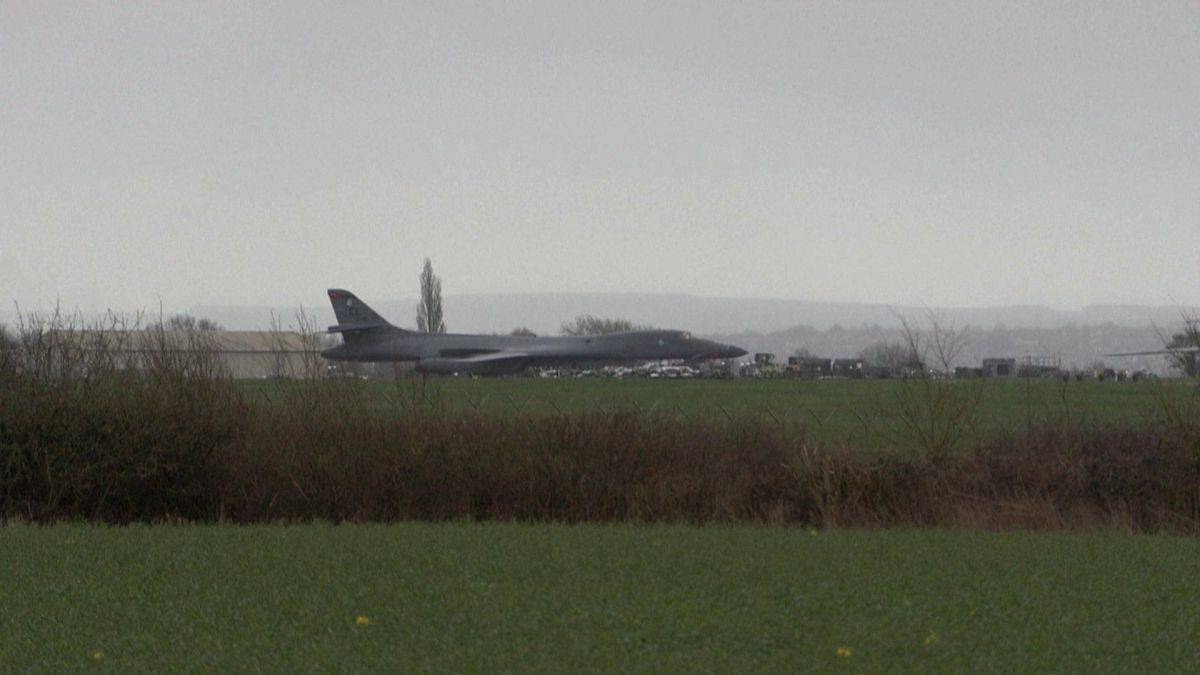
The United States Air Force recently executed an abrupt and complete withdrawal of its strategic bomber aircraft, including B-52s, from RAF Fairford in the United Kingdom. The official explanation provided by a former NATO operations director points to concerns over a potential attack, specifically referencing an alleged 'explosives plot' uncovered the previous month. This sudden departure leaves the base, a crucial forward operating location for US long-range aviation in Europe, devoid of its usual complement of heavy bombers, signaling a significant and immediate shift in US force posture in the region.
The decision to pull strategic assets like bombers from a key allied base is never taken lightly; it reflects a complex interplay of military doctrine, political signaling, and perceived threats. The immediate stated reason—a potential attack linked to an 'explosives plot'—highlights a fundamental power dynamic: the protection of high-value assets. For the United States, the ability to project power globally relies on the security of its forward operating bases. If a host nation's security environment is deemed insufficient to protect these assets, the US military doctrine dictates their relocation or withdrawal to minimize risk.
From the US perspective, this withdrawal serves multiple purposes. Firstly, it is a clear act of force protection, ensuring that expensive and strategically vital aircraft are not vulnerable to attack. Secondly, it sends a powerful, albeit subtle, message to the UK government and its intelligence agencies. It implies that the threat environment in the UK has reached a level where US assets are at unacceptable risk, thereby pressuring London to enhance its counter-terrorism capabilities and intelligence sharing. This is not merely a security decision; it is a diplomatic leverage point, underscoring the US expectation of robust security from its closest allies.
For the United Kingdom, the implications are multi-layered. The presence of US strategic bombers at RAF Fairford is a tangible symbol of the 'special relationship' and a cornerstone of NATO's collective defense. Their abrupt departure could be interpreted as a momentary vote of no confidence in UK security, potentially embarrassing the government and raising questions about its ability to protect critical national infrastructure and allied assets. It also forces a re-evaluation of UK counter-terrorism strategies and the effectiveness of its intelligence apparatus. The UK relies heavily on US military presence for its own defense and for its standing within NATO; any perceived weakening of this bond carries significant political weight.
Beyond bilateral relations, the withdrawal impacts the broader NATO alliance. RAF Fairford has historically been a critical staging ground for US strategic bombers supporting operations in Europe, the Middle East, and Africa. These bombers contribute significantly to NATO's deterrence posture, particularly against potential adversaries in Eastern Europe. Their absence, even if temporary, creates a perceived gap in capability and could be interpreted by rivals as a sign of vulnerability or a successful disruption. The flexibility of long-range bombers means they can be redeployed elsewhere, but the signal sent by their departure from a long-standing European base is undeniable.
Economically, the presence of US military personnel and their families, along with the support staff for the base, contributes to local economies around Fairford. While the direct economic impact of a temporary bomber withdrawal might be limited, it introduces uncertainty that can affect local businesses and property values. The decision highlights how military deployments, often seen as purely strategic, have tangible economic footprints that can be disrupted by geopolitical shifts or security concerns.
While the immediate focus of a bomber withdrawal might be on military hardware and strategic implications, the human cost, though often less visible, is significant. This event ripples through various communities, creating uncertainty, anxiety, and tangible economic consequences.
The area surrounding RAF Fairford has long been accustomed to the presence of US military personnel and their families. Local businesses, from pubs and restaurants to shops and service providers, rely on the custom generated by the base's population. A sudden withdrawal, even if the base itself remains operational, can lead to a noticeable downturn in economic activity. Jobs that support the base indirectly, such as cleaning services, transportation, or housing rentals, face immediate uncertainty. For residents, the departure of a significant military presence can alter the social fabric of their towns, leading to a sense of loss or instability. The psychological impact of living near a base that is suddenly deemed unsafe for strategic assets can also be profound, raising questions about their own safety and the effectiveness of local security measures.
The vague nature of the 'explosives plot' and the abruptness of the withdrawal can erode public trust. When governments and military officials cite unspecified threats for significant actions, citizens are left to speculate. This lack of transparency can breed anxiety and a sense of vulnerability, especially in the UK, which has a history of dealing with terrorism. The public may question whether their security services are truly capable of protecting them, or if the threat is far greater than what is being communicated. This uncertainty can lead to increased fear and a reluctance to engage in public spaces, impacting daily life and social cohesion.
For the US airmen and their families stationed at RAF Fairford, such a sudden change can be highly disruptive. While the bombers are withdrawn, the personnel supporting them may remain, but the shift in mission and the underlying security concerns can create stress. If a full base closure or significant reduction in personnel were to follow, it would mean forced relocations, school changes for children, and the severing of community ties. Even a temporary measure creates an environment of instability, affecting morale and long-term planning for military families.
The official narrative—a withdrawal due to an 'explosives plot'—is likely only a fraction of the full story. Powerful actors, both in Washington and London, often downplay or omit crucial details to manage public perception, maintain strategic ambiguity, or avoid political fallout. Several deeper currents are likely at play.
The most glaring omission is the lack of specific details regarding the alleged 'explosives plot'. Was it a credible, imminent threat that intelligence agencies failed to fully neutralize? Or was it a successfully disrupted plot that nonetheless revealed a systemic vulnerability? The vagueness allows for multiple interpretations. It could be a genuine, severe threat that the authorities are deliberately keeping under wraps to prevent panic or to avoid revealing intelligence methods. Alternatively, the 'plot' could be a convenient pretext—a plausible deniability for a pre-planned strategic repositioning that the US wanted to execute anyway.
The United States has been increasingly vocal about its strategic pivot towards the Indo-Pacific, viewing China as its primary long-term competitor. This pivot often entails re-evaluating global force posture, including the deployment of strategic assets. It is plausible that the US was already considering reducing its conventional footprint in Europe to free up resources for the Pacific theater. A security concern, even a genuine one, could provide the perfect cover for such a move, allowing the US to shift assets without explicitly stating a diminished commitment to European security, which could cause friction with NATO allies.
If the 'explosives plot' was real and serious enough to warrant a bomber withdrawal, it raises uncomfortable questions about intelligence efficacy. Was there an intelligence failure that allowed the plot to develop to such a dangerous stage? Or, conversely, was it an intelligence success to uncover and disrupt it, but the residual risk was still too high for such valuable assets? Governments rarely highlight their intelligence shortcomings, preferring to emphasize successes or downplay risks. The silence around the specifics of the plot suggests either a profound operational security concern or an attempt to manage the narrative around a potentially embarrassing security lapse.
The withdrawal also serves as a potent political message from the US to the UK. It subtly implies that the UK needs to bolster its internal security and counter-terrorism measures. This isn't just about protecting US assets; it's about the US signaling its expectations for its allies. In an era of increasing global instability, the US is likely placing greater demands on its partners to ensure their environments are secure enough to host critical US military capabilities. The move could be a form of pressure, urging London to invest more in its own defense and intelligence, rather than relying solely on the US security umbrella.
While security is the stated reason, underlying economic and logistical factors might also be at play. Maintaining strategic bombers at an overseas base is expensive. Are there unstated cost-saving measures or logistical efficiencies that the US is pursuing, using the security scare as a justification? The long-term costs of maintaining a robust presence at RAF Fairford might have been deemed unsustainable or less efficient compared to alternative deployment strategies, such as rotational deployments from continental US bases or other, more secure locations.
The abrupt withdrawal of US bombers from RAF Fairford is not an isolated incident but a symptom of deeper geopolitical currents. The immediate future will reveal much about the true motivations and consequences of this decision.
Firstly, observe the rhetoric from US and UK officials. Any further statements, particularly those that offer more specifics about the 'explosives plot' or the future of US deployments in the UK, will be crucial. Continued vagueness or a swift, quiet return of the bombers could suggest the initial withdrawal was a temporary measure or a strategic feint. Conversely, if the bombers are redeployed to other European bases or even back to the continental US for an extended period, it would strongly support the theory of a broader strategic repositioning.
Secondly, monitor UK government actions regarding internal security. Will there be new counter-terrorism initiatives announced? An increase in intelligence budgets? Or a public inquiry into the alleged plot? The UK's response will indicate how seriously London perceives the implied criticism of its security capabilities and its commitment to reassuring its key ally.
Thirdly, pay attention to the reactions of potential adversaries. How will Russia, China, or non-state actors interpret this move? Will they see it as a sign of Western vulnerability, a successful disruption, or merely a tactical repositioning? Their propaganda and military posturing could offer clues about their assessment of the situation. Any increased probing or aggressive actions in regions where US strategic air power typically operates could be a direct response to this perceived shift.
Finally, watch for any broader shifts in US global force posture. Is this an isolated incident, or part of a larger pattern of re-evaluating overseas deployments, particularly in Europe? The long-term implications for NATO cohesion and the US-UK 'special relationship' hinge on how this event is managed and whether the perceived security gap is effectively addressed. The transparency, or lack thereof, in the coming weeks will shape public perception and strategic confidence on both sides of the Atlantic.
The US officially cited concerns about a potential attack, specifically referencing an alleged 'explosives plot' uncovered the previous month. This move is presented as a measure of force protection for high-value strategic assets.
The withdrawal raises questions about the UK's ability to protect allied assets and could be seen as a subtle message from the US for the UK to enhance its counter-terrorism and intelligence capabilities. It also impacts the UK's role within NATO and its 'special relationship' with the US.
Analysts suggest the 'explosives plot' could be a convenient pretext for a broader US strategic repositioning, potentially to focus more resources on the Indo-Pacific. Economic factors, alliance pressure, and internal intelligence dynamics may also play a role in the decision.
Source referenced: ALJAZEERA
This brief was synthesized by our Editorial Engine and reviewed by The Ground Narrative team.


