TRENDING

Monday, 5 October 2026
----------------------
24 Rabi' Al-Thani 1448 AH
Serb leader Milorad Dodik announced a sweeping win in Bosnia’s latest vote, a claim that deepens ethnic fault lines and tests the fragile post‑Dayton order. The article unpacks who gains, who loses, and what the next moves could mean for ordinary Bosnians.
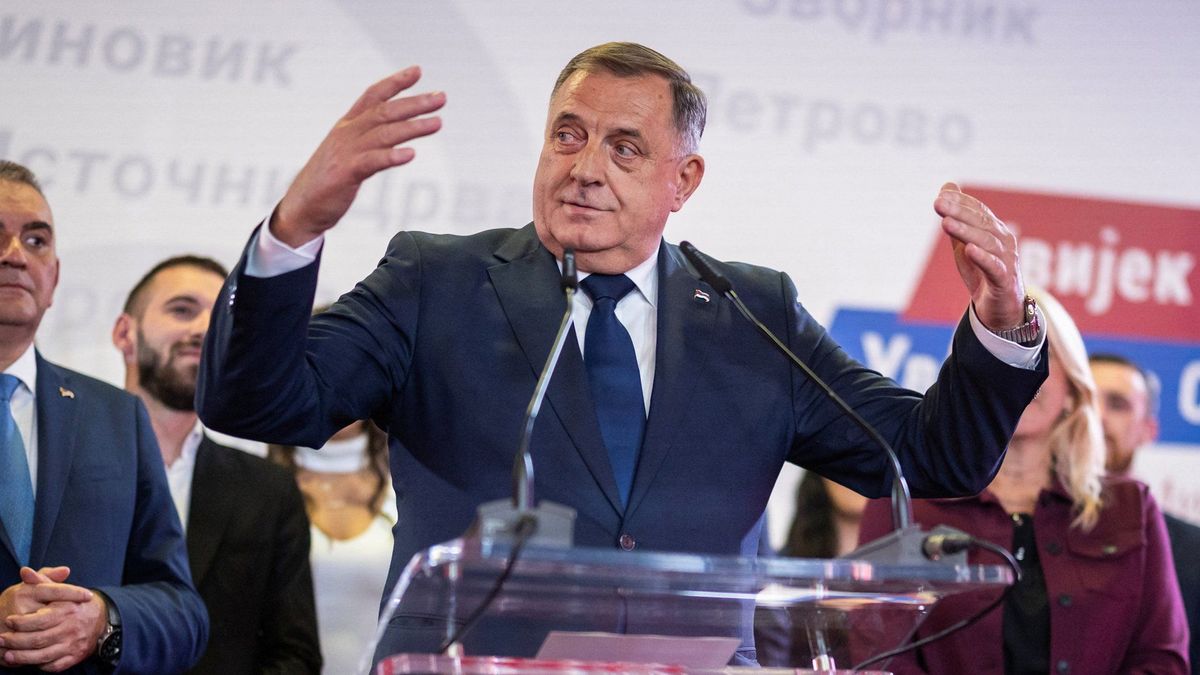
Bosnian Serb nationalist Milorad Dodik proclaimed his party’s victory in the recent presidential election, asserting that the Serb member of the three‑person presidency will now dominate the rotating chairmanship. The election, held under the complex power‑sharing system established by the Dayton Accords, left the other two seats – a Bosniak and a Croat – contested but without a clear majority, reinforcing the country’s entrenched ethnic stalemate.
The Bosnian political architecture is built on a delicate balance of ethnic representation, a legacy of the 1995 peace settlement that ended the brutal war. Under the Dayton framework, the state is divided into two entities – the Federation of Bosnia and Herzegovina and Republika Srpska – each wielding veto power over national decisions. Dodik’s claim of victory is less about raw vote counts and more about leveraging the entity’s constitutional tools to block reforms that could dilute Serb autonomy.
Economic incentives also drive the power play. Republika Srpska receives a disproportionate share of foreign aid earmarked for post‑war reconstruction, and its leadership has cultivated a patronage network that rewards loyalty with jobs and contracts. By positioning himself as the victor, Dodik can negotiate better terms with donors, promising stability in exchange for continued funding, even as the broader economy stalls under high unemployment and brain drain.
Internationally, the European Union and the United States have long championed a unified Bosnia as a prerequisite for EU accession. Yet both actors are constrained by their own domestic politics: the EU grapples with enlargement fatigue, while the US faces a crowded foreign‑policy agenda. This creates a vacuum that regional powers, notably Serbia and Russia, are eager to fill. Serbian President Aleksandar Vučić has publicly backed Dodik, framing his success as a defense of Serb rights, while Russian diplomatic channels have quietly offered political backing, hoping to keep the Western Balkans within Moscow’s sphere of influence.
Military doctrine adds another layer. Republika Srpska maintains its own armed forces, a relic of the war that remains under the nominal control of the central army but operates with significant autonomy. Dodik’s rhetoric often includes references to “defending our people,” a narrative that can justify the retention of parallel security structures, thereby complicating any attempts at defense reform or NATO partnership.
Alliance math is equally crucial. The rotating presidency means that every eight months, a different ethnic representative chairs the council of ministers. Dodik’s anticipated turn at the helm gives Republika Srpska a strategic window to push through legislation that entrenches its privileges, while the Bosniak and Croat members scramble to form coalitions that can counterbalance the Serb agenda. The resulting legislative gridlock can stall critical reforms, from judiciary independence to anti‑corruption measures, perpetuating a cycle of patronage and public disillusionment.
For ordinary Bosnians, the political deadlock translates into stagnant wages, limited public services, and a pervasive sense of uncertainty. Young people in Sarajevo and Mostar face bleak job prospects, prompting a wave of emigration that drains the country of skilled labor. In Republika Srpska, the promise of Serb dominance does little to improve infrastructure; roads remain pothole‑ridden, and hospitals struggle with outdated equipment, leaving citizens to rely on fragmented aid programs.
Dodik’s victory claim reignites old grievances. In mixed towns like Banja Luka, Bosniak minorities report increased harassment and a rise in nationalist graffiti, signaling a climate of intimidation. Schools that once taught a shared curriculum now face pressure to adopt ethnically segregated textbooks, eroding the already fragile sense of a common Bosnian identity.
International investors remain wary of Bosnia’s unpredictable governance. The World Bank recently downgraded its growth forecast, citing “political uncertainty and institutional weakness.” Small businesses, especially those operating across entity lines, encounter bureaucratic hurdles that increase costs and limit market access, deepening regional disparities.
Official statements from Belgrade and Moscow emphasize “respect for sovereignty” while quietly providing political cover. Serbian media runs op‑eds praising Dodik as a guardian of Serb heritage, yet the Serbian government refrains from overt financial commitments, avoiding sanctions risk. Russian diplomats, meanwhile, hold low‑profile meetings with Republika Srpska officials, a subtle signal of backing that is rarely acknowledged in public briefings.
The European Union publicly urges dialogue and reform, but behind closed doors EU officials have signaled a willingness to accept a status quo that keeps Bosnia fragmented, as long as the country does not drift toward overt Russian alignment. This pragmatic tolerance is downplayed in EU press releases, which instead highlight “ongoing support for democratic institutions.” The omission masks a strategic calculation: a weak, divided Bosnia is less likely to demand rapid accession, allowing the EU to manage enlargement on its own timetable.
Local Bosnian media, polarized along ethnic lines, often echo the dominant narratives of their respective entities. In the Federation, coverage focuses on alleged electoral fraud by Serb officials, while Republika Srpska outlets celebrate Dodik’s claim as a triumph of self‑determination. Independent journalists attempting balanced reporting face intimidation, leading to a fragmented information environment where citizens receive only partial truths.
International donors have attached conditionality to aid packages, demanding reforms in the rule of law and public procurement. However, these conditions are frequently softened in practice to avoid jeopardizing the fragile peace. The subtle relaxation of standards is rarely disclosed, allowing patronage networks to continue siphoning funds without public scrutiny.
The next eight months will reveal whether Dodik can convert his proclaimed victory into concrete policy gains. Key indicators include any legislative moves to solidify Republika Srpska’s autonomous powers, shifts in the EU‑Bosnia accession dialogue, and the response of Bosniak and Croat leaders to potential vetoes. Watch for protests in mixed municipalities, changes in foreign aid disbursement patterns, and any overt diplomatic signals from Serbia or Russia that could signal deeper involvement. The trajectory of Bosnia’s political equilibrium will hinge on how these power levers are exercised and whether ordinary citizens can mobilize enough pressure to demand a functional, inclusive state.
It gives the Serb member of the three‑person presidency a stronger bargaining position, potentially allowing Republika Srpska to block reforms and shape the rotating chairmanship agenda.
The EU is likely to maintain diplomatic pressure for dialogue while quietly tolerating a fragmented status quo, balancing its enlargement agenda against the risk of pushing Bosnia toward Russian alignment.
Source referenced: ALJAZEERA
This brief was synthesized by our Editorial Engine and reviewed by The Ground Narrative team.