TRENDING

Monday, 5 October 2026
----------------------
24 Rabi' Al-Thani 1448 AH
China is leading a coalition of 71 countries to propose a new global human rights governance system at the UN, challenging existing norms. This move redefines accountability and sovereignty, with significant implications for individuals worldwide.
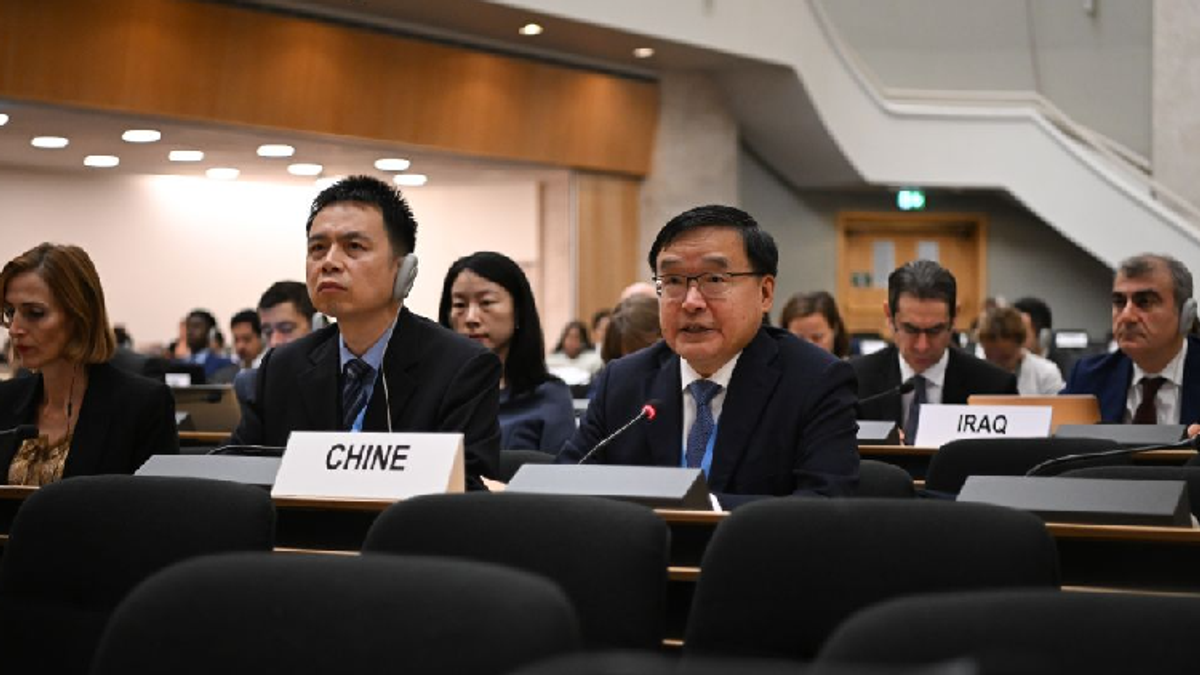
At the 63rd session of the United Nations Human Rights Council (UNHRC) in Geneva, China's permanent representative, Jia Guide, delivered a joint statement on behalf of 71 countries. The statement called for the establishment of a "just, equitable and inclusive global human rights governance system," guided by President Xi Jinping's Global Governance Initiative. This collective declaration, presented from the platform of "The Group of Friends of Global Governance in Geneva," outlined four key proposals emphasizing a "people-centered approach," sovereign equality, fairness, justice, and the international rule of law, directly challenging the prevailing Western-centric framework for human rights.
This initiative by China is a clear assertion of its growing influence and a deliberate attempt to reshape global norms in an area traditionally dominated by Western liberal democracies. The core of China's argument, articulated through its four proposals, is a redefinition of human rights governance that prioritizes state sovereignty and non-interference over universal individual rights as often championed by Western states. The "people-centered approach," as framed by Beijing, places the assessment and improvement of human rights firmly within the purview of each country's government, effectively limiting external scrutiny and intervention. This is a powerful mechanism for states to shield internal policies from international criticism, particularly those with records that might not align with established international human rights conventions.
The emphasis on "sovereign equality" and the call for greater attention to the voices of the Global South are strategic moves. Many nations in the Global South harbor historical grievances against perceived Western hypocrisy, selective interventionism, and the imposition of standards that don't always account for diverse cultural contexts or developmental stages. By positioning itself as a champion of these nations, China builds a formidable coalition that can collectively resist pressures from traditional human rights advocates. This alliance is not merely ideological; it is often underpinned by China's significant economic leverage through initiatives like the Belt and Road Initiative, offering an alternative development model that comes with fewer political conditions compared to Western aid.
Furthermore, the call to oppose the "politicization and instrumentalization of human rights" is a direct critique of what China and its allies see as Western double standards—where human rights concerns are allegedly used as tools for geopolitical influence rather than genuine humanitarian concern. By advocating for "fairness, objectivity and non-selectivity," China aims to dismantle the existing mechanisms of accountability that often target states with authoritarian tendencies, including itself. The formation of "The Group of Friends of Global Governance in Geneva" is a tangible step towards institutionalizing this alternative vision, creating a counter-bloc within multilateral forums like the UNHRC and signaling a deeper, long-term strategy to build a parallel international order.
The shift towards a state-centric, sovereignty-first approach to human rights governance carries profound implications for individuals, particularly those living under authoritarian or semi-authoritarian regimes. When the assessment and improvement of human rights are deemed solely the prerogative of national governments, the space for independent civil society, human rights defenders, and minority groups to advocate for their rights shrinks dramatically. International bodies and non-governmental organizations, which often serve as crucial lifelines and platforms for accountability, could find their mandates and influence severely curtailed.
The concept of universal human rights, while imperfectly applied, provides a baseline of protection for all individuals, regardless of their nationality or the nature of their government. China's proposed framework risks eroding this universality by promoting a form of cultural relativism or state-defined rights, where what constitutes a human right can vary significantly from one country to another. This approach could legitimize practices that are widely considered abuses under existing international law, making it harder for victims of state repression, arbitrary detention, or discrimination to seek redress or international solidarity.
Specific populations stand to bear a disproportionate cost. Ethnic and religious minorities, political dissidents, LGBTQ+ communities, and indigenous peoples often rely on international pressure and monitoring to protect them from state-sanctioned discrimination or violence. If international bodies are prevented from intervening or even scrutinizing internal affairs under the guise of "sovereign equality" and "non-interference," these groups could become even more vulnerable, with fewer avenues for appeal or protection. The emphasis on a "holistic approach to all categories of human rights" could also be used to downplay civil and political rights in favor of economic or developmental rights, a common tactic to deflect criticism from regimes that suppress dissent while claiming to lift people out of poverty.
Ultimately, the human cost is measured in the silence that descends when accountability mechanisms are weakened. When states can define their own human rights standards, oppose "double standards" by dismissing legitimate criticism, and reject external interference, the powerful gain greater impunity. Ordinary citizens, who bear the consequences of decisions made by powerful actors, are left with fewer tools to demand justice, transparency, or protection from their own governments.
The narrative presented by China and its allies, while framed in terms of fairness and equality, subtly omits and downplays several critical aspects of global power dynamics and the very nature of human rights. The call for a "people-centered approach" and the right of each country to assess its own human rights situation, for instance, often conflates the state with its people. In many contexts, the state is precisely the entity infringing upon the rights of its citizens, making self-assessment a deeply problematic concept for accountability.
The accusation of "double standards" is a potent rhetorical weapon. While it is true that Western nations have historically applied human rights principles inconsistently, often prioritizing strategic interests, China's use of this critique is frequently selective. It serves to deflect legitimate scrutiny of its own human rights record—such as the treatment of Uyghurs in Xinjiang, the suppression of dissent in Hong Kong, or the widespread use of surveillance—rather than genuinely advocating for a universally applied, consistent standard of justice. This framing allows Beijing to position itself as a defender of the oppressed Global South against Western hypocrisy, while simultaneously promoting a framework that could shield its own actions.
The term "global human rights governance system" itself is a rebranding effort. Traditional human rights discourse focuses on the protection of individual liberties from state overreach. China's framework, however, appears to emphasize the state's role in managing and defining human rights within its borders, aligning with a broader Chinese vision of "governance" that prioritizes stability, order, and collective development over individual freedoms. This subtle shift in language is crucial, as it transforms human rights from a check on state power into an instrument of state policy.
What is also downplayed is the broader geopolitical context. This initiative is not merely about human rights; it is a fundamental pillar of China's long-term strategy to construct a multipolar world order where its own values and systems hold equal, if not superior, weight to those of the West. By building a coalition of 71 countries—many of which are themselves wary of Western interference or have their own human rights challenges—China is consolidating a significant diplomatic bloc that can challenge the existing international consensus on a wide range of issues, from trade to security. The Global Governance Initiative is a comprehensive blueprint for this new order, and human rights is a critical battleground within it.
The coming years will reveal the true impact and trajectory of China's push for a re-envisioned global human rights governance. Observers should closely monitor several key developments to understand how this challenge to the established order will unfold.
First, watch the continued expansion and institutionalization of "The Group of Friends of Global Governance in Geneva" and similar platforms. The number of co-sponsoring nations is a critical indicator of China's success in building a durable alternative coalition. Any significant increase in membership, particularly from influential nations in the Global South, would signal a growing challenge to the traditional human rights consensus.
Second, pay attention to how Western nations and their allies respond within the UNHRC and other multilateral forums. Will they directly confront China's proposals, or will they seek to find areas of compromise? The debate will likely intensify, with both sides leveraging their diplomatic weight to shape resolutions and mandates. The language used in future UN documents on human rights will be a key battleground, revealing whether China's state-centric definitions begin to gain broader acceptance.
Third, observe the practical implications on the ground. Will the new framework embolden states with poor human rights records to further restrict freedoms, knowing that international scrutiny may be diminished? Look for changes in how international organizations are allowed to operate within these nations, particularly regarding monitoring and reporting on human rights abuses. Any reduction in access or increased pressure on human rights defenders will be a direct consequence of this shift.
Finally, track the broader integration of China's Global Governance Initiative across different sectors of international relations. The human rights aspect is just one facet of a comprehensive vision. How this vision influences global economic, environmental, and security governance will ultimately determine the shape of the emerging international order and the future of human rights for ordinary citizens worldwide.
Source referenced: CGTN
This brief was synthesized by our Editorial Engine and reviewed by The Ground Narrative team.