TRENDING

Monday, 5 October 2026
----------------------
24 Rabi' Al-Thani 1448 AH
As Japan marks 81 years since the atomic bombing of Hiroshima, the nation's long-held non-nuclear principles and pacifist constitution face unprecedented pressure. Regional security concerns are pushing Tokyo to re-evaluate its defense posture, sparking debate over the human cost of a potential shift.
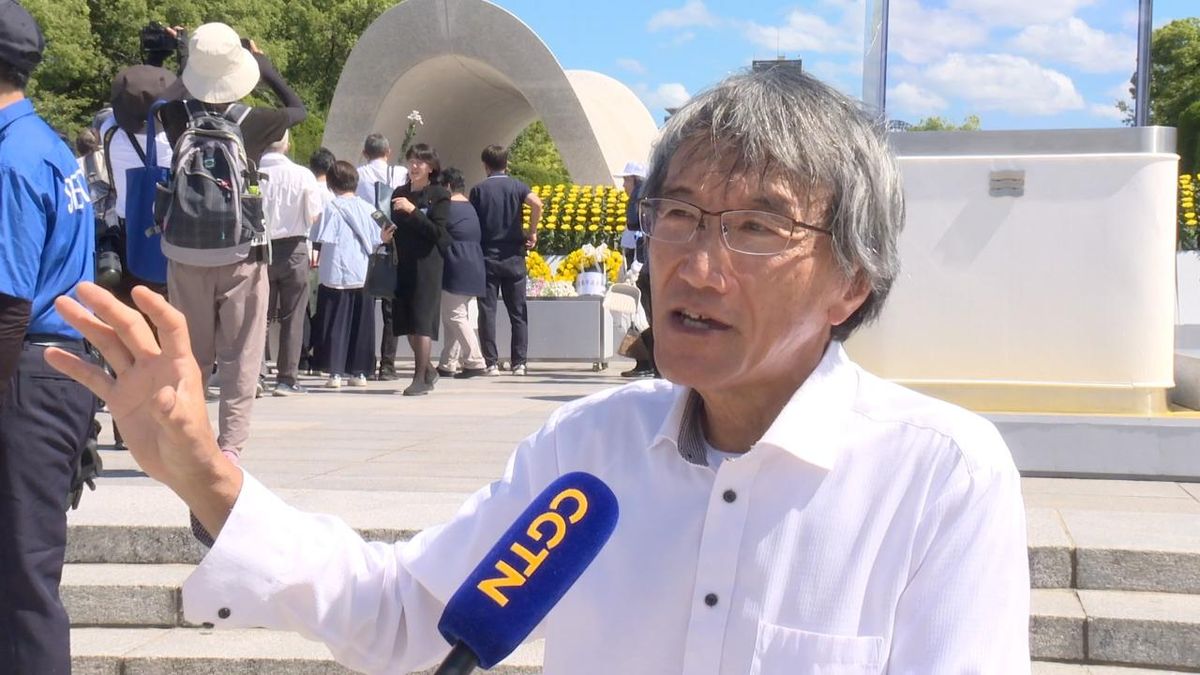
Eighty-one years after the atomic bomb devastated Hiroshima, the city once again hosted its annual memorial ceremony, a poignant reminder of nuclear warfare's catastrophic human cost. This year, however, the solemn commemorations unfolded against a backdrop of intense national debate: Japan's government is actively pursuing a significant shift in its defense policy, prompting fears among peace advocates and survivors that the nation's commitment to its post-war pacifist constitution and its three non-nuclear principles could be eroding.
Japan's post-World War II constitution, particularly Article 9, famously renounces war and the maintenance of military forces. For decades, this has underpinned a defense posture focused solely on self-defense, with security largely guaranteed by the U.S. alliance and its nuclear umbrella. The current shift is not sudden; it's a calculated response to a rapidly deteriorating regional security environment. China's growing military assertiveness, including its expansion in the East China Sea and Taiwan Strait, coupled with North Korea's accelerating ballistic missile and nuclear weapons programs, has fundamentally altered Tokyo's strategic calculus. The government, under pressure from conservative factions and a public increasingly anxious about external threats, argues that the existing framework is insufficient to protect national interests. The power mechanics at play involve a delicate balancing act: maintaining the U.S. alliance while asserting greater independent defense capabilities, and navigating domestic political survival against the imperative of national security in a volatile neighborhood. The debate includes discussions around acquiring 'counterstrike capabilities' – the ability to hit enemy bases preemptively – a concept that directly challenges the traditional interpretation of self-defense.
The human cost of this defense reorientation is borne most acutely by the generations who remember the horrors of war and the 'hibakusha' (atomic bomb survivors) who have tirelessly campaigned for nuclear disarmament. For them, any move away from pacifism is a betrayal of their lived experience and a step back towards a past they desperately want to avoid. Beyond the survivors, ordinary citizens, particularly those in communities like Hiroshima and Nagasaki, grapple with the psychological burden of a potential return to militarism. They fear that a more assertive Japan could inadvertently escalate regional tensions, making them, once again, potential targets. The economic cost, too, is significant, as increased defense spending diverts resources from social programs and other public investments, impacting healthcare, education, and infrastructure for the general populace. The peace movement, a powerful moral voice in Japan, finds itself increasingly marginalized in the face of what the government frames as pragmatic security necessities.
What governments and official statements often downplay is the *economic incentive* behind a stronger defense industry. While presented as a security necessity, increased military spending also represents a significant boost for domestic arms manufacturers and related industries, potentially creating jobs and technological advancements that serve economic interests alongside security ones. Furthermore, the subtle but persistent pressure from the United States for Japan to shoulder more of its own defense burden, particularly in the context of China's rise, is rarely articulated explicitly. The U.S. benefits from a stronger, more independent Japanese military that can act as a more robust regional deterrent. What's also omitted is the potential for a regional arms race. If Japan significantly re-arms and acquires offensive capabilities, it could trigger similar escalations from China, South Korea, and North Korea, creating a more dangerous and less predictable East Asia. The narrative focuses on 'self-defense' while sidestepping the broader destabilizing implications of such a shift.
Readers should closely watch several key developments. Firstly, monitor the specifics of Japan's defense budget allocations and procurement decisions, particularly regarding long-range missile capabilities and advanced weaponry. Secondly, observe public opinion polls and the strength of the pacifist movement's opposition, especially as national elections approach. Any significant public backlash could temper the government's ambitions. Thirdly, pay attention to the rhetoric and actions of Japan's neighbors – China, North Korea, and South Korea – as their responses will dictate the pace and direction of regional security dynamics. Finally, watch for any shifts in the interpretation of Article 9 by the Japanese Supreme Court or through constitutional amendment debates, which would fundamentally alter Japan's identity on the global stage. The choice Japan makes today will echo for generations, shaping not just its own future, but the stability of the entire Indo-Pacific region.
Source referenced: CGTN
This brief was synthesized by our Editorial Engine and reviewed by The Ground Narrative team.