TRENDING

Friday, 16 October 2026
----------------------
5 Jumada Al-Awwal 1448 AH
The 140th China Import and Export Fair marks a milestone for global commerce, but beneath the glossy booths lie power calculations and human stakes. This analysis untangles the forces at play.
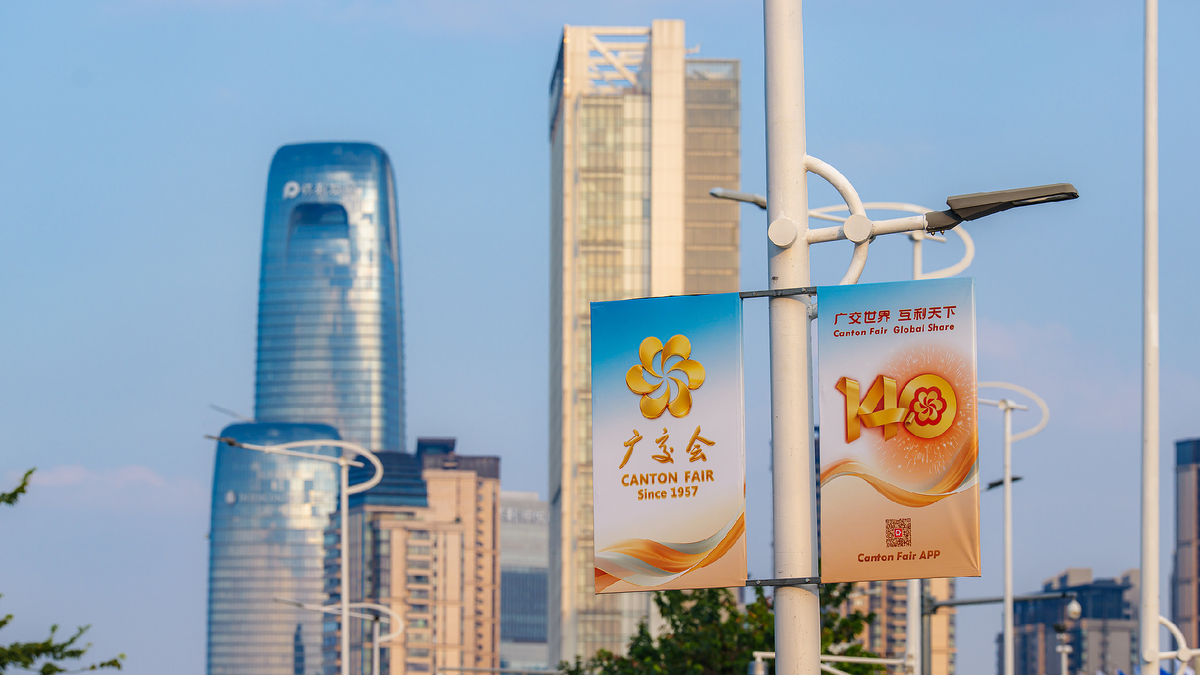
The 140th China Import and Export Fair, better known as the Canton Fair, opened in Guangzhou on 11 October 2026, celebrating its 70th anniversary. Over 310,000 buyers from more than 220 countries walked the exhibition halls, while 32,000 companies showcased everything from agricultural machinery to next‑generation chips. Chinese customs data showed a 18.8% year‑on‑year rise in total trade value for the first three quarters of the year, underscoring the fair’s role as a barometer of global demand.
China’s leadership treats the fair as a strategic lever to lock in economic influence. By foregrounding high‑tech products, the state signals a shift from low‑cost manufacturing to an innovation‑driven export model, aligning with the Made in China 2025 agenda. The fair also serves domestic political goals: showcasing growth counters any narrative of slowdown and bolsters the Communist Party’s claim of delivering prosperity. For foreign firms, participation offers a quasi‑guaranteed gateway to the world’s largest consumer market, reducing transaction costs and providing a platform for technology transfer. Meanwhile, the Chinese government subsidises logistics, offers tax incentives, and coordinates visa facilitation, turning the event into a state‑backed marketplace that deepens supply‑chain interdependence. This interdependence creates a feedback loop—foreign buyers need Chinese inputs, while Chinese firms rely on overseas components—making it costly for any major economy to decouple.
The surge in orders translates into intensified production schedules for factories across China’s interior provinces. Workers often face longer shifts, overtime without proportional pay, and heightened safety risks, especially in sectors like battery manufacturing and semiconductor assembly where occupational hazards are high.
Companies from Indonesia, Egypt, and other emerging markets see the fair as a lifeline, yet they must compete against state‑backed Chinese firms that can undercut prices thanks to economies of scale and preferential financing. The result is squeezed margins and, in some cases, forced consolidation or exit from export markets.
About 20% of the 32,000 exhibitors have overseas subsidiaries that collectively created over 200,000 jobs abroad. While this generates employment, it also ties local economies to Chinese capital flows, making them vulnerable to policy shifts in Beijing, such as sudden changes in export credit terms or technology licensing requirements.
Official narratives celebrate the fair as a beacon of openness, but several dimensions remain hidden. First, the environmental toll of scaling up production—especially for energy‑intensive sectors like electric‑vehicle batteries—is largely omitted from promotional material, even as China grapples with air‑quality and water‑pollution challenges. Second, the fair masks the debt dynamics that underpin many overseas joint ventures; Chinese banks often provide the financing, creating long‑term repayment obligations that can strain host‑country fiscal balances. Third, the emphasis on “innovation” can conceal forced technology transfer practices, where foreign firms feel pressured to share proprietary know‑how in exchange for market access, eroding their competitive edge abroad. Finally, the state‑driven narrative downplays the geopolitical leverage gained by embedding Chinese standards—such as 5G protocols and green‑energy specifications—into global supply chains, effectively reshaping rule‑making in sectors far beyond trade.
Analysts should monitor three converging trends. One, the rollout of new Chinese standards for emerging technologies; early adoption by foreign buyers could lock in Beijing’s technical dominance. Two, shifts in tariff policy, especially the recent expansion of zero‑tariff treatment to African partners, which may signal a broader push to capture market share in resource‑rich regions. Three, labor‑rights activism within China’s manufacturing hubs; any significant unrest could force firms to renegotiate production contracts, potentially disrupting the flow of goods that the fair promises to guarantee. Keeping an eye on these signals will reveal whether the fair’s promise of certainty translates into sustainable, inclusive growth or merely deepens existing power asymmetries.
The fair gathers the world’s largest concentration of buyers and sellers in one place, reflecting demand trends, pricing signals, and the health of international supply chains.
It offers market access but also pits them against heavily subsidised Chinese firms, often compressing margins and forcing strategic adjustments or consolidation.
Adoption of Chinese standards can create dependency, limit alternative suppliers, and give Beijing leverage over global tech governance and intellectual‑property regimes.
Source referenced: CGTN
This brief was synthesized by our Editorial Engine and reviewed by The Ground Narrative team.