TRENDING

Friday, 16 October 2026
----------------------
5 Jumada Al-Awwal 1448 AH
The Houthi movement has launched a series of missile and drone strikes deep inside Saudi Arabia, targeting airports and oil facilities. While the coalition touts its defensive successes, ordinary people on both sides bear the growing cost.
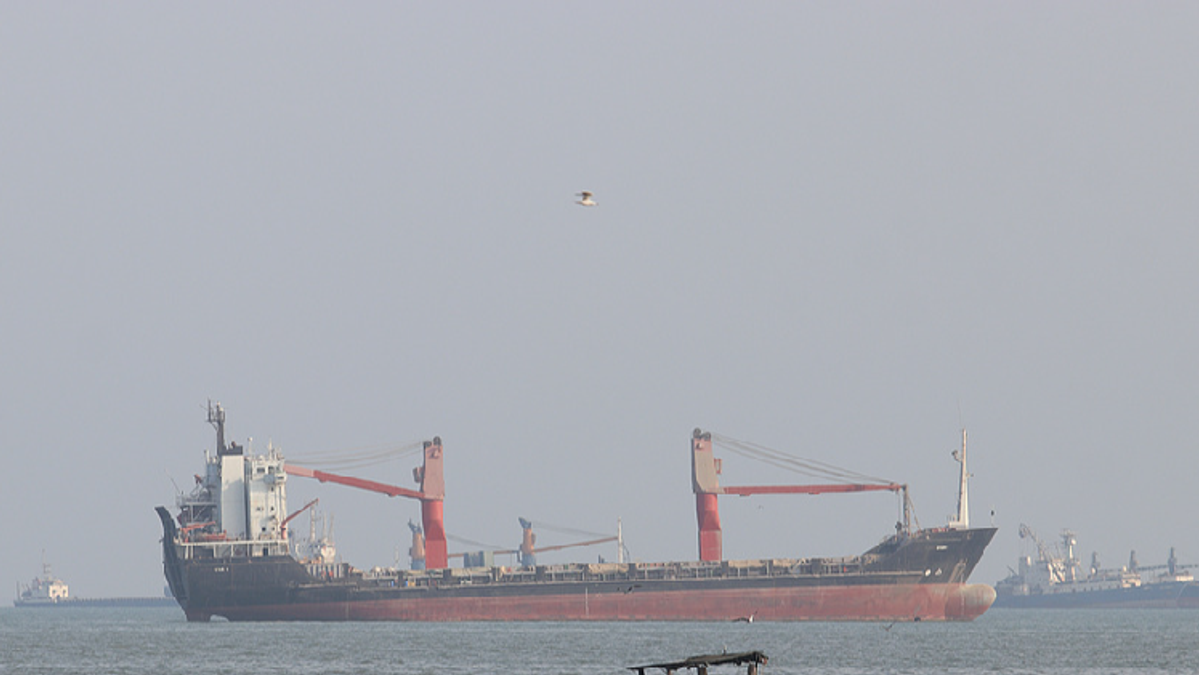
On 15 October 2026 the Houthi military spokesperson announced a "precise and direct" ballistic missile hit on King Khalid International Airport in Riyadh, followed by a large‑scale missile and drone raid on Aramco facilities in Dhahran and a refinery in Riyadh. Saudi‑led coalition forces reported intercepting a missile aimed at the capital, and later claimed to have downed a Houthi surface‑to‑air missile over Saada province. Simultaneously, the coalition said it had carried out more than 2,300 strikes on Houthi positions across Yemen, while the Red Cross warned of a surge in hospital casualties and the UN World Food Programme reported that aid to Taiz had been cut off for 600,000 people.
The renewed Houthi offensive cannot be read as a simple retaliation; it is a calculated move within a web of regional power calculations. First, the Houthis leverage missile strikes to force Saudi Arabia into a costly defensive posture, draining its air‑defence budget and exposing vulnerabilities in its critical energy infrastructure. By hitting high‑profile targets like an international airport and an oil giant, the group amplifies its political relevance both domestically and on the international stage, where media coverage can translate into diplomatic leverage.
Second, the Saudi‑led coalition faces a dilemma. On one hand, it must demonstrate that it can protect its territory and maintain the flow of oil that underpins the global energy market. On the other, each additional airstrike in Yemen inflates civilian casualties, erodes the coalition’s legitimacy, and fuels anti‑Saudi sentiment that the Houthis can exploit. The coalition’s reported 2,309 "precise" hits are framed to showcase effectiveness, yet the language masks the indiscriminate nature of many of those attacks on civilian infrastructure in Sanaa, Taiz, and other provinces.
Third, the United States and its allies are quietly watching the escalation because the Red Sea and the Strait of Hormuz remain chokepoints for global oil shipments. The US‑CentCom statement about destroying an Iranian‑affiliated vessel in the Gulf of Oman underscores a broader concern: any disruption in Saudi oil output reverberates through world markets, giving Washington a pretext to maintain a naval presence and justify further arms sales to the kingdom.
Finally, Iran’s role is both overt and covert. While Tehran denied involvement in the specific missile launches, the IRGC’s warning of a stronger response to any "renewed aggression" signals that Tehran may be supplying the Houthis with longer‑range missiles and surveillance capabilities. This creates a triangular deterrence structure: Saudi Arabia must guard against Houthi strikes, the United States must guard against Iranian escalation, and the Houthis gain a patron that can sustain their war effort.
The most immediate victims are Yemeni civilians who already endure a decade of war, famine, and disease. The UN‑WFP’s warning that 600,000 people in Taiz cannot receive food assistance illustrates how each new front line tightens the humanitarian squeeze. Hospitals, already operating at the brink, are overwhelmed by blast injuries and the indirect effects of disrupted supply chains. Aid workers report that even the delivery of basic medicines is delayed because coalition airstrikes have damaged roads and bridges.
In Saudi Arabia, the missile strike on Riyadh’s main airport triggered city‑wide aerial‑threat alerts, forcing thousands of commuters to evacuate terminals and disrupting domestic and international travel. Residents near the Aramco refinery in Dhahran reported hearing “deep, rumbling explosions” and seeing plumes of smoke that lingered for hours, raising concerns about air quality and long‑term health impacts. While the Saudi government emphasizes the successful interception of missiles, ordinary families are left coping with power outages, school closures, and the psychological toll of living under a constant threat of attack.
The attacks on oil infrastructure threaten global energy prices. Even a brief shutdown of a single refinery can push crude prices upward, increasing fuel costs for consumers worldwide. For low‑income households in both the Gulf and elsewhere, higher fuel prices translate into higher transportation costs, reduced purchasing power, and greater vulnerability to inflation.
Both conflict zones generate displacement. In Yemen, the fighting around Saada and Marib forces families to flee to already overcrowded camps in Aden and Abyan, where sanitation is poor and disease spreads easily. In Saudi Arabia, temporary shelters have been set up near the airport for workers whose housing was damaged, highlighting how infrastructure attacks reverberate beyond the immediate blast zone.
Saudi officials have framed the missile interceptions as evidence of a “robust defence system,” downplaying the fact that a ballistic missile still struck a major civilian hub. By focusing on the number of missiles shot down, the kingdom sidesteps questions about why its air‑defence network could not prevent a hit on a critical airport. This narrative also obscures the financial cost of maintaining and upgrading such systems, a burden ultimately borne by taxpayers.
Western media and diplomatic statements rarely address the suspected Iranian supply chain that enables the Houthis to launch long‑range missiles. By not naming Iran explicitly, the United States and its allies avoid escalating a broader regional confrontation, yet they also allow Tehran to continue its proxy strategy with limited accountability.
The coalition’s claim of “precise” strikes masks a pattern of targeting infrastructure that supplies civilians—water pumps, electricity substations, and market areas. By restricting humanitarian access to Taiz, the Saudi‑backed government forces create leverage over the Houthis, but the cost is borne by women, children, and the elderly who depend on aid for survival.
Both sides label their actions as retaliation, a rhetorical device that normalizes escalation. The Houthis present missile strikes as a justified response to coalition bombings, while the coalition portrays its air raids as necessary to neutralize “terrorist” positions. This reciprocal justification obscures the underlying strategic goal: each side seeks to compel the other to the negotiating table on terms favorable to its own political survival.
The next weeks will likely see a sharpening of three interlinked dynamics. First, monitor Saudi Arabia’s investment in longer‑range air‑defence systems; any procurement deals with the United States or European firms will signal an escalation in the arms race. Second, watch for shifts in Iranian rhetoric or covert logistics—satellite imagery of ports in Abu Musa and Al‑Mokha could reveal increased shipments of missile components to the Houthis. Third, track humanitarian corridors into Taiz and other besieged cities; any breakthrough or renewed blockage will directly affect the lives of hundreds of thousands and could become a flashpoint for international condemnation or renewed diplomatic pressure.
For ordinary citizens, the key indicator will be the frequency of aerial‑threat alerts on mobile apps and the continuity of oil prices at the pump. When those everyday signals change, they reveal the hidden calculus of power that drives the conflict.
---
The Houthis aim to pressure Saudi Arabia by threatening its most valuable economic asset—oil production. Striking refineries and pipelines raises global oil prices and forces the kingdom to allocate more resources to defence.
Air‑raid alerts, airport closures, and smoke from refinery attacks disrupt daily life, cause health concerns, and create economic uncertainty for workers and families living near the targeted sites.
Iran is believed to supply the Houthis with longer‑range missiles and surveillance equipment, enabling strikes deep inside Saudi territory while maintaining plausible deniability to avoid direct confrontation.
Source referenced: CGTN
This brief was synthesized by our Editorial Engine and reviewed by The Ground Narrative team.