TRENDING

Friday, 16 October 2026
----------------------
5 Jumada Al-Awwal 1448 AH
Students and professors at the University of Buenos Aires staged an occupation to protest President Javier Milei's austerity, exposing a clash between fiscal policy and free public education.
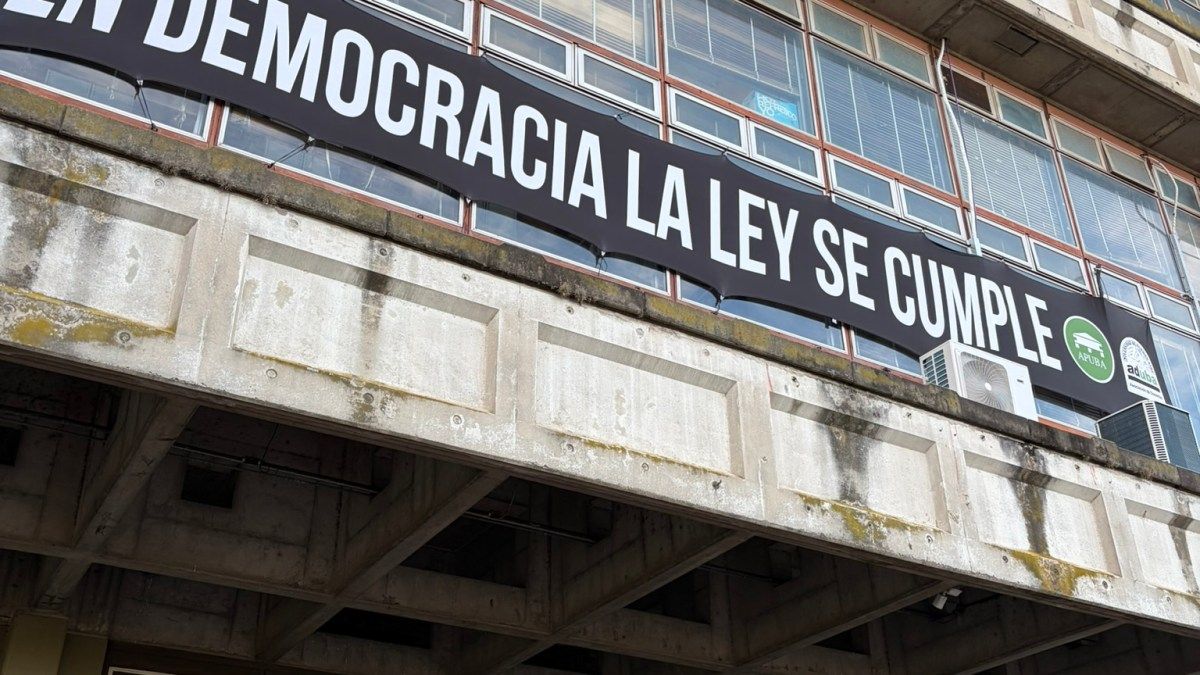
On 16 October 2026, students and faculty at the University of Buenos Aires (UBA) announced a one‑day occupation of the Exact and Natural Sciences building. Banners demanded the restoration of university salaries, scholarships and research funding that had been slashed under Javier Milei's austerity agenda. The protest quickly spread to the streets of Buenos Aires, where a general strike turned violent as police deployed tear gas and rubber bullets, leaving dozens injured and 25 detained.
Milei’s government has pursued one of the harshest fiscal tightening programs in Argentine history, aiming to curb chronic inflation that once hovered above 200 %. By cutting public sector wages, eliminating ministries and slashing subsidies, the administration hopes to attract foreign investment and unlock the country’s natural‑resource wealth. The narrative presented to markets is one of macro‑stability and rapid growth – a claim Milei reinforces with statements about “four‑times historical growth” during a Washington visit.
Argentina’s public university system is constitutionally guaranteed free education, a pillar of the nation’s social contract. When Congress passed a law to restore university funding and declared a disability emergency, Milei’s cabinet refused to allocate the necessary budget, arguing the legislature had not detailed financing. A federal judge now fines the state 100,000 pesos per day for non‑compliance, but enforcement remains weak, exposing a gap between judicial authority and executive will.
Milei’s base consists of libertarian‑leaning voters and business interests that benefit from deregulation and reduced labor costs. Maintaining this coalition requires visible austerity, even as public discontent rises. The administration therefore downplays dissent, framing protests as “political agitation” rather than legitimate grievances, and leverages security forces to signal that opposition will not derail the reform agenda.
Long‑time faculty like Maria Teresa de Jesus, earning roughly 700 pesos a month, struggle to meet basic needs. Salary erosion forces senior academics to abandon public institutions for private universities abroad, draining the public sector of expertise and mentorship. The loss of experienced teachers directly reduces the quality of undergraduate and graduate programs, jeopardizing Argentina’s long‑term human capital development.
Students such as physics major Emiliano Gato confront a dual crisis: tuition remains free, but scholarships fail to keep pace with inflation, and research labs operate without essential supplies. The prospect of a de‑valued degree diminishes social mobility for low‑income families, reinforcing entrenched inequality. Moreover, the threat of campus closures could push thousands into informal work, exposing them to precarious labor conditions.
Public universities in Argentina double as public hospitals, research centers and cultural hubs. Cuts to university budgets ripple outward, limiting access to affordable healthcare, stalling medical research, and reducing community outreach programs. Rural and marginalized neighborhoods, already underserved, feel the impact most acutely as state‑run services recede.
Official statements celebrate macro‑stability while omitting the massive social safety‑net erosion required to fund the cuts. The administration’s claim of “growth” relies heavily on projected revenues from oil and mining concessions, yet the timeline for these projects is uncertain and subject to environmental litigation. By foregrounding future resource windfalls, the government sidesteps the immediate budget shortfall that forces cuts to education and welfare.
Foreign capital has begun to flow into Argentine energy projects, attracted by Milei’s market‑friendly rhetoric. However, diplomatic cables reveal that many investors are wary of social unrest, which could jeopardize project timelines. This tension is rarely mentioned in public speeches, which instead portray a seamless partnership between the state and global capital.
State‑aligned media outlets emphasize the “necessity” of austerity, portraying protests as disruptive fringe movements. Independent journalists, meanwhile, struggle to secure airtime for in‑depth analysis of how university funding cuts affect long‑term productivity. The narrative gap leaves many citizens unaware of the structural link between education funding and future wage growth.
The next legislative session will test whether Congress can force the executive to honor the university‑funding law despite Milei’s fiscal objections. Watch for any amendment that ties resource‑revenue allocations to social spending, a potential compromise that could reshape the reform trajectory. Additionally, monitor the response of international lenders and investors; a sudden withdrawal of capital could force the government to recalibrate its austerity calculus, bringing education back onto the agenda. Finally, keep an eye on the spread of campus occupations to other public universities, as a coordinated student movement could pressure the administration into policy concessions before the upcoming mid‑term elections.
Students say cuts to university salaries, scholarships and research funding threaten free higher education and force professors to leave for private jobs, undermining the quality and accessibility of public universities.
Legal fines for not implementing the university‑funding law, mounting public unrest, and potential pull‑back by foreign investors worried about social instability could pressure the administration to adjust its fiscal strategy.
Source referenced: ALJAZEERA
This brief was synthesized by our Editorial Engine and reviewed by The Ground Narrative team.