TRENDING

Friday, 16 October 2026
----------------------
5 Jumada Al-Awwal 1448 AH
Adidas says Chinese rivals sharpen its edge, but the rivalry rewrites supply chains and labor realities in China. The clash reveals who gains, who loses, and what power players prefer to hide.

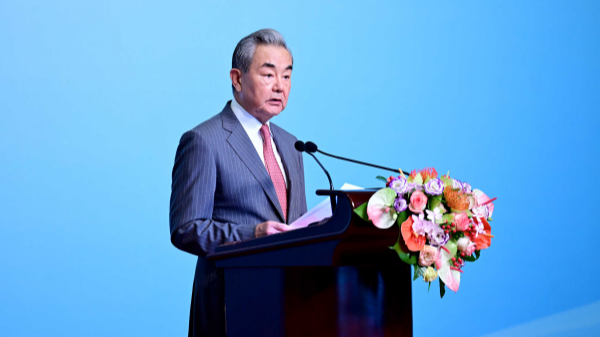
Adidas' global chief executive Bjørn Gulden told a Shanghai audience that fierce competition from home‑grown Chinese sportswear firms is pushing the German giant to innovate faster. The statement, recorded by CGTN on 15 October 2026, frames the rivalry as a catalyst for better design, localised supply chains and a “In China, For China” strategy that embeds Adidas deeper into the country’s manufacturing and creative ecosystems. While the comment sounds like corporate optimism, it signals a strategic pivot: Adidas is no longer merely exporting a European playbook, it is co‑creating with Chinese partners and confronting brands that have already captured large swaths of the domestic market.
- Strategic localisation – Adidas has shifted from a hub‑and‑spoke model, where design sits in Europe and production abroad, to a hybrid where Chinese designers, marketers and factories sit at the core of product development. This reduces lead times, cuts tariff exposure and lets the brand respond to local taste trends that Chinese rivals, such as Anta and Li‑Ning, have mastered for years.
- Economic incentives – The German government, still keen on preserving high‑value manufacturing jobs at home, offers tax breaks for firms that keep R&D in Europe while outsourcing only labour‑intensive steps. Adidas leverages these incentives to justify a split supply chain that keeps premium tech in Germany but moves volume production to China, where wages remain lower and the labour pool is abundant.
- Political survival – Both China and Germany face domestic pressure to protect jobs. In Beijing, the state‑run Ministry of Commerce promotes “dual circulation,” encouraging foreign firms to integrate locally and share technology. In Berlin, opposition parties accuse multinational CEOs of abandoning German workers. By publicly praising Chinese competition, Gulden signals to both capitals that Adidas is a cooperative partner rather than a hostile extractor.
- Alliance math – The sportswear sector is increasingly a contest of ecosystems. Chinese brands benefit from state‑backed financing, preferential distribution through mega‑retail chains, and a patriotic consumer base that favours domestically‑made products. Adidas counters by leveraging its global brand equity, sponsorships with elite athletes, and a digital ecosystem that can be localised through Chinese e‑commerce platforms like Tmall and JD.com.
- Market share calculus – China now accounts for roughly 30 % of Adidas' total revenue. Losing ground there would dent the company's growth targets for the next fiscal year. The competition therefore forces Adidas to invest in joint‑venture factories, co‑branded collections, and even localised sustainability initiatives that appeal to Chinese millennials.
Chinese assembly workers, many of whom are migrant labourers from poorer provinces, face intensified production quotas as Adidas ramps up output to match rivals. Shifts are lengthened, overtime becomes the norm, and safety inspections are often rushed to meet launch dates for limited‑edition drops tied to Chinese festivals.
Small‑scale component makers in Zhejiang and Guangdong, who previously supplied a handful of foreign brands, now compete for contracts with both Adidas and domestic giants. The race to offer the lowest price drives many to cut corners on material quality and worker protections, creating a cascade of hidden labor violations.
German shareholders see short‑term profit promises, but the volatility of Chinese consumer sentiment—shaped by nationalistic campaigns and sudden regulatory crackdowns—means that a misstep can erode market value quickly. When a Chinese brand is accused of copying a Western design, the ensuing media storm can spill over to foreign competitors, affecting stock prices.
Urban redevelopment projects linked to new Adidas‑branded retail districts displace long‑standing neighbourhoods in Shanghai and Guangzhou. Residents receive compensation, but the loss of affordable housing and local businesses fuels social tension, especially as the new stores cater to higher‑spending tourists.
- Labor standards under‑reported – Official statements highlight “fair wages” and “safe conditions,” yet independent audits reveal that many Adidas‑linked factories still fall short of International Labour Organization benchmarks. The company’s public reporting aggregates data across dozens of sites, obscuring hotspots where violations concentrate.
- State subsidies hidden – Chinese provincial governments often provide subsidies for foreign firms that create jobs, but the amounts and conditions are rarely disclosed. These incentives can distort competition, giving Adidas an edge that is not reflected in its public cost‑structure explanations.
- Intellectual property (IP) gray zones – While Adidas claims that competition forces it to innovate, the rapid copying of sneaker silhouettes by Chinese brands is a two‑way street. The company’s legal teams file lawsuits abroad, but domestic courts in China are less likely to enforce foreign IP claims, a fact that is downplayed in corporate messaging.
- Environmental externalities – The push for faster production cycles increases water usage and chemical waste in textile factories. Adidas touts its sustainability pledges, yet the localized supply chain means that most of the environmental impact stays within Chinese river basins, a detail omitted from global sustainability reports.
- Consumer sentiment manipulation – Influencer campaigns in China often feature paid endorsements that blur the line between genuine enthusiasm and corporate marketing. The scale of these campaigns is rarely disclosed, masking the extent to which brand perception is engineered rather than organically earned.
- Regulatory shifts – Beijing’s upcoming “Consumer Protection and Fair Competition” guidelines could tighten rules on foreign brand advertising and force greater transparency on subsidies. Watch for any language that targets joint‑venture models.
- Supply‑chain diversification – If trade tensions between the United States and China flare, Adidas may accelerate moves to shift parts of its production to Southeast Asia, altering the balance of power among regional manufacturers.
- Consumer backlash – Growing awareness of labour and environmental issues among Chinese millennials could translate into boycotts or demand for higher‑priced, ethically‑certified products, pressuring Adidas to prove its commitments beyond PR statements.
- Technology transfer disputes – Ongoing negotiations over 5G and AI‑driven design tools may force Adidas to share proprietary data with Chinese partners, raising concerns about long‑term competitive advantage.
- Shareholder activism – European investors are increasingly filing resolutions on ESG (environmental, social, governance) performance. The outcome of upcoming AGM votes could compel Adidas to disclose more granular data on its Chinese operations.
Staying alert to these dynamics will reveal whether the competition narrative remains a win‑win story for Adidas and its Chinese rivals, or whether hidden costs begin to outweigh the touted benefits.
Adidas is embedding designers, creatives and supply‑chain functions locally, creating joint‑venture factories and co‑branding with Chinese partners to respond faster to domestic trends and compete with home‑grown brands.
Workers face longer shifts, higher overtime, and weaker safety oversight as Adidas ramps up production to match rivals, while small suppliers cut costs, often compromising labor standards.
Yes, upcoming fair‑competition and consumer‑protection rules may require greater transparency on subsidies and joint‑venture structures, potentially limiting the flexibility Adidas currently enjoys.
Editor's Note: Analysis based on publicly available statements and industry reports; some proprietary data on subsidies and labor audits remain limited.
Source referenced: CGTN
This brief was synthesized by our Editorial Engine and reviewed by The Ground Narrative team.