TRENDING

Thursday, 15 October 2026
----------------------
4 Jumada Al-Awwal 1448 AH
Massive wildfires are engulfing Brazil's Amazonas state, forcing residents to breathe dangerous smoke and raising alarms about deliberate criminal activity. This crisis reveals deep-seated power struggles over land, resources, and the global economy.
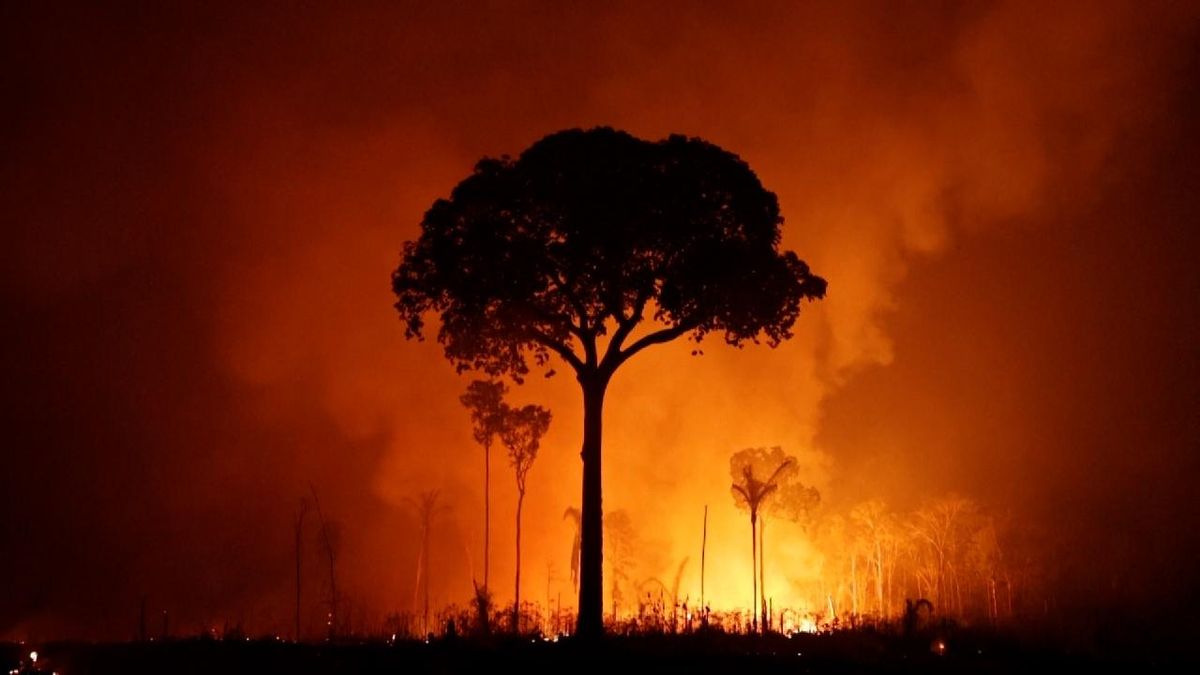
Wildfires are once again consuming vast tracts of the Brazilian Amazon, specifically within Amazonas state. As of mid-October 2026, authorities have registered a staggering 1,558 hotspots in the region, triggering widespread alarm. The fires have blanketed residential areas in dangerous, unhealthy smoke, directly threatening the health and livelihoods of countless citizens. Brazilian authorities have openly voiced concerns that a significant portion of these blazes are not natural occurrences but rather the result of deliberate criminal actions aimed at clearing land.
The recurring infernos in the Amazon are not mere natural disasters; they are a direct consequence of deeply entrenched power dynamics, economic incentives, and political choices. At the core of this destruction lies the relentless pursuit of profit driven by global demand for specific commodities.
The primary driver of deforestation and subsequent fires in Brazil is the expansion of the agricultural frontier. Vast swathes of rainforest are cleared to make way for cattle ranching and soy cultivation. Powerful agribusiness lobbies exert immense influence on national policy, often pushing for relaxed environmental regulations and increased land-use flexibility. This creates a permissive environment where illegal land grabbers and loggers operate with relative impunity, knowing that the economic benefits often outweigh the risks of legal repercussions. The global market for beef and soy, particularly from countries like China, the European Union, and the United States, fuels this expansion, creating a direct link between international consumption patterns and the destruction of the rainforest.
For many Brazilian politicians, particularly at the state and federal levels, balancing environmental protection with economic growth is a perpetual tightrope walk. Governments often face pressure from powerful ruralist blocs who advocate for policies that prioritize agricultural expansion, resource extraction, and infrastructure projects over conservation. Promises of jobs and economic development in impoverished regions are potent political tools, even if they come at the cost of long-term environmental degradation. Enforcement agencies like IBAMA (Brazilian Institute of Environment and Renewable Natural Resources) and ICMBio (Chico Mendes Institute for Biodiversity Conservation) are frequently underfunded, understaffed, and subject to political interference, further weakening the state's ability to protect the forest.
Ambiguous land ownership and the historical lack of clear land titles in the Amazon create a chaotic environment ripe for exploitation. This uncertainty allows individuals and groups to illegally occupy and clear land, often using fire as the cheapest and quickest method. Once cleared, claims are made, often with the hope of future legalization. Simultaneously, illegal gold mining operations continue to proliferate, particularly in indigenous territories. These operations not only cause direct habitat destruction and mercury contamination but also often rely on cleared areas and create conditions that increase fire risk, further exacerbating the problem.
While human actions ignite most fires, the changing global climate acts as a powerful accelerant. Prolonged dry seasons, higher temperatures, and shifts in rainfall patterns, partly driven by the Amazon's own deforestation, make the forest more susceptible to burning. This creates a dangerous feedback loop: deforestation reduces the forest's ability to generate its own rain, leading to drier conditions, which in turn makes it easier for fires to spread, further intensifying deforestation. This cycle threatens to push parts of the Amazon past a critical tipping point, transforming rainforest into savanna.
The fires in the Amazon are not just an ecological catastrophe; they are a profound human tragedy, disproportionately impacting the most vulnerable populations and exacting a heavy toll on the planet's collective future.
Indigenous communities are the primary custodians of the Amazon, possessing invaluable traditional knowledge for its preservation. Their lands, often legally recognized, act as crucial barriers against deforestation. However, these communities are on the front lines, bearing the brunt of the fires. Their homes, sacred sites, and traditional food sources are destroyed. The smoke causes severe respiratory illnesses, particularly among children and the elderly. Beyond the immediate physical threats, the loss of their ancestral lands represents an existential crisis, eroding their cultural identity and way of life. They are often targeted by land grabbers and illegal miners, facing intimidation, violence, and even assassination for defending their territories.
For the millions of Brazilians living in towns and cities bordering the Amazon, the fires translate into a public health emergency. The dense, toxic smoke blankets urban centers, leading to a dramatic increase in respiratory problems, eye irritations, and cardiovascular issues. Hospitals become overwhelmed, and daily life is disrupted. Farmers lose crops, and local economies dependent on sustainable forest products or nascent eco-tourism suffer significant setbacks. The long-term health consequences of prolonged exposure to wildfire smoke are still being understood but are likely to be severe, creating a lasting burden on public health systems.
The Amazon is often called the 'lungs of the world' due to its immense capacity to absorb carbon dioxide and produce oxygen. When it burns, this carbon is released back into the atmosphere, accelerating global climate change. This contributes to more extreme weather events worldwide, from intense heatwaves to devastating floods and prolonged droughts, impacting populations far beyond Brazil's borders. Furthermore, the Amazon is one of the most biodiverse regions on Earth, home to millions of species, many yet undiscovered. Each fire extinguishes countless species, representing an irreversible loss to global biodiversity and potentially depriving humanity of future medicines, food sources, and ecological resilience.
While official statements often focus on immediate firefighting efforts or the
Source referenced: CGTN
This brief was synthesized by our Editorial Engine and reviewed by The Ground Narrative team.