TRENDING

Thursday, 15 October 2026
----------------------
4 Jumada Al-Awwal 1448 AH
Madrid has openly refused President Donald Trump's calls for higher defense spending and the use of Spanish bases in a potential Iran conflict. The stance pits strategic autonomy against U.S. pressure as Spain heads toward a crucial election.
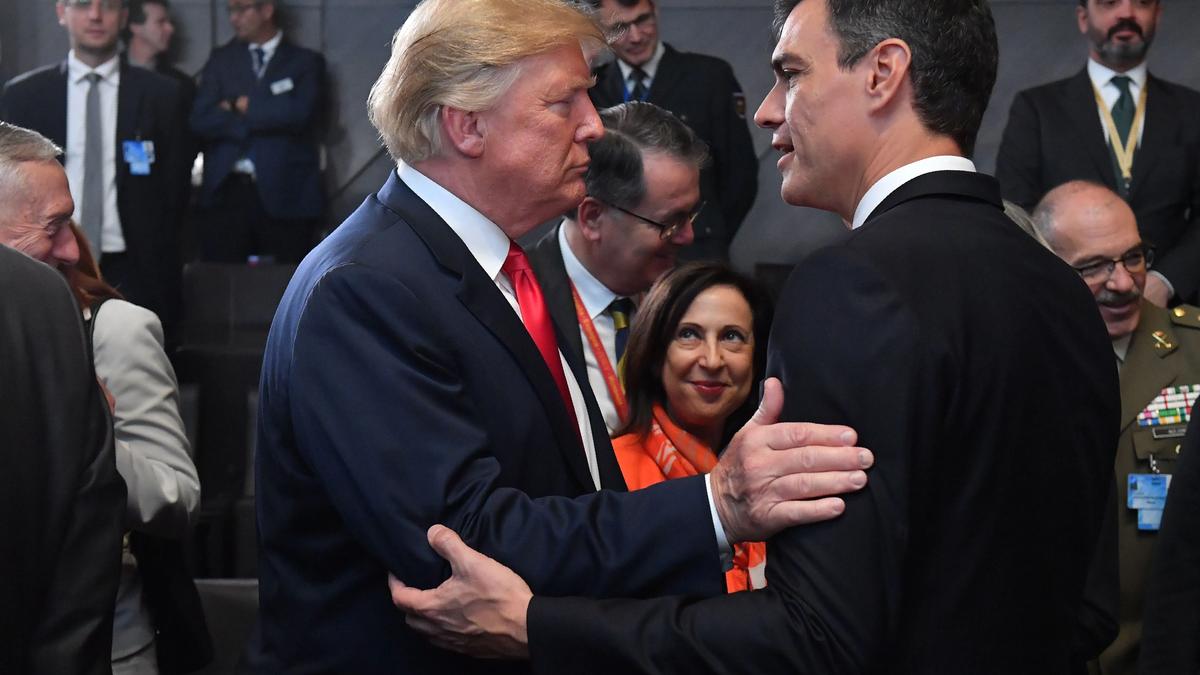
In the summer of 2026, President Donald Trump publicly labeled Spain a "wasted cause" and threatened trade penalties unless Madrid increased its NATO defense budget to 5 % of GDP and allowed U.S. forces to operate from its bases against Iran. Prime Minister Pedro Sánchez and Foreign Minister José Manuel Albares responded by reaffirming Spain’s commitment to NATO, but refusing the specific spending target and the base request. The disagreement has been aired in multiple diplomatic channels and media interviews, highlighting a rare public rift between a major European ally and the United States.
The Sánchez government heads into a November election where its progressive platform—centered on social welfare, climate action, and a rules‑based international order—faces a right‑wing surge across Europe. By openly challenging Trump, Sánchez signals to his base that Spain will not be a pawn in a U.S.‑driven militarism narrative. This stance consolidates left‑leaning voters who view NATO spending hikes as a diversion from pressing domestic needs such as unemployment benefits and renewable energy subsidies.
Despite the diplomatic spat, Spain runs a trade surplus with the United States, largely driven by imports of American liquefied natural gas (LNG) and robust tourism flows. Spanish investors hold significant stakes in U.S. tech and real‑estate markets, while American firms own key Spanish infrastructure assets. The economic calculus therefore tolerates a degree of political friction; the immediate cost of a trade war would be felt more acutely in sectors like agriculture and automotive exports than in the abstract of defense spending.
NATO’s 5 % target is a political benchmark rather than a uniform capability requirement. Albares argues that Spain already meets its operational commitments: 2 % of GDP, 3,000 troops deployed across the Baltic and Eastern European fronts, command of the NATO mission in Iraq, and regular contributions of naval and air assets. By framing the debate around “capabilities, not percentages,” Madrid sidesteps the raw fiscal number while maintaining its strategic relevance within the alliance.
President Trump seeks to leverage European bases for a potential strike campaign against Iran, aiming to pressure Tehran over its nuclear program and regional proxies. Spanish soil offers a geographically optimal launch point for carrier‑based aircraft and logistical support. Denying access forces the United States to rely on bases in the United Kingdom, Italy, and the Gulf, raising operational costs and complicating coalition coordination.
While many EU members have quietly acquiesced to U.S. pressure, Spain stands out for its vocal opposition. This creates a subtle diplomatic lever for Brussels, which can cite Madrid’s principled stance when negotiating the EU’s own defense fund and its relationship with the United States. The EU’s desire to avoid a fragmented trans‑Atlantic front gives Madrid a modest bargaining chip, even as it risks alienating the U.S.‑centric security architecture.
Redirecting a larger slice of the national budget to defense would inevitably cut funding for health, education, and the green transition—areas that the Sánchez administration has pledged to expand. Rural hospitals, public school upgrades, and subsidies for solar installations are all vulnerable to a sudden 3 % budget shift. For ordinary Spaniards, the trade‑off translates into longer wait times for medical care and higher energy costs.
Spain’s current deployment of 3,000 troops abroad strains families who must cope with prolonged separations. An increase in defense spending could expand the force, potentially leading to more deployments and heightened risk for service members. Conversely, maintaining the status quo means limited modernization of equipment, exposing troops to outdated technology in high‑intensity scenarios.
Spain’s liberal immigration stance—accepting asylum seekers from Africa and the Middle East—has become a political flashpoint. Trump’s rhetoric links defense spending to border security, implying that a stronger NATO posture would enable stricter migration controls. If Madrid were to capitulate, it could face pressure to tighten asylum policies, directly affecting vulnerable populations seeking safety in European ports.
The country’s reliance on imported U.S. LNG helps diversify its energy mix, but a pivot toward higher defense outlays could delay investments in renewable infrastructure. Spain’s 2030 climate targets risk slipping, potentially increasing electricity prices for households and undermining the EU’s broader decarbonization agenda.
President Trump is leveraging foreign policy to rally his base ahead of the 2028 election, portraying any ally that refuses his demands as “weak” or “unreliable.” The public threats to cut trade are less about actual economic loss—given Spain’s surplus—and more about signaling to American voters that the administration is tough on foreign partners.
While the European Commission publicly supports a united front, internal documents reveal concern that Spain’s defiance could embolden other member states to resist U.S. pressure. The EU’s own defense fund, the European Defence Action Plan, is quietly being re‑scaled to reduce reliance on NATO’s burden‑sharing metrics, a shift that Madrid’s stance indirectly accelerates.
Spain’s domestic arms manufacturers—such as Navantia and Indra—have struggled to secure large‑scale contracts compared with German or French rivals. A forced 5 % spending increase would likely channel funds into foreign‑made systems, marginalizing local firms and leading to job losses in shipyards and aerospace plants.
Spanish state media often emphasizes the moral high ground of upholding international law, while U.S. outlets portray Madrid as an obstacle to “global security.” This divergent framing shapes public opinion: in Spain, the narrative reinforces a progressive identity; in the United States, it fuels a perception of European unreliability, which can justify further diplomatic pressure.
- Election outcomes: The November vote will reveal whether Spanish voters reward the government’s principled stance or punish it for perceived diplomatic friction.
- U.S. policy shifts: Any softening of Trump’s rhetoric—perhaps due to domestic economic concerns—could open a window for renewed negotiations on base access.
- EU defense financing: Progress on the European Defence Action Plan will indicate whether the bloc can reduce its dependence on NATO’s spending targets, indirectly supporting Spain’s position.
- Energy market movements: Fluctuations in U.S. LNG prices and Spain’s renewable rollout will affect the cost‑benefit calculus of allocating funds to defense versus green infrastructure.
- NATO summit dynamics: The next NATO leaders’ meeting will test whether Spain’s capability‑based argument gains traction among allies, potentially reshaping the alliance’s burden‑sharing narrative.
By tracking these threads, readers can gauge how a small European power leverages diplomatic independence against a superpower’s transactional demands, and what that means for ordinary citizens caught in the cross‑currents of global power politics.
Spain argues it already meets NATO’s capability requirements with 2% of GDP and substantial troop deployments, preferring to allocate funds to social programs and renewable energy rather than a raw percentage target.
It would give the United States a strategic launch point in the Mediterranean, potentially increasing Spain’s security relevance but also drawing the country deeper into Middle‑East conflicts and exposing it to retaliatory threats.
Maintaining current defense spending protects public budgets for health, education, and climate projects, while a forced increase could raise taxes or cut services that directly impact daily life.
Editor's Note: Analysis based on publicly available statements and standard geopolitical frameworks; specific internal budget numbers are not disclosed.
Source referenced: FOREIGNPOLICY
This brief was synthesized by our Editorial Engine and reviewed by The Ground Narrative team.


