TRENDING

Thursday, 15 October 2026
----------------------
4 Jumada Al-Awwal 1448 AH
A decade after the horrific Baniyas mass killings, Syrian authorities have arrested a primary suspect. This development, occurring in a post-Assad Syria, raises profound questions about accountability and the nation's future.
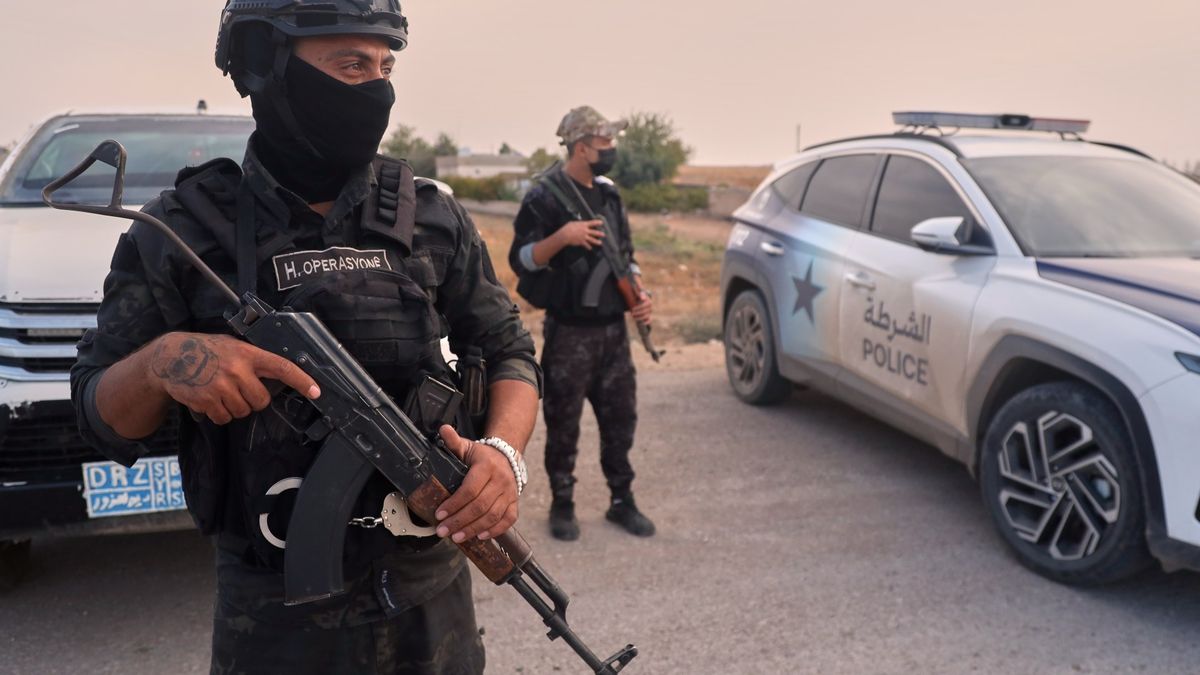
Syrian authorities have announced the arrest of Ali Kayali, also known by his alias Mihrac Ural, a key suspect in the brutal mass killings that occurred in the coastal city of Baniyas and the nearby village of Bayda in 2013. According to state news agency SANA, intelligence officials apprehended Kayali as he attempted to cross the border. At the time of the massacres, Kayali was reportedly a leader of an armed group explicitly loyal to then-President Bashar al-Assad. This arrest comes in a significantly altered political landscape, as the raw intelligence notes that Bashar al-Assad himself was toppled in December 2024, signaling a new, albeit undefined, era for Syria.
The arrest of a high-profile figure like Ali Kayali in a post-Assad Syria is not merely a legal action; it is a profound political statement, a carefully orchestrated move within a new matrix of power. For the new Syrian authorities, this action serves multiple critical purposes, all aimed at consolidating their legitimacy and control after the seismic shift of Assad's fall.
First, it is a potent signal of a break from the past. By apprehending a figure directly implicated in the atrocities committed under the previous regime, the current authorities aim to demonstrate a commitment to accountability and justice that was conspicuously absent for over a decade. This move is designed to resonate with the Syrian populace, many of whom suffered immensely from the impunity enjoyed by pro-regime militias and security forces during the civil war. Offering even a semblance of justice for past crimes can be a powerful tool for winning public trust and establishing a new social contract.
Second, the arrest functions as a form of internal power consolidation. Kayali, as a leader of an armed group loyal to the former president, likely commanded a network of loyalists and possessed significant influence within certain segments of the former regime's security apparatus. His arrest could be a strategic move to dismantle these residual networks, preventing any potential counter-movements or challenges to the new order. It sends a clear message to other former loyalists that their past allegiances offer no protection under the new administration, forcing them to either align or face similar consequences.
Third, there is an undeniable international dimension. The new Syrian authorities are operating in a country devastated by war, desperately in need of reconstruction aid and international recognition. Prosecuting individuals accused of war crimes, particularly those linked to the previous regime, could be an attempt to improve Syria's standing on the global stage. It might be seen as a gesture towards compliance with international humanitarian law and a prerequisite for unlocking much-needed financial and political support from international bodies and states that have long shunned Assad's government. This move could potentially soften the stance of nations that previously imposed sanctions or refused engagement.
Finally, the timing and circumstances of the arrest—as Kayali attempted to cross the border—suggest a calculated operation. It implies that the new authorities possess robust intelligence capabilities and are actively pursuing individuals deemed threats or liabilities. It also raises questions about potential external influence. Given the complex web of foreign actors involved in the Syrian conflict—including Russia, Iran, Turkey, and various Gulf States—it is highly probable that the new Syrian administration is not acting in a vacuum. The decision to arrest Kayali might have been tacitly approved, or even encouraged, by one or more of these external powers, each with their own strategic interests in shaping the post-Assad landscape. For instance, Turkey has long viewed Mihrac Ural as a terrorist due to his alleged ties to a left-wing group and his role in the 2013 massacres, making his capture potentially beneficial to Turkish interests in the region, particularly if he was attempting to flee towards their border.
The arrest of Ali Kayali brings a flicker of hope for justice, but it cannot erase the immense human cost borne by the Syrian people, particularly the victims of the Baniyas and Bayda massacres. For over a decade, the families of those killed have lived with unaddressed grief, trauma, and the agonizing weight of impunity. This arrest, while significant, underscores the profound and lasting scars left by the conflict.
In May 2013, the towns of Baniyas and Bayda witnessed horrific mass killings, primarily targeting Sunni civilians, allegedly in retaliation for rebel activity. Reports from human rights organizations at the time detailed summary executions, burnings, and the slaughter of entire families, including women and children. The exact death toll remains disputed, but estimates range into the hundreds. For the survivors, and the relatives of those murdered, the intervening years have been a living nightmare, characterized by fear, displacement, and a crushing sense that justice would never be served. The arrest of Kayali offers a belated acknowledgment of their suffering, but the wounds run deep, and the psychological toll of such atrocities is generational.
Beyond Baniyas, the entire Syrian population has endured a conflict marked by widespread human rights abuses, war crimes, and crimes against humanity committed by all sides. The culture of impunity that flourished under the Assad regime, where loyalist militias and security forces operated with little fear of reprisal, eroded trust in any form of governance or justice. Millions have been displaced, either internally or as refugees in neighboring countries and beyond. For these displaced populations, the news of an arrest like Kayali's can be a double-edged sword: a glimmer of hope for a safer future, but also a stark reminder of the violence that forced them from their homes. The long-term human cost includes not only the physical destruction of the country but also the fragmentation of its social fabric, the widespread trauma, and the challenge of rebuilding a society based on rule of law and respect for human rights.
While Kayali's arrest is a step towards accountability, it is just one step in a conflict that has seen countless perpetrators. The human cost also lies in the continued suffering of those who have yet to see justice for their own losses, and the cynicism that can breed when justice is perceived as selective or politically motivated. The true human cost will only begin to be addressed when a comprehensive, impartial, and transparent process of transitional justice is established, capable of addressing the full spectrum of crimes committed and offering reparations and reconciliation to all victims.
The arrest of Ali Kayali is a significant development, yet the official narrative, however sparse, inevitably omits crucial context and raises more questions than it answers. The most glaring
Source referenced: ALJAZEERA
This brief was synthesized by our Editorial Engine and reviewed by The Ground Narrative team.


