TRENDING

Thursday, 15 October 2026
----------------------
4 Jumada Al-Awwal 1448 AH
China’s aggressive push into biomanufacturing is reshaping global supply chains, while the United States scrambles to match the pace. A coordinated Western response could determine who controls the next wave of industrial power.
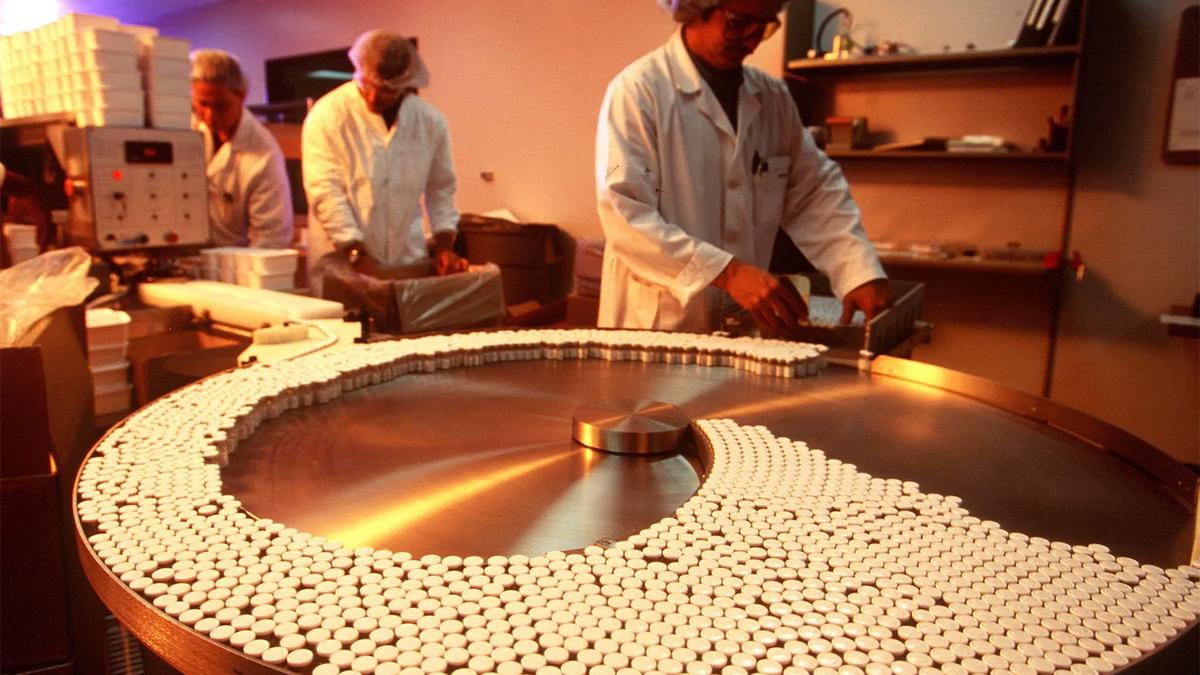
In the past two years, Chinese firms have begun mass‑producing a range of bio‑based chemicals that were once the domain of Western chemical giants. The most visible case is glufosinate, a herbicide whose price collapsed by roughly 75% after Chinese capacity flooded the market in 2022‑23. At the same time, the United States launched a National Biotechnology and Biomanufacturing Initiative, pledging over a billion dollars to jump‑start domestic capacity, while China reported a $4 billion investment in the sector in 2024. The clash is not limited to herbicides; it extends to bio‑derived plastics, vaccine platforms, and even cement‑like materials, signaling a broader shift toward biomanufacturing as the backbone of future industrial output.
Beijing has woven biomanufacturing into its five‑year plan as a “future industry” and a “core technology.” Decades of directed credit, tax incentives, and streamlined regulatory pathways have allowed Chinese biotech firms to scale quickly, often with direct state ownership or backing. In contrast, Washington’s approach is fragmented across the Department of Commerce, the Department of Defense, and a patchwork of congressional bills. While the Biden administration earmarked funds for pilot plants, the lack of a single coordinating agency dilutes impact.
The Pentagon, the largest public patron of U.S. biomanufacturing, has poured roughly $1 billion into projects since 2020—pennies compared with China’s $4 billion in 2024. This disparity matters because bio‑based production can underpin everything from battlefield medical supplies to resilient food chains. Control over the supply of key inputs like bio‑fertilizers translates into geopolitical leverage, especially in regions where agriculture is a security concern.
Western firms still rely heavily on European and Asian equipment makers for reactors, consumables, and automation. The United States’ dependence on German, Japanese, South Korean, and Swiss suppliers creates a paradox: it needs to import the very tools that could help it out‑compete China, yet those same partners risk being drawn into Beijing’s standards‑setting initiatives if the West does not act collectively.
Inspired by the AI‑focused “Pax Silica,” policymakers propose a coordinated Western framework—Pax Biologica—to harmonize standards, pool investment, and create joint research hubs. The idea is to lock in a rule‑making regime that favors Western patents and safety protocols, thereby limiting Beijing’s ability to dictate global norms.
When Chinese bio‑herbicides undercut prices, farmers in the United States and Europe faced a sudden loss of revenue. Small‑scale growers, already squeezed by volatile commodity markets, found their margins evaporate, forcing many to sell land or shift to less profitable crops.
The collapse of BASF’s European plants led to hundreds of layoffs, eroding middle‑class jobs in regions that depend on chemical manufacturing. In the United States, the slow rollout of domestic biomanufacturing facilities means fewer opportunities for skilled technicians and engineers, perpetuating a talent drain to Asia.
Biomanufacturing is central to vaccine production and therapeutic proteins. A supply chain dominated by a single geopolitical actor raises concerns about access during pandemics, especially for low‑income countries that may be forced to accept terms set by Beijing.
Chinese state reports frame the export of biomanufacturing standards as “global public goods,” downplaying the strategic intent to embed Chinese technical specifications into international norms. Western regulators, meanwhile, often present their own standards as purely safety‑driven, obscuring the competitive advantage they confer.
Major agro‑chemical conglomerates in Europe have quietly lobbied for looser bio‑product regulations, hoping to regain market share lost to cheaper Chinese imports. Their public statements emphasize “consumer choice,” while the underlying motive is to protect profit margins.
U.S. media coverage frequently celebrates the “innovation” narrative of biotech startups without acknowledging the heavy reliance on foreign equipment and the geopolitical risks of a supply chain that can be severed by export controls.
The next twelve months will reveal whether the Pax Biologica concept gains traction among the EU, Japan, South Korea, and the United Kingdom. Watch for joint funding announcements, cross‑border standard‑setting workshops, and any movement toward a dedicated Western biomanufacturing agency. Equally critical will be China’s response—whether it accelerates its own standards‑export campaign or seeks bilateral deals to lock in markets before a Western coalition solidifies. Finally, monitor the price trajectories of bio‑based inputs in agriculture and the rollout of pilot biomanufacturing plants in the United States; these will be early indicators of who is securing the industrial high ground.
Biomanufacturing turns living organisms into chemicals, medicines, and materials, offering resource efficiency and supply‑chain resilience. Control over the technology lets a country secure essential inputs for health, agriculture, and defense.
Pax Biologica is a suggested Western alliance to harmonize biomanufacturing standards, pool investment, and coordinate research, mirroring the AI‑focused Pax Silica initiative.
Cheaper Chinese bio‑herbicides have driven down prices, cutting revenue for farmers who rely on higher‑priced domestic products, leading some to abandon crops or sell land.
Source referenced: FOREIGNPOLICY
This brief was synthesized by our Editorial Engine and reviewed by The Ground Narrative team.