TRENDING

Thursday, 15 October 2026
----------------------
4 Jumada Al-Awwal 1448 AH
A tragic alleged murder in Okinawa by a US Marine has forced Japan and the United States into high-level consultations over the conduct of US troops. The incident has reignited long-standing calls for a fundamental review of the Status of Forces Agreement (SOFA), exposing the deep fissures in the critical bilateral alliance.
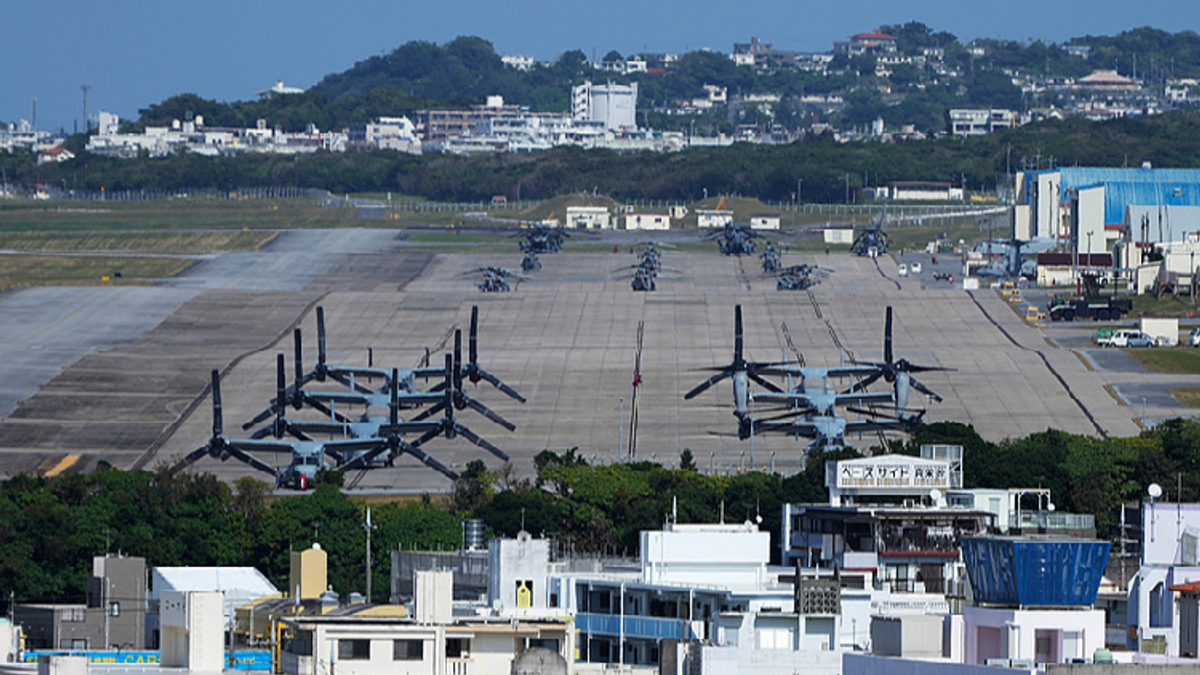
Japanese Prime Minister Sanae Takaichi recently announced that Japan and the United States have initiated senior working-level consultations aimed at tightening the rules of conduct for US troops stationed in Japan. This diplomatic move comes in the wake of the alleged murder of a 39-year-old local woman in Naha, the capital of Okinawa, for which a 20-year-old US Marine from Marine Corps Air Station Futenma was arrested. The incident has swiftly amplified calls from the Okinawa prefectural government for a comprehensive review of the Japan-US Status of Forces Agreement (SOFA), a pact that has long been a source of contention due to its perceived imbalance regarding legal jurisdiction over US service members.
At the heart of this recurring crisis lies the intricate web of power dynamics that underpins the Japan-US alliance. For the United States, its extensive military presence in Japan, particularly in Okinawa, is a cornerstone of its Indo-Pacific strategy. These bases serve as forward operating platforms, enabling rapid power projection, intelligence gathering, and deterrence against perceived threats from China and North Korea. The SOFA, signed in 1960, is designed to facilitate this strategic imperative by granting US forces a degree of legal autonomy, which Washington views as essential for maintaining troop morale and operational freedom. Any fundamental revision to the SOFA is seen by the Pentagon as potentially setting a precedent that could complicate its global network of alliances and bases.
Japan's central government, led by Prime Minister Takaichi, faces a delicate balancing act. The security alliance with the US is considered indispensable for Japan's national defense, especially given the volatile regional landscape. Maintaining a robust relationship with Washington is a top priority, making Tokyo hesitant to push too aggressively for SOFA revisions that could be perceived as undermining the alliance. The political cost of appearing weak on national security is high, yet the domestic pressure from Okinawa is equally potent. The central government's approach reflects an attempt to manage the symptoms (troop conduct) without addressing the root cause (the SOFA's structural inequalities), aiming to appease local anger while preserving strategic stability.
Okinawa, however, bears a disproportionate burden of this strategic arrangement. Despite comprising just 0.6% of Japan's landmass, it hosts approximately 70% of all US military facilities in the country. This concentration of bases translates into constant noise pollution, environmental concerns, and, most significantly, a higher incidence of crimes and accidents involving US personnel. The SOFA's provisions, which allow US authorities to retain custody of off-duty suspects until formal charges are filed by Japan, are a persistent source of frustration. This clause often delays investigations and, in the eyes of many Okinawans, creates a perception of impunity, eroding trust in both the US military and their own central government.
The most immediate and devastating human cost of such incidents is borne by the victim and their family. The alleged murder of the Okinawan woman represents an irreparable loss, leaving behind a void of grief and injustice. Beyond this individual tragedy, the incident reverberates through the entire Okinawan community, reigniting collective trauma and deep-seated resentment.
For residents of Okinawa, living in close proximity to massive US military bases is a daily reality fraught with unique challenges. Noise from aircraft, particularly MV-22 Osprey transport planes, disrupts daily life, education, and sleep. Environmental concerns, ranging from potential contamination to wildlife disruption, are constant worries. However, the most profound human cost stems from the psychological burden of perceived vulnerability and the recurring fear of crime. Each incident, whether it's an accident or a serious offense, reinforces the feeling that their safety and sovereignty are secondary to the strategic needs of a foreign military. This creates a pervasive sense of unease and a feeling of being a
The Japan-US SOFA is a 1960 agreement that defines the legal status of US military personnel stationed in Japan. It outlines jurisdiction over offenses, base access, and other operational details for US forces.
Okinawa hosts approximately 70% of all US military facilities in Japan, despite being a small fraction of the country's landmass. This concentration is a legacy of its post-World War II occupation and its strategic location.
Critics argue that the SOFA's provisions, particularly allowing US authorities to retain custody of off-duty suspects until Japan files charges, create a perception of unequal justice and impunity for US service members, delaying investigations and eroding public trust.
Editor's Note: The analysis relies on the provided news as factual intelligence and expands on the underlying power dynamics and human costs, adhering to TGN's editorial guidelines. The 'untold story' section specifically addresses what powerful actors might be downplaying.
Source referenced: CGTN
This brief was synthesized by our Editorial Engine and reviewed by The Ground Narrative team.