TRENDING

Thursday, 15 October 2026
----------------------
4 Jumada Al-Awwal 1448 AH
A proposal for state-approved uniform Friday sermons in Kashmir has ignited widespread condemnation, signaling a deepening struggle over religious freedom and autonomy in the region. This move by a federally controlled Waqf Board is seen as another attempt by New Delhi to assert control over the daily lives and spiritual spaces of Kashmiri Muslims.
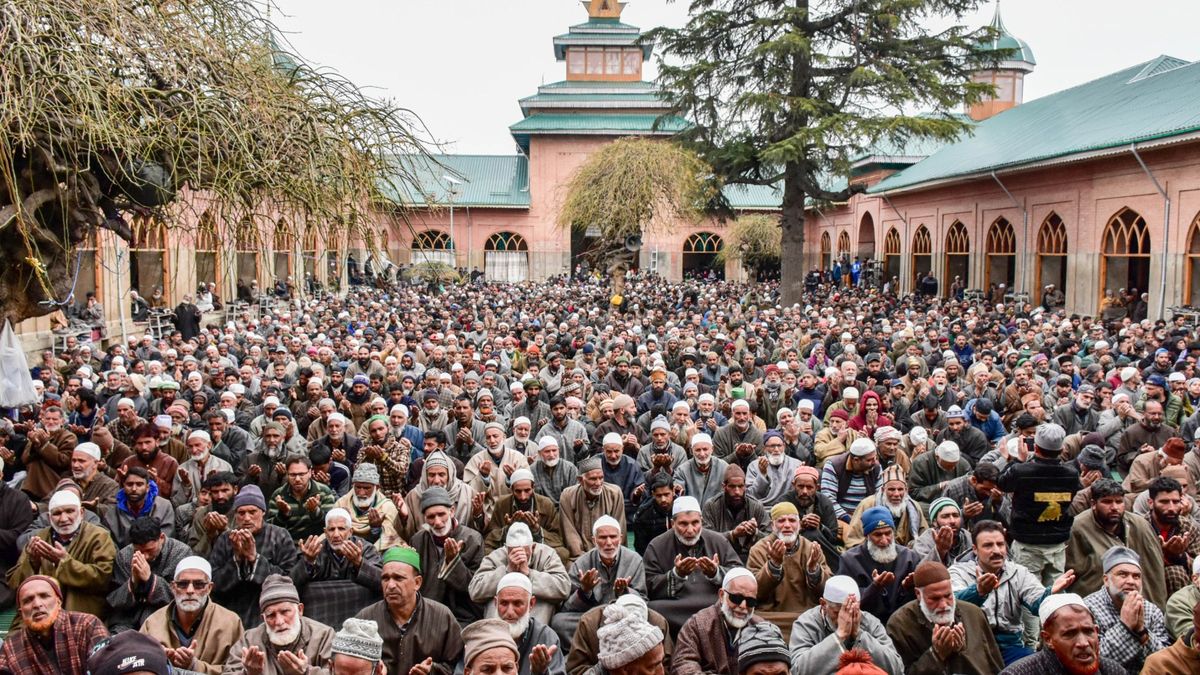
The Jammu and Kashmir Waqf Board, an administrative body overseeing Muslim religious endowments, recently proposed the implementation of uniform Friday sermons across all mosques in Indian-administered Kashmir. This initiative, spearheaded by Darakshan Andrabi, a local leader associated with India's ruling Bharatiya Janata Party (BJP), was initially defended as a measure to address social issues such as drug abuse. However, the proposal immediately triggered a significant backlash from Kashmiri religious scholars, politicians, and community leaders, who denounced it as an unacceptable interference in Muslim religious affairs and a direct assault on their religious freedom. Following widespread condemnation, the Waqf Board head reportedly retracted her statement, shifting the responsibility for sermon content back to independent scholars, albeit with a suggested focus on social issues.
This seemingly administrative proposal is, at its core, a potent demonstration of power dynamics at play in Kashmir, a region whose semi-autonomous status was controversially revoked by New Delhi in 2019. The move to standardize Friday sermons must be understood within the broader context of India's central government consolidating its authority over Jammu and Kashmir.
Since the abrogation of Article 370 in 2019, New Delhi has systematically dismantled many of the institutions and legal frameworks that afforded Kashmir its unique status. The region was reconfigured into two federally governed territories, effectively bringing it under direct central control. This shift extended to the management of waqf—charitable bequests mandated by Islamic law—which were traditionally governed by indigenous legal arrangements. These were replaced by pan-Indian laws, granting the federally controlled bureaucracy significant powers over local religious boards. The Jammu and Kashmir Waqf Board, now headed by a BJP-affiliated appointee, has transformed from a community-led body into a direct instrument of state policy.
Friday sermons, or khutbas, are far more than mere religious recitations in Muslim societies. They serve as vital platforms for community discourse, social commentary, and, historically, political mobilization. Clerics use these weekly addresses to guide their congregations on matters of faith, ethics, and contemporary issues, often reflecting the concerns and aspirations of the local population. By seeking to impose uniform, pre-approved sermons, the state aims to control this powerful narrative space. This is not merely about religious uniformity; it is about managing public opinion, preventing the propagation of dissenting views, and ensuring that the discourse within mosques aligns with the state's agenda. In a region like Kashmir, where religious identity is deeply intertwined with political sentiment, controlling the pulpit is a strategic move to neutralize a potential source of resistance or critical commentary.
This action also reflects the ideological leanings of the Bharatiya Janata Party (BJP), which champions a Hindu majoritarian vision for India. The BJP government has often been accused of seeking to homogenize diverse cultural and religious practices under a singular national identity, sometimes at the expense of minority rights. In Kashmir, a Muslim-majority region with a distinct cultural heritage, the attempt to dictate religious practice is perceived as an extension of this agenda. The question posed by local politicians—whether a Muslim political party in India could ever dictate how a Hindu priest conducts prayers—underscores the perceived double standard and the selective application of secularism in this context. The state, through its appointed board, is asserting its right to define what constitutes
The Jammu and Kashmir Waqf Board proposed uniform Friday sermons across all mosques in the region, claiming it would address social issues. This move was met with significant backlash from religious leaders and politicians who saw it as state interference.
Critics viewed the proposal as direct interference by the Indian government, particularly the BJP-affiliated Waqf Board, into Muslim religious affairs, infringing on religious freedom and local autonomy in Kashmir. They argued it was an attempt to control community discourse.
The proposal is seen as part of India's broader strategy to exert control over Kashmir since its semi-autonomous status was revoked in 2019. It extends federal authority into religious and cultural institutions, further integrating the region under New Delhi's direct rule.
Source referenced: ALJAZEERA
This brief was synthesized by our Editorial Engine and reviewed by The Ground Narrative team.


