TRENDING

Thursday, 15 October 2026
----------------------
4 Jumada Al-Awwal 1448 AH
The war in Yemen escalates with cross-border strikes and a deepening humanitarian crisis, while the US and Israel reportedly discuss military action against Iran, tying together the region's complex power struggles.
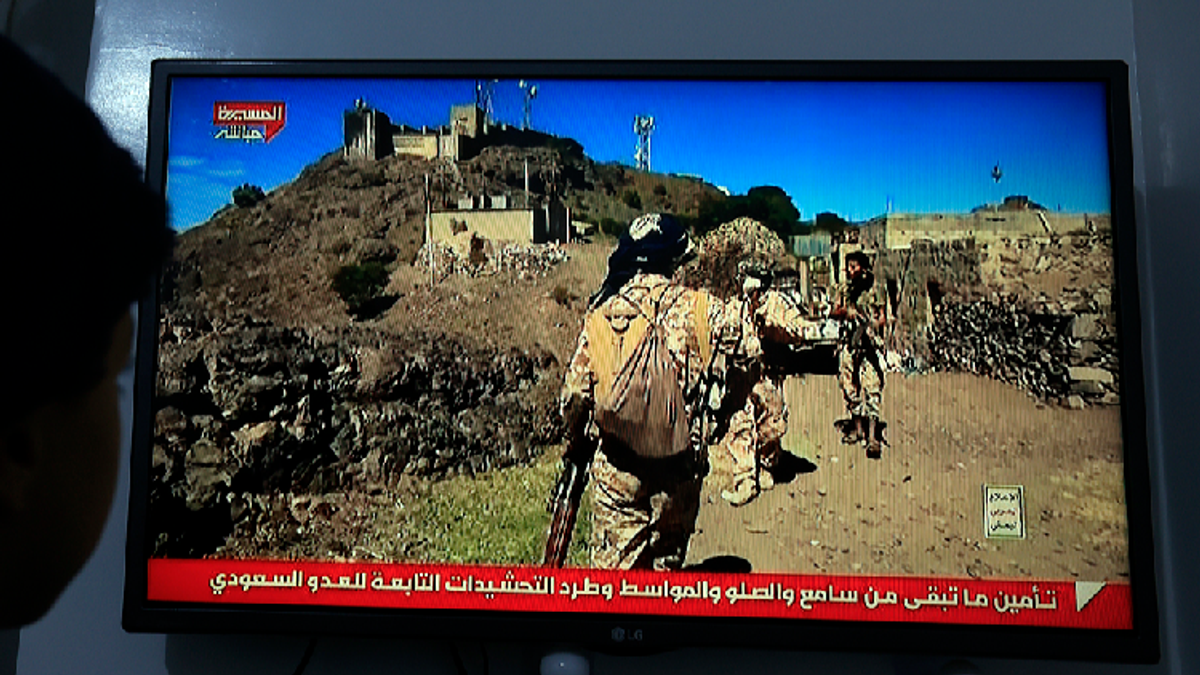
Fighting has sharply intensified in Yemen, marked by a dangerous exchange of cross-border missile and drone attacks between Saudi Arabia and the Houthi group. Saudi cities, including the capital Riyadh, and critical oil infrastructure were targeted, prompting retaliatory strikes by the Saudi-led coalition across Houthi-held areas. This escalation has further exacerbated an already dire humanitarian crisis, with the UN Office for the Coordination of Humanitarian Affairs (OCHA) reporting severe shortages of basic supplies, soaring prices, and increasing health risks for displaced populations. Concurrently, reports emerged that Israel and the United States are discussing the possibility of renewed military strikes against Iran, potentially targeting nuclear and military sites, ahead of Israeli parliamentary elections. Tensions also flared in the Strait of Hormuz, with Iran's Islamic Revolutionary Guard Corps (IRGC) threatening US warships, a claim swiftly rejected by US Central Command (CENTCOM).
The current escalation in the Middle East is not a series of isolated incidents, but rather a tightly woven tapestry of interconnected power plays, each actor seeking to secure its interests, project influence, and ensure political survival. In Yemen, the conflict serves as a critical proxy battleground in the broader regional rivalry between Saudi Arabia and Iran. For the Saudi-led coalition, the objective is to restore the internationally recognized government, contain perceived Iranian expansionism through the Houthis, and secure its southern borders and vital oil infrastructure. The repeated Houthi attacks on Saudi territory demonstrate a persistent capability to inflict economic and psychological pressure, challenging Saudi Arabia's regional dominance and forcing it to divert significant resources to defense.
The Houthis, for their part, leverage these attacks to assert their legitimacy as a dominant force within Yemen, demonstrate their military prowess, and gain negotiating leverage. Their ability to strike deep into Saudi territory, despite years of coalition air superiority, underscores a strategic resilience, likely bolstered by external support. This capability allows them to portray themselves as defenders against foreign intervention and to rally internal support, even as the humanitarian situation deteriorates under their de facto control. Their actions are a direct challenge to the Saudi narrative of control and stability in the Arabian Peninsula.
Beyond Yemen, the reported discussions between Israel and the United States regarding strikes on Iran reveal another layer of this complex power dynamic. For Israeli Prime Minister Benjamin Netanyahu, the timing of these discussions, just weeks before parliamentary elections, is critical. A strong stance against Iran, particularly concerning its alleged nuclear ambitions, often resonates with his political base and can be used to project an image of decisive leadership. The narrative of Iran rebuilding its nuclear capacity provides a potent justification for pre-emptive action, aligning with Israel's long-standing doctrine of preventing any regional adversary from acquiring nuclear weapons. The involvement of the United States, particularly under President Donald Trump, signals a continuation of the
The conflict in Yemen is escalating due to continued cross-border attacks by Houthi forces on Saudi targets, including oil facilities, and retaliatory strikes by the Saudi-led coalition. Both sides are attempting to gain leverage and assert dominance in a protracted civil war that has become a proxy battleground for regional powers.
The Yemen conflict is often seen as a proxy war where Iran supports the Houthi movement against a Saudi-led coalition backed by the US. Potential US-Israeli strikes on Iran are part of a broader strategy to counter Tehran's regional influence and alleged nuclear ambitions, directly linking these seemingly separate conflicts within a wider regional power struggle.
The humanitarian situation in Yemen is catastrophic, with millions displaced and facing severe shortages of food, water, and medical supplies. Prices for basic necessities have skyrocketed, and the healthcare system is largely non-functional, leading to widespread hunger and disease, as reported by the UN Office for the Coordination of Humanitarian Affairs (OCHA).
Source referenced: CGTN
This brief was synthesized by our Editorial Engine and reviewed by The Ground Narrative team.