TRENDING

Wednesday, 14 October 2026
----------------------
3 Jumada Al-Awwal 1448 AH
Myanmar's military junta is quietly achieving significant diplomatic breakthroughs, securing direct talks with the United States and gaining renewed engagement from Malaysia. This shift marks a significant erosion of the international isolation imposed after the 2021 coup, raising critical questions about the true cost of such pragmatism.
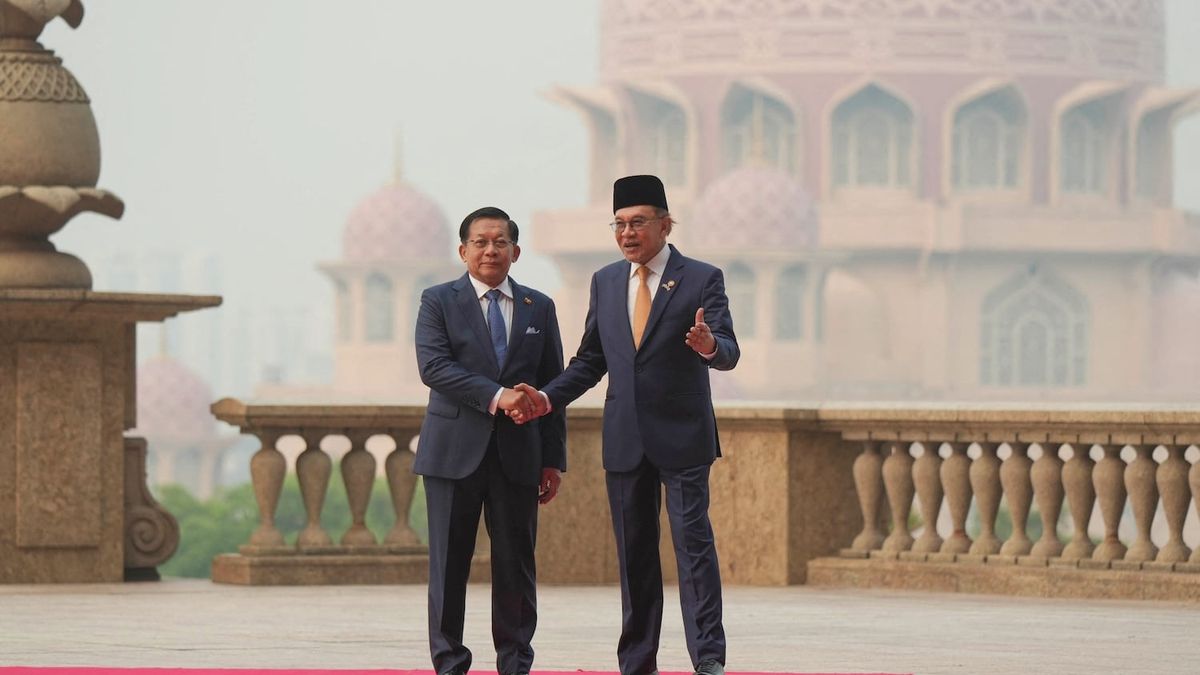
Myanmar's military junta, led by Min Aung Hlaing, has recently secured a series of significant diplomatic victories, signaling a potential end to its post-2021 coup isolation. In a notable shift, Malaysia, once a vocal critic of the regime, hosted Min Aung Hlaing, with Prime Minister Anwar Ibrahim declaring Malaysia's intent to reintegrate Myanmar into the ASEAN community. Almost simultaneously, Reuters broke news of direct talks between the United States and the junta, a reversal of Washington's previous policy of isolation. These discussions reportedly focus on shutting down online scam centers targeting Americans and exploring access to Myanmar's heavy rare earth deposits, following the release of an American citizen previously held by the regime.
The recent diplomatic overtures towards Myanmar's junta are less about a sudden shift in global values and more about a calculated recalibration of power interests by various actors. For the junta, these engagements are a lifeline, a crucial step towards legitimizing its rule after a violent coup and a sham election that saw Min Aung Hlaing transition from military chief to 'president.' By presenting itself as a stable, if authoritarian, interlocutor, the junta seeks to chip away at the international sanctions and consolidate its grip on power.
Malaysia's decision to engage the junta, despite its earlier condemnation, is driven by immediate domestic and regional concerns. The primary incentive appears to be the ability to deport Myanmar migrants and refugees, a move that addresses internal pressures related to immigration and resource strain. While framed as a step towards regional unity within ASEAN, this transactional approach highlights a willingness to overlook human rights abuses for practical gains. For Malaysia, the cost of continued isolation of Myanmar, particularly within the ASEAN framework, might have begun to outweigh the moral imperative to uphold democratic principles. The country's leader, Anwar Ibrahim, seeks to project regional leadership and stability, which a fractured ASEAN, with Myanmar as a pariah, complicates.
The United States' shift from isolation to direct talks with the junta is a stark illustration of realpolitik. Washington's stated objectives—shutting down scam centers that defraud American citizens and securing access to rare earth minerals—are purely transactional. The release of an American citizen served as a practical catalyst for these discussions. This engagement, however, is fraught with contradictions. While the Biden administration previously imposed sanctions, the underlying intelligence suggests a different approach, perhaps influenced by a desire to counter China's pervasive influence in the region. The lifting of sanctions on the daughter of a Myanmar businessman in 2025 and 2026, following earlier relief, indicates a gradual erosion of the initial punitive stance. The internal political dynamics in the US, particularly the contrast between the Trump administration's softer approach and the Democratic Party's stated values, underscore the complex interplay of domestic politics and foreign policy.
The developments also expose the deep fissures within ASEAN. While Malaysia and the Philippines (under President Ferdinand Marcos Jr.) are signaling a willingness to re-engage, other members like Singapore and Timor-Leste remain more resistant. Singapore's reported unhappiness with informal meetings suggests a continued commitment to a principled stand, while Timor-Leste, with its own history of struggle against occupation, maintains a strong sympathy for anti-junta forces. However, even Timor-Leste's President José Ramos-Horta has indicated openness to dialogue, albeit with calls for a cease-fire and prisoner release. This suggests that the collective resolve of ASEAN to isolate the junta is weakening, driven by individual member states' varying national interests and strategic calculations.
Crucially, China's deep and long-standing influence over Myanmar remains a dominant factor. Beijing has demonstrated its capacity to compel the junta to act on issues like scam centers targeting Chinese citizens, leveraging its economic and political leverage. The US, in contrast, lacks this level of influence, particularly in the conflict-ridden border zones where many scam operations and rare earth deposits are located. This reality underscores the limitations of US engagement; even if talks yield some results, they are unlikely to fundamentally alter China's strategic advantage in Myanmar's critical sectors.
The diplomatic breakthroughs for Myanmar's junta come at a significant human cost, borne primarily by the ordinary citizens of Myanmar and vulnerable populations in the region. The transactional nature of these engagements often sidelines the very people most affected by the junta's rule and the broader geopolitical maneuvers.
For Malaysia, the primary driver for engaging the junta is the ability to deport Myanmar migrants and refugees. This policy, while appealing to domestic political constituencies, places already vulnerable individuals at immense risk. Many of these individuals fled persecution and violence in Myanmar, and their forced return could expose them to further harm under the junta's repressive regime. While Rohingya refugees have reportedly been spared deportation due to Myanmar's refusal to acknowledge their citizenship, this does not alleviate the broader humanitarian concern. The act of using human beings as bargaining chips in diplomatic negotiations strips them of agency and dignity, prioritizing state interests over fundamental human rights.
Within Myanmar, the junta's diplomatic successes translate directly into a continuation of its oppressive rule. The international community's engagement, even if transactional, lends a degree of legitimacy to a regime that seized power through force and continues to suppress democratic aspirations. This can further demoralize the anti-junta forces and the broader civilian population who have endured widespread violence, arbitrary arrests, and a severe curtailment of freedoms since the 2021 coup. The
Source referenced: FOREIGNPOLICY
This brief was synthesized by our Editorial Engine and reviewed by The Ground Narrative team.


