TRENDING

Wednesday, 14 October 2026
----------------------
3 Jumada Al-Awwal 1448 AH
Houthi rebels launched missile attacks on Saudi Arabia's capital Riyadh and the eastern city of Dhahran, with debris causing injuries and property damage. This escalation highlights the ongoing spillover of the brutal Yemeni conflict.
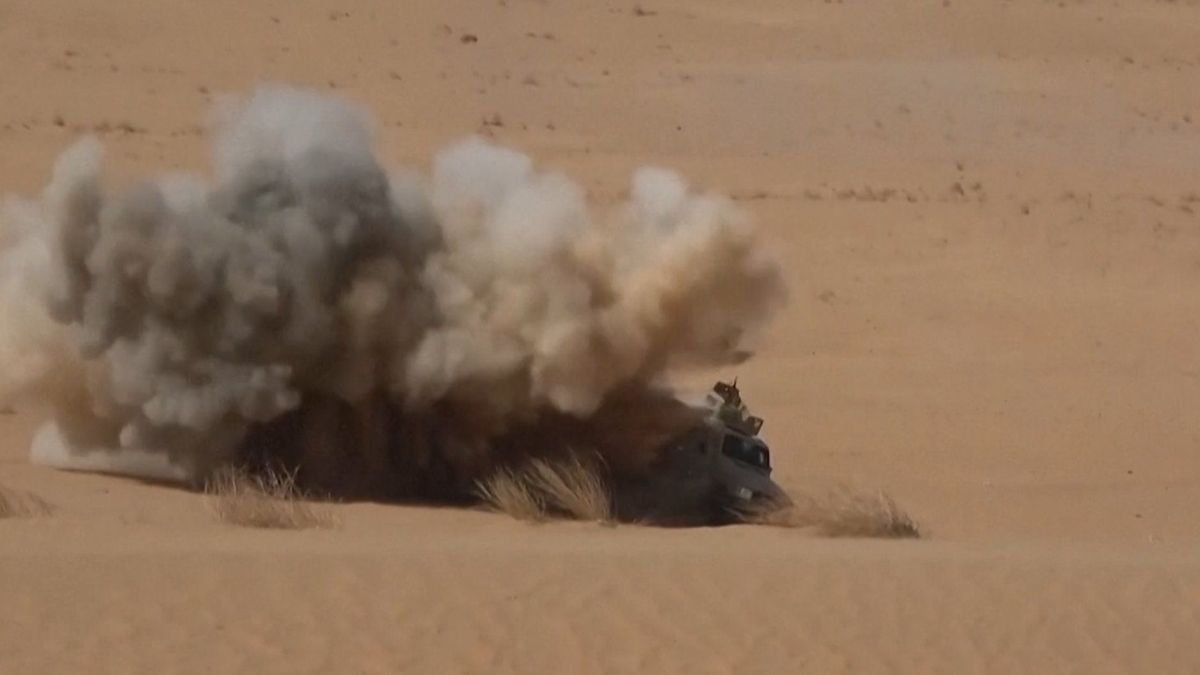
On October 14, 2026, Houthi rebels in Yemen launched a volley of missiles targeting key urban centers in Saudi Arabia, specifically the capital Riyadh and the eastern city of Dhahran. Saudi air defense systems successfully intercepted the projectiles, but falling debris injured at least four people and caused damage to homes in Riyadh. This incident occurred amidst reports from Yemen's internationally-recognized government of intensified offensives aimed at retaking Houthi-held territories, signaling a dangerous cycle of escalation in the protracted conflict.
The missile attacks on Saudi Arabia are a stark manifestation of the complex and deeply entrenched power struggle that has consumed Yemen for nearly a decade, fundamentally reshaping the regional balance of power. At its core, the conflict is a proxy battle between regional titans Saudi Arabia and Iran, each vying for influence in the Arabian Peninsula.
For Saudi Arabia, the intervention in Yemen in 2015, leading a coalition of Arab states, was framed as a necessary measure to restore the legitimate government and counter what it perceived as Iran's expanding footprint through the Houthi movement. The objective was to secure its southern border and prevent a hostile, Iran-aligned entity from controlling a strategic neighbor. However, the war has become a costly quagmire, draining Saudi resources and tarnishing its international image. The ability of the Houthis to strike deep inside Saudi territory, despite the kingdom's advanced air defense capabilities, serves as a constant reminder of the war's unresolved nature and the limitations of military might.
The Houthis, officially known as Ansar Allah, are a Zaydi Shia group that seized control of Yemen's capital, Sanaa, in 2014. Their motivation is rooted in a desire for greater autonomy, a rejection of perceived corruption and foreign influence, and a deep-seated anti-Saudi sentiment. Iran's support for the Houthis is a low-cost, high-impact strategy. By providing training, technology, and components for drones and missiles, Tehran effectively ties down its main regional rival, Saudi Arabia, forcing it to divert significant resources to a protracted conflict and exposing its vulnerabilities. This asymmetrical warfare allows Iran to project power and destabilize the region without direct military engagement, a key pillar of its regional foreign policy.
The recent offensive by Yemen's internationally recognized government, backed by the Saudi-led coalition, represents an attempt to shift the military balance and regain lost territory. For the government-in-exile, reclaiming land is crucial for its legitimacy and any future political settlement. For Saudi Arabia, these offensives are an effort to create leverage at the negotiating table and reduce the Houthi threat to its borders. However, such military pushes often provoke retaliatory strikes, as seen with the recent missile launches, perpetuating the cycle of violence.
Western powers, particularly the United States and the United Kingdom, play a complex role. While they often voice concerns about the humanitarian crisis, they remain significant arms suppliers to Saudi Arabia, providing the advanced weaponry, including missile defense systems, that the kingdom relies on. This support is driven by strategic alliances, economic interests in arms sales, and a shared concern over Iran's regional influence, creating a delicate balancing act between geopolitical objectives and human rights considerations.
While the recent missile attacks brought the war's violence to Saudi cities, the overwhelming human cost of the Yemen conflict continues to be borne by the Yemeni people themselves. For nearly a decade, Yemen has been ravaged by a war that has pushed an already impoverished nation to the brink of collapse, creating one of the world's worst humanitarian crises.
Millions of Yemenis face severe food insecurity, with large swathes of the population teetering on the edge of famine. The conflict has systematically destroyed infrastructure, including hospitals, schools, and water systems, making basic services inaccessible for most. The Saudi-led coalition's air strikes, often targeting Houthi-controlled areas, have resulted in significant civilian casualties and displacement. Simultaneously, the Houthi rebels have been accused of indiscriminate shelling, recruitment of child soldiers, and obstruction of humanitarian aid, further exacerbating the suffering. Over four million Yemenis have been internally displaced, forced to abandon their homes and livelihoods, living in precarious conditions with limited access to shelter, food, and medical care.
Beyond the immediate physical toll, the prolonged conflict has inflicted deep psychological scars. Generations of Yemeni children have grown up knowing nothing but war, violence, and deprivation. The constant threat of air raids, the sound of explosions, and the loss of loved ones contribute to widespread trauma and mental health issues that will persist long after any ceasefire. For these children, the future remains uncertain, with limited opportunities for education or a peaceful existence.
While the scale of suffering in Yemen is incomparable, the recent missile attacks underscore that Saudi civilians are also caught in the crossfire. The injuries sustained in Riyadh and the damage to homes serve as a tangible reminder that the war, which Saudi Arabia initiated on foreign soil, now has direct consequences within its own borders. Living under the constant threat of missile attacks, even if largely intercepted, creates a pervasive sense of insecurity and anxiety among the population, disrupting daily life and challenging the perception of national safety. The economic cost of maintaining such extensive air defenses is also substantial, diverting resources that could otherwise be used for domestic development.
In the aftermath of incidents like the recent missile interceptions, official narratives from all sides often simplify the conflict, downplaying crucial elements that reveal the deeper mechanics of power and the true extent of human suffering.
While the Saudi-led coalition frequently highlights Houthi aggression and missile attacks, it often omits or downplays the devastating impact of its own naval and air blockade on Yemen. This blockade, ostensibly aimed at preventing arms shipments to the Houthis, has severely restricted the flow of essential goods, including food, medicine, and fuel, into Yemen. This deliberate policy has been a primary driver of the humanitarian catastrophe, pushing millions into starvation and making it nearly impossible for humanitarian organizations to deliver aid effectively. The narrative focuses on intercepted missiles, not the slow, silent death by starvation and disease that the blockade perpetuates.
Governments in the United States, United Kingdom, and other Western nations often express concern over the Yemen crisis and call for peace, yet they continue to be major suppliers of advanced weaponry to Saudi Arabia. The economic incentives of these arms deals — billions of dollars in contracts, jobs in defense industries, and strategic partnerships — are rarely discussed in conjunction with the human cost of the conflict. The powerful defense industry lobbies in these countries ensure that the flow of weapons continues, effectively fueling a war that they simultaneously claim to want to end. This inherent contradiction is a critical untold story, highlighting how global economic interests often supersede humanitarian concerns.
Iran's role in supporting the Houthis is often framed by Saudi Arabia and its allies as pure aggression, an unprovoked attempt to destabilize the region. While Iran's actions are undeniably destabilizing, this narrative often omits the strategic calculus behind Tehran's approach. For Iran, supporting the Houthis is a relatively inexpensive way to bog down its primary regional rival, Saudi Arabia, divert its resources, and demonstrate its ability to project influence across the Arabian Peninsula. It's a key component of Iran's broader regional strategy to counter perceived US and Saudi hegemony, a nuanced motivation often lost in the simplified
Source referenced: ALJAZEERA
This brief was synthesized by our Editorial Engine and reviewed by The Ground Narrative team.