TRENDING

Wednesday, 14 October 2026
----------------------
3 Jumada Al-Awwal 1448 AH
Chinese President Xi Jinping has outlined four principles for resolving conflicts in Africa, emphasizing African leadership and peaceful solutions. This move signals a significant shift in Beijing's engagement with the continent, extending beyond economic ties into the complex realm of security and governance.
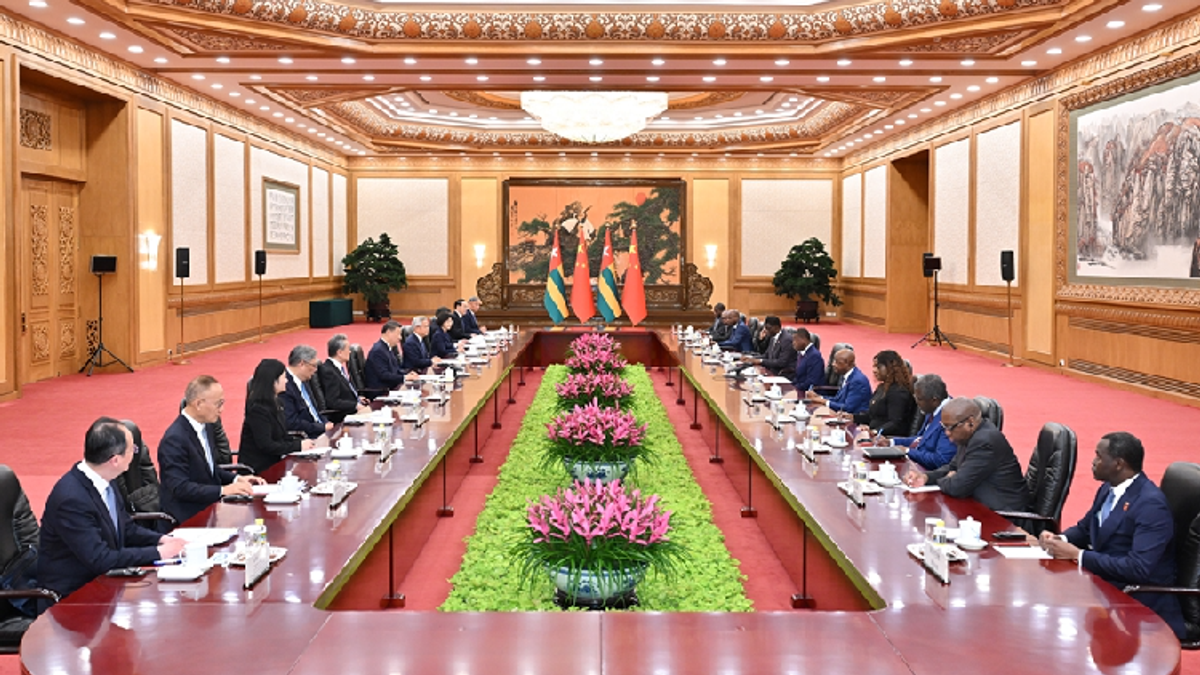
Chinese President Xi Jinping recently proposed a four-point framework for constructively addressing Africa's "hotspot issues." During a meeting with Togolese President Faure Essozimna Gnassingbé, President Xi articulated principles centered on African leadership, adherence to international law, peaceful resolution over unilateral sanctions, and tackling both immediate security concerns and underlying developmental challenges. This declaration signals Beijing's intent to deepen its involvement in the continent's political and security landscape.
For decades, China's engagement with Africa has been characterized by massive infrastructure investment, resource acquisition, and trade, all underpinned by a stated policy of non-interference in internal affairs. President Xi's new principles, however, mark a subtle yet significant evolution, moving Beijing from a primarily economic partner to an increasingly active player in African peace and security. This shift is not altruistic; it is deeply rooted in China's expanding global interests and its competition with established powers.
The principle of "Africa-led" is a strategic rhetorical device. It resonates deeply across the continent, where the legacy of colonial intervention and subsequent Western-led peace efforts often breed resentment. By championing African agency, China positions itself as a respectful partner, contrasting sharply with perceived Western paternalism or interventionism. Yet, the very act of an external power proposing such principles, no matter how well-intentioned, inherently shapes the discourse and potential outcomes, subtly guiding African states towards Beijing's preferred solutions.
The emphasis on upholding fairness, justice, and the United Nations Charter, alongside respect for sovereignty and territorial integrity, directly reflects China's core foreign policy tenets. These principles are not only appealing to many African nations wary of external pressure but also serve Beijing's own geopolitical objectives, particularly in pushing back against Western criticism regarding its internal affairs (e.g., Taiwan, Xinjiang) and its broader vision for a multipolar world order. By aligning with these universally recognized norms, China bolsters its image as a responsible global power.
The explicit rejection of "wars and unilateral sanctions" as fundamental conflict resolvers is a direct challenge to Western foreign policy tools. Sanctions, a frequent instrument of US and European diplomacy, are often viewed by China and many developing nations as coercive and counterproductive. By advocating for "mutual respect, extensive consultations, and seeking common ground," Beijing offers an alternative framework that appeals to states seeking to avoid punitive measures and maintain economic ties without political preconditions. This stance also protects China's own economic interests, as sanctions on African partners could disrupt its supply chains and investments.
Finally, addressing both "symptoms and root causes" by linking immediate security to long-term development plays directly into China's strengths. Its vast experience in infrastructure development and economic growth, often through its Belt and Road Initiative (BRI), is presented as the ultimate solution to instability. This narrative reinforces the idea that China's economic presence is not just about profit but about fostering the conditions for lasting peace, thereby legitimizing and expanding its footprint across the continent. Such stability is crucial for safeguarding China's extensive investments, securing access to critical resources, and ensuring the smooth flow of trade, all of which are vital for Beijing's sustained economic growth and national security.
While the stated goal of resolving Africa's conflicts is noble, the practical application of these principles carries significant human costs, often borne by the very populations they aim to protect. The emphasis on stability, while desirable, can sometimes overshadow the deeper issues of governance, human rights, and equitable resource distribution that fuel many conflicts.
Many African conflicts are rooted in internal political disenfranchisement, ethnic tensions, and competition over resources, often exacerbated by corrupt governance. While China's principles advocate for "Africa-led" solutions, the interpretation of this can vary. If "Africa-led" means supporting existing regimes without critical scrutiny, it risks entrenching leaders who may be part of the problem. This approach, prioritizing state stability over internal reforms, can leave underlying grievances festering, leading to cycles of violence and displacement for ordinary citizens.
Connecting security to long-term development, a cornerstone of China's approach, often translates into large-scale infrastructure projects financed by Chinese loans. While these projects can bring much-needed modernization, they also carry risks. Communities are often displaced for dams, mines, or railways, sometimes without adequate compensation or consultation. Furthermore, the debt burden incurred by African nations can be substantial, potentially compromising future generations' economic sovereignty and limiting their ability to fund essential social services like healthcare and education, diverting resources from human development to debt repayment.
China's traditional policy of non-interference, while respected by many African governments, can have a dark side for citizens. It often means that Beijing refrains from commenting on or pressuring client states regarding human rights abuses, corruption, or undemocratic practices. This stance, while maintaining diplomatic relations and access to resources, can inadvertently enable authoritarian tendencies and undermine local civil society efforts to promote accountability and good governance. For ordinary people living under oppressive regimes, the promise of stability without justice can feel like a hollow victory.
While China's critique of unilateral sanctions resonates with many, sanctions are sometimes employed as a tool to pressure regimes into changing harmful policies, including those that fuel conflict. While sanctions often have unintended negative consequences for ordinary citizens, their complete dismissal by Beijing could remove a potential lever for international pressure against regimes that violate human rights or perpetuate violence. The complex calculus of sanctions means that removing them entirely, without alternative mechanisms for accountability, could leave vulnerable populations without recourse.
Beijing's proposed principles for African conflict resolution, while framed in terms of shared prosperity and mutual respect, are deeply intertwined with China's own strategic imperatives. What is often downplayed or omitted in official statements, particularly from state media like CGTN, is the extent to which these principles serve China's expanding global power ambitions and its competition with Western influence.
The most significant untold story is the direct link between African stability and the security of China's massive Belt and Road Initiative (BRI) investments. Africa is a critical component of the BRI, with extensive infrastructure projects, resource extraction operations, and trade routes spanning the continent. Instability, conflict, and political upheaval directly threaten these investments, disrupt supply chains, and endanger Chinese personnel. By actively engaging in conflict resolution, Beijing is not just promoting peace; it is safeguarding its strategic assets and ensuring the viability of its long-term economic vision.
China's entry into the African security discourse is a direct challenge to the traditional dominance of Western powers in this domain. For decades, France, the United States, and the United Kingdom have been the primary external actors involved in African peacekeeping, military training, and diplomatic mediation. By offering an alternative framework that explicitly rejects "unilateral sanctions" and emphasizes "Africa-led" solutions, Beijing is attempting to delegitimize Western approaches and present itself as a more appealing, less interventionist partner. This is a strategic move to chip away at Western influence and reshape the global governance narrative, particularly within the UN Security Council where African votes are crucial.
While China continues to champion non-interference, its increasing involvement in security matters represents a nuanced evolution of this policy. Providing military training, selling arms, deploying peacekeepers, and now proposing conflict resolution principles are all forms of engagement that, by their very nature, influence internal affairs. The "non-interference" doctrine is subtly shifting from a passive stance to an active one, where Beijing selectively intervenes or offers solutions that align with its interests, while still maintaining the rhetoric of respecting sovereignty. This allows China to expand its influence without being seen as overtly meddling in the way Western powers often are.
Beijing's proactive stance on African conflicts is also a play for greater legitimacy and leadership in global governance. By presenting itself as a responsible global power capable of providing solutions to complex international problems, China aims to burnish its image and build a coalition of support for its vision of a multipolar world order. This includes gaining greater sway within international organizations and cultivating diplomatic allies who will support China's positions on a range of global issues, from trade to human rights, and the future of the UN itself.
China's new principles for African conflict resolution mark a pivotal moment, and their true impact will depend on how they are translated from rhetoric into action. Observers should closely monitor several key areas.
First, watch for concrete examples of China's implementation of these principles. Will Beijing increase its participation in UN peacekeeping missions in Africa, or will it prefer bilateral security cooperation and mediation efforts? The nature and scale of its direct involvement in specific conflicts, such as those in the Sahel region or the Democratic Republic of Congo, will reveal the depth of its commitment and the practical limits of its non-interference doctrine.
Second, pay attention to the reactions of major African powers. Nations like Nigeria, South Africa, and Egypt have their own geopolitical aspirations and established relationships. How they respond to China's more assertive role in conflict resolution will indicate whether Beijing's proposals are widely embraced as genuine partnership or viewed with suspicion as a new form of external influence.
Third, observe the responses from Western nations, particularly the United States and European Union. China's explicit critique of unilateral sanctions and its emphasis on an "Africa-led" approach directly challenge Western foreign policy tools and narratives. Expect intensified diplomatic competition, with Western powers likely to highlight potential downsides of China's engagement, such as debt sustainability or governance issues.
Finally, track the evolution of China's military and security footprint in Africa. While the principles emphasize peace, a more active role in security could lead to an expansion of military training programs, arms sales, and potentially even logistics or naval facilities, ostensibly for stability but also serving China's broader strategic interests. The long-term implications for African sovereignty and the balance of power on the continent will be crucial to understand.
Source referenced: CGTN
This brief was synthesized by our Editorial Engine and reviewed by The Ground Narrative team.