TRENDING

Wednesday, 14 October 2026
----------------------
3 Jumada Al-Awwal 1448 AH
Israel handed back 22 stolen Greek antiquities, a move that coincides with a massive defense agreement. The exchange reveals how cultural gestures can mask deeper power plays.
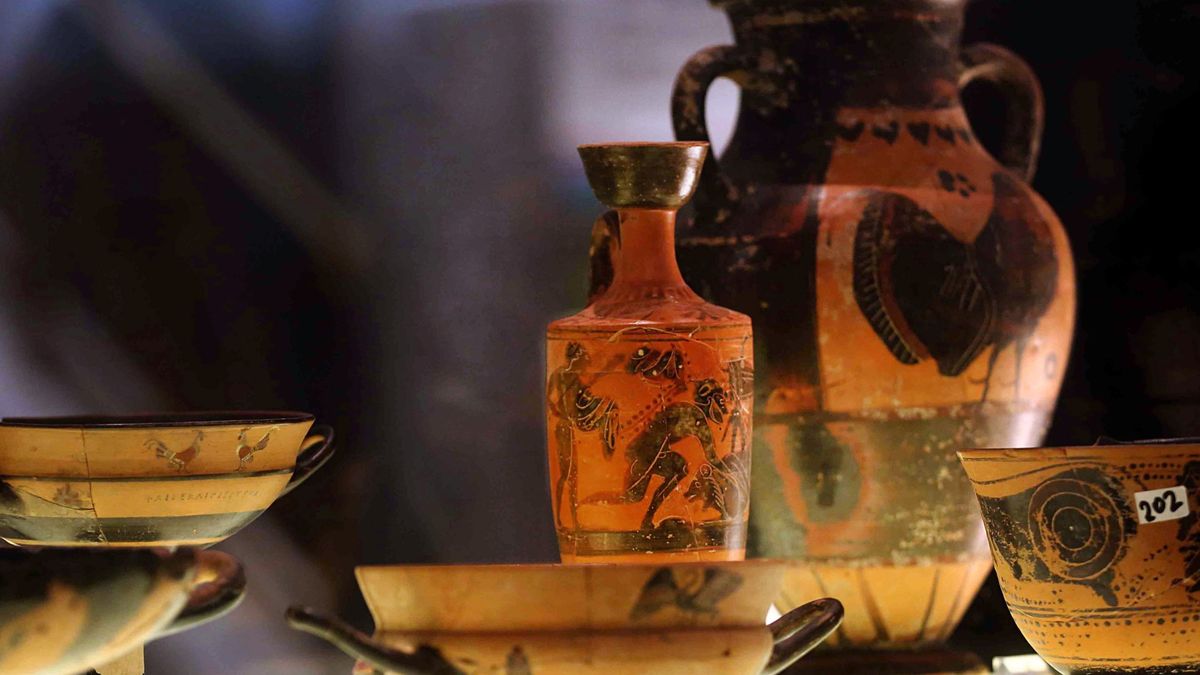
Israel's Antiquities Authority announced the return of 22 ancient objects—15 Attic vases, six Corinthian vases, and a bronze female statuette—to Greece. The hand‑over took place at the National Archaeological Museum in Athens, where Greek Minister of Culture Lina Mendoni accepted the pieces in a ceremony that highlighted a new era of cultural cooperation. Officials did not disclose how the artefacts were uncovered in Israel or the exact circumstances of their illegal removal from Greek soil.
The return of the artefacts cannot be read in isolation; it arrives against the backdrop of a $3.5 billion defence contract signed earlier in the year. Under the Achilles Shield deal, Israel will supply a multi‑layered air‑defence system to Greece, marking the largest security export in Israeli history. This convergence of cultural diplomacy and hard security illustrates a classic “soft‑hard” power blend, where goodwill gestures smooth the path for strategic agreements.
- Economic incentives: Greece’s faltering economy still leans heavily on tourism, and the provenance of ancient objects is a lucrative draw for visitors. By securing the return of prized artefacts, Athens can bolster museum attendance and reinforce its image as the guardian of classical heritage, indirectly supporting a sector that employs thousands.
- Political survival: For Israel’s Pninat Yanay, head of the Theft Prevention Unit, showcasing a successful repatriation bolsters domestic credibility. The Israeli public, often preoccupied with security concerns, sees cultural stewardship as a sign of governmental competence beyond the battlefield.
- Alliance math: Both nations share concerns over Iranian influence in the Eastern Mediterranean and the growing assertiveness of Turkey. By intertwining cultural goodwill with a high‑tech defence umbrella, they create a reciprocal dependency that complicates any future diplomatic drift.
- External pressure: The United States, a key ally to both countries, has quietly encouraged closer ties to counterbalance Russian and Chinese outreach in the region. The cultural return serves as a low‑risk, high‑visibility signal that the partnership is deepening, satisfying Washington’s strategic calculus without overt military posturing.
While diplomats celebrate the symbolic victory, ordinary people bear the hidden costs of the broader agenda.
Greek scholars who have long campaigned for the artefacts' return finally see a tangible win, but the victory comes after years of underfunded excavations and limited staffing. The Ministry of Culture must now allocate resources for conservation, display, and security—expenses that compete with other heritage sites across the country. Rural communities near excavation zones, which often rely on informal tourism, may see a modest boost, yet they also face stricter site protections that can limit local access.
The Achilles Shield system, while technologically advanced, represents a massive fiscal commitment for Israel. Funding the project may divert money from social programs, housing, or education, affecting low‑income citizens who already grapple with a high cost of living. Moreover, the emphasis on exporting defence hardware can reinforce a national narrative that prioritises militarisation over domestic welfare.
The illicit trade in antiquities fuels a shadow economy that exploits vulnerable communities in source countries. By returning these objects, Israel disrupts a supply chain that often involves looters, smugglers, and middlemen who profit at the expense of archaeological sites and the people who live near them. However, the singular act does little to dismantle the broader network that continues to strip heritage from nations worldwide.
Official statements frame the hand‑over as a pure act of cultural restitution, yet several layers remain under‑reported.
The artefact return occurred just weeks after the Achilles Shield agreement was sealed, suggesting a coordinated diplomatic choreography. By pairing a soft‑power gesture with a hard‑power contract, both governments mitigate potential criticism—Israel can portray the defence deal as part of a broader partnership, while Greece can claim the deal is balanced by cultural goodwill.
In Israel, the current coalition faces growing public fatigue over prolonged conflict in Gaza and mounting calls for social reform. Highlighting a successful cultural mission offers a diversionary narrative that showcases governmental effectiveness beyond security concerns. Conversely, in Greece, the ruling party seeks to rejuvenate its image after years of austerity; the artefact return provides a tangible success story to rally nationalist sentiment and distract from economic grievances.
Both nations are keen to project themselves as responsible custodians of heritage and security. By foregrounding the return, they pre‑empt criticism from the European Union, which has increasingly scrutinised the provenance of museum collections. Simultaneously, the move signals to Turkey and Iran that the two countries are tightening both cultural and military bonds, a message that is deliberately opaque in official briefings.
The intersection of cultural restitution and defence cooperation sets a precedent that could reshape diplomatic playbooks across the Mediterranean.
- Further artefact returns: Watch for announcements of additional Greek objects in Israeli collections, or reciprocal gestures involving other nations. Each return will likely be timed with new security or trade agreements.
- Implementation of Achilles Shield: The rollout of Israel’s air‑defence system will be closely monitored by regional actors. Delays or technical glitches could strain the nascent partnership and expose the limits of cultural goodwill as a diplomatic lubricant.
- EU and UNESCO responses: International bodies may use this case to push for stricter provenance checks, potentially affecting museum acquisitions worldwide. Their stance will reveal whether cultural diplomacy can truly influence global heritage policy.
- Domestic political shifts: Upcoming elections in both countries could test the durability of the partnership. If opposition parties capitalize on perceived over‑reliance on foreign defence contracts or question the allocation of resources for heritage projects, the narrative may shift dramatically.
By tracking these threads, readers can gauge whether the return of ancient vases is a genuine step toward shared stewardship, or a calculated move that masks deeper strategic ambitions.
The return coincides with a major defence contract, suggesting the gesture is part of a broader diplomatic package that strengthens bilateral ties.
The $3.5 billion air‑defence system enhances Greece’s ability to monitor its airspace, potentially shifting the military balance against nearby adversaries like Turkey and Iran.
Source referenced: ALJAZEERA
This brief was synthesized by our Editorial Engine and reviewed by The Ground Narrative team.


