TRENDING

Wednesday, 14 October 2026
----------------------
3 Jumada Al-Awwal 1448 AH
A recent high-level reset between China and India signals a fragile de-escalation, but the underlying strategic rivalry for influence in South Asia persists. Smaller nations in the region navigate a precarious path, seeking development while avoiding entanglement in the ambitions of two powerful neighbors.
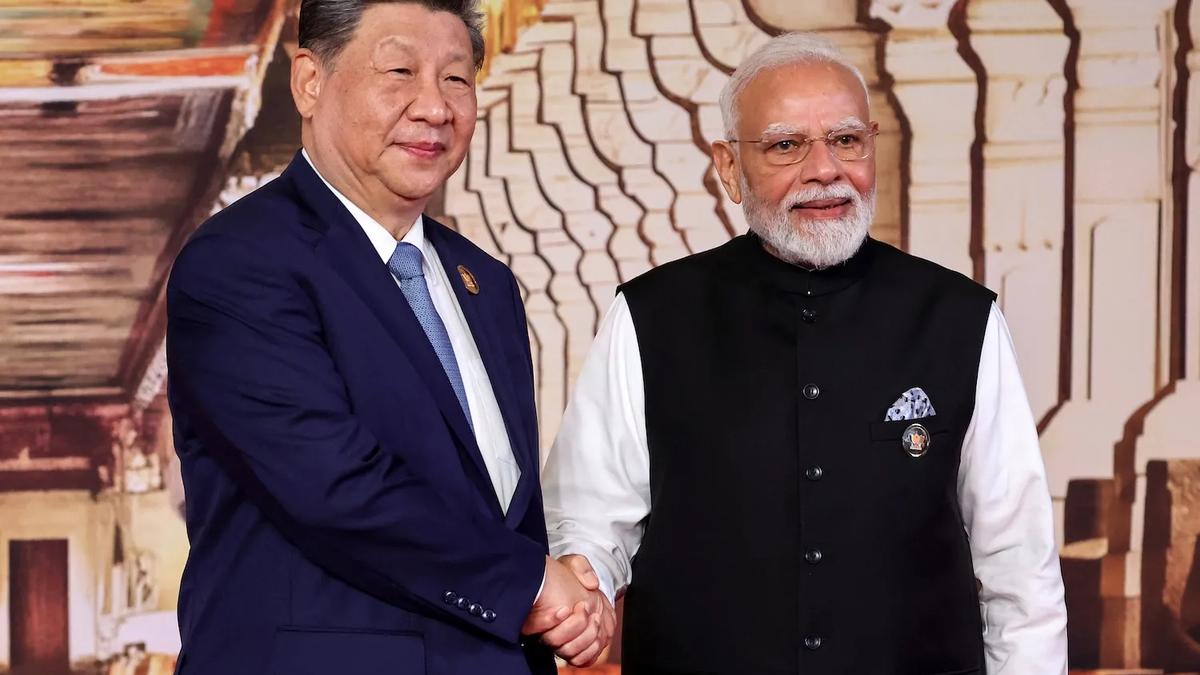
In a significant diplomatic shift, China and India have recently undertaken a partial renormalization of their strained relationship, marked by high-level engagements. Chinese President Xi Jinping made his first visit to India in nearly seven years for the BRICS summit in New Delhi, following Indian Prime Minister Narendra Modi's reciprocal trip to China for the Shanghai Cooperation Organisation (SCO) summit. This thaw comes after the most severe border conflagration between the two nuclear powers in over four decades, occurring in 2020. The renewed engagement includes the resumption of direct flights, a relaxation of visa and investment restrictions, and substantive progress on the intractable border issue, culminating in an eight-point consensus from their Special Representatives framework. Trade along three key border passes has also restarted after a six-year hiatus.
The recent reset between China and India is not merely a bilateral de-escalation; it is a calculated recalibration driven by deeper power dynamics, both regional and global. For Beijing, a stable periphery is paramount to its economic ambitions and geopolitical rise. South Asia, bordering its western flank, represents not only a market for its exports and investments but also a critical corridor for alternative trade routes, mitigating its perceived "Malacca Dilemma" – the vulnerability of its maritime trade through the narrow Malacca Strait. Initiatives like the China-Pakistan Economic Corridor (CPEC), a cornerstone of its Belt and Road Initiative (BRI), and newer trilateral dialogues with countries like Bangladesh, Pakistan, and Afghanistan, underscore China's strategic intent to deepen its footprint and connectivity across the region. This expansion is often viewed by New Delhi as a deliberate "String of Pearls" strategy, aimed at encircling India and challenging its historical dominance.
From New Delhi's perspective, the normalization is a pragmatic acknowledgment of China's undeniable and growing presence in its backyard. While India has historically viewed South Asia as its exclusive sphere of influence, it is slowly adapting to a multipolar regional reality. Its aversion to an expanded Chinese role, rooted in a history of border disputes and strategic mistrust, remains strong. However, futile attempts to exclude China have often prompted Beijing to develop its own regional initiatives that bypass India, further marginalizing New Delhi in its own neighborhood. India's own regional leadership, particularly through the South Asian Association for Regional Cooperation (SAARC), has been hobbled by its strained relations with Pakistan, leaving a vacuum that China has been eager to fill. India's strategy now involves partnering with
The reset follows a severe border conflict in 2020, with both nations seeking to de-escalate tensions and find common ground on global issues, as seen at the BRICS summit. It's a pragmatic move to manage rivalry rather than a sign of deep trust.
China's expanding trade, investment, and infrastructure projects offer development opportunities but also raise concerns about debt sustainability and potential loss of sovereignty for smaller nations, as exemplified by Sri Lanka's Hambantota Port.
India is shifting from viewing South Asia as its exclusive sphere to partnering with like-minded countries on infrastructure. However, its reluctance to engage Pakistan within SAARC continues to hinder broader regional cooperation, inadvertently creating space for China.
Editor's Note: Analysis is based on the provided raw intelligence, interpreting the 2026 publication date as the present for the article's context, including the 2025 India-Pakistan conflict claim.
Source referenced: FOREIGNPOLICY
This brief was synthesized by our Editorial Engine and reviewed by The Ground Narrative team.