TRENDING

Wednesday, 14 October 2026
----------------------
3 Jumada Al-Awwal 1448 AH
Israel continues its occupation and systematic destruction of southern Lebanon, creating a de facto buffer zone marked by its 'Yellow Line.' This policy has displaced over a million Lebanese citizens and fundamentally reshaped the border region.
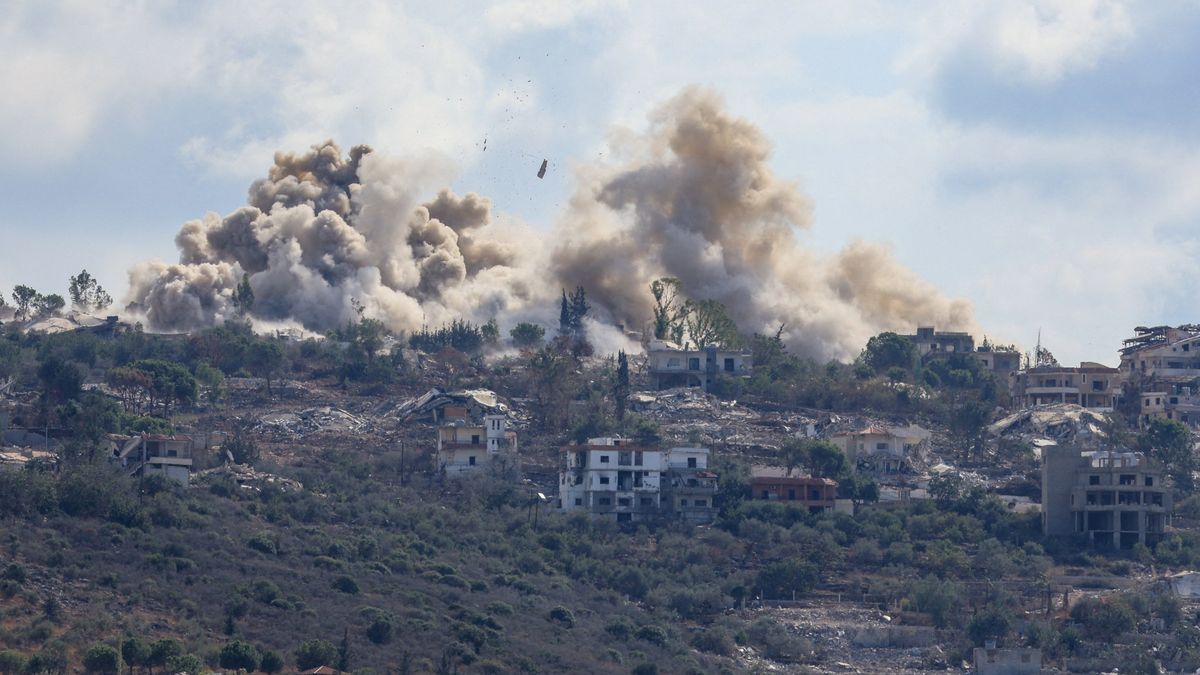
Israel has continued its occupation and systematic destruction of southern Lebanon, creating a de facto buffer zone marked by what it terms the "Yellow Line." This aggressive expansion and demolition campaign, which has razed homes and infrastructure in dozens of villages, persists despite a framework agreement signed in June between Lebanon and Israel that aimed for a phased Israeli withdrawal. The escalation follows a March 2 rocket attack by the Lebanese Shia group Hezbollah, which cited daily Israeli ceasefire violations and the assassination of Iran's Supreme Leader Ayatollah Ali Khamenei as its triggers. The ongoing Israeli actions have displaced over 1.2 million Lebanese citizens, fundamentally reshaping the demographic and physical landscape of the country's southern border region.
The current Israeli occupation and systematic destruction of southern Lebanon reveal a calculated strategy rooted in security imperatives and regional power projection. For Israel, the establishment of the "Yellow Line" and the extensive depopulation of Lebanese border villages serve a dual purpose: creating a physical buffer zone to deter future attacks from Hezbollah and asserting dominance over a historically contested frontier. Defence Minister Israel Katz's statements suggesting an extended occupation, reminiscent of the 22-year presence that ended in 2000, underscore a long-term strategic vision that prioritizes Israeli security over Lebanese sovereignty.
Hezbollah's actions, particularly the March 2 rocket fire, are not isolated incidents but responses within a broader regional power struggle. The group, which traces its origins to resistance against Israeli occupation in the 1980s, operates with significant backing from Iran. Its stated reasons for the attack – Israeli ceasefire violations and the assassination of Iran's Supreme Leader Ayatollah Ali Khamenei – indicate a direct linkage to a wider "US-Israeli war on Iran," framing the Lebanese front as one theater in a much larger, undeclared conflict. This positions Hezbollah as a proxy actor whose calculus is influenced by both local grievances and the geopolitical interests of its patron.
The Lebanese government finds itself in an unenviable position, caught between a powerful occupying force and a heavily armed non-state actor. Despite Hezbollah's objections, Beirut engaged in US-brokered direct negotiations with Israel, leading to a framework agreement that included "pilot zones" for Israeli withdrawal and Lebanese Armed Forces disarmament of Hezbollah. This reliance on US mediation highlights Lebanon's profound weakness and its inability to independently protect its territory or citizens. The government's struggle to provide even basic services to its displaced population further erodes its legitimacy and capacity to govern.
Crucially, Israel appears to be leveraging Lebanon's internal sectarian divisions. While the majority of southern Lebanon's population is Shia Muslim, reports indicate that Israel has allowed some Christian and Sunni villages to remain inhabited within the "Yellow Line," while simultaneously warning non-Shia areas not to host displaced Shia populations. This tactic aims to fragment social cohesion and undermine any unified resistance, effectively "West Bankifying" the remaining communities by imposing severe restrictions on their daily lives, including arbitrary detentions and control over basic resources like water access. This manipulation of sectarian identity is a classic divide-and-conquer strategy, designed to solidify Israeli control with minimal direct military presence in certain areas.
The human toll of Israel's "Yellow Line" policy in southern Lebanon is catastrophic and far-reaching, transforming a vibrant border region into a landscape of ruin and displacement. The most immediate and staggering impact is the mass displacement of its residents. Initially tens of thousands, the numbers have swelled to over 1.2 million people forced to flee their homes, leaving behind entire communities that have existed for generations. These individuals are now scattered across Lebanon, renting temporary accommodation, their lives uprooted by what they describe as "flawed tragedies and failed politics."
The systematic demolition of homes and infrastructure in approximately 50 frontline villages has rendered these areas uninhabitable. Satellite imagery confirms the widespread destruction, turning once-thriving towns like Khiam and Bint Jbeil into "collections of dust, rubble and ash." This is not merely property damage; it is the eradication of entire communities, erasing the physical embodiment of their history, culture, and social fabric. Agricultural lands, the backbone of the local economy, have also been destroyed, severing the primary source of income for many families. The sentiment among the displaced is stark: "Khiam is destroyed, there’s nothing, it’s uninhabitable for the next 10, 15, 20 years. They returned us to the Stone Age."
Even for the few villages that Israel has permitted to remain inhabited within or near the "Yellow Line," life is far from normal. These communities, often Christian and Sunni, are subjected to a model of control described as the "West Bankification" of their existence. Residents are allowed to exist on their land but not to use it freely. Access to fields and olive groves is contingent on checkpoints, coordination with Israeli forces, and the arbitrary "mood of a patrol." Municipal officials face detention and questioning at will, as seen in Kfarchouba and Deir Mimas. This creates a pervasive atmosphere of fear and subjugation, where basic freedoms are curtailed, and the local population lives under constant surveillance and control, effectively turning their homes into open-air prisons.
Analysts believe the displacement could be permanent for many, as the scale of destruction makes short-to-medium term return impossible. The Lebanese government, already struggling with economic crises, lacks the capacity to rebuild the extensive infrastructure – water, electricity, sewage – that has been widely damaged or destroyed. The promise of prefabricated homes offers little solace against the backdrop of systemic ruin and the loss of essential state services. This permanence of displacement means that an entire generation of southern Lebanese may grow up without ever knowing their ancestral homes, bearing the long-term psychological and social trauma of forced relocation and the erosion of their cultural identity.
Beneath the official statements and the shifting lines on maps, a deeper, more troubling narrative unfolds in southern Lebanon – one of deliberate depopulation and strategic ambiguity. What governments and official channels often downplay or omit is the chilling parallel between Israel's actions in southern Lebanon and its long-standing policies in Gaza and the West Bank.
Analysts are explicit: Israel's primary goal in southern Lebanon is to "empty, depopulate, and make those dozens of frontline villages and towns uninhabitable." This is not collateral damage from conflict; it is a systematic strategy to create a demographic vacuum. The term "Gaza model" is not used lightly; it refers to the creation of buffer zones through destruction and displacement, effectively rendering territory unlivable for its original inhabitants. This deliberate strategy, aimed at pushing people out and making it "extremely difficult if not impossible for people to return to their homes," speaks to an intent beyond mere security concerns – it suggests a form of demographic engineering and potential ethnic cleansing, where the physical destruction of villages serves to erase the presence of a specific population. The world's "silent" observation of this process, as one analyst noted, is a critical omission from the official narrative, implying a tacit acceptance of these actions.
The proliferation of "lines" – the "Blue Line," the "Yellow Line," and now discussions of a "Grey Line" – serves a crucial purpose: to sow confusion and "hide or obfuscate the reality of what Israel has done on the ground." These terms, while appearing to delineate clear boundaries, are in practice fluid and shifting, allowing Israel to continually redefine its control and justify its actions. The "Yellow Line," for instance, marks the end of an "occupation zone" but simultaneously defines an area where demolitions continue unabated. The proposed "Grey Line," extending 4 kilometers into Lebanese territory, would be an uninhabited buffer, further cementing Israel's control without formal annexation. This strategic use of nomenclature allows Israel to present its actions as legitimate border management, while the underlying reality is one of illegal occupation, destruction, and the effective seizure of vast Lebanese territory.
Perhaps the most significant untold story lies in the broader regional context. Hezbollah's March 2 rocket attack was explicitly linked to the "assassination two days prior of Iran's Supreme Leader Ayatollah Ali Khamenei, at the start of the US-Israeli war on Iran." This detail, often overlooked in analyses focusing solely on the Lebanon-Israel border, reveals that the conflict in southern Lebanon is not an isolated bilateral dispute. Instead, it is a direct manifestation of a larger, undeclared "US-Israeli war on Iran," with Lebanon serving as a critical battleground. This framing suggests that the destruction and displacement in southern Lebanon are not just about local security but are part of a grander strategic confrontation between major regional and global powers, with ordinary Lebanese citizens bearing the brunt of a conflict that extends far beyond their borders. The silence around this larger war allows powerful actors to avoid accountability for the wider consequences of their actions.
The situation in southern Lebanon is far from resolved, with several critical dynamics poised to shape its future. The immediate focus will be on the permanence of the "Yellow Line" and the proposed "Grey Line." Will these de facto boundaries solidify into permanent features, effectively annexing Lebanese territory and creating an internationally unacknowledged buffer zone? The continued demolition of villages, despite ceasefire announcements, suggests Israel's intent to make these changes irreversible.
Another key indicator will be the fate of the displaced population. The scale of destruction in the 50 frontline villages makes a short-to-medium term return highly improbable. Watch for any concrete, large-scale international or governmental initiatives to facilitate the return and rebuilding efforts. The Lebanese government's capacity to provide essential services to these devastated areas will be a crucial test of its sovereignty and effectiveness. Without significant external aid and a robust internal plan, the displacement could become permanent, leading to long-term humanitarian crises and further internal instability within Lebanon.
The role of Hezbollah remains central. The framework agreement included provisions for the Lebanese Armed Forces to disarm Hezbollah in "pilot zones." How this disarmament, if it occurs, is implemented and whether Hezbollah genuinely complies will dictate the future security landscape. Any continued Israeli occupation or perceived violations of sovereignty could provoke further retaliatory actions from Hezbollah, risking renewed escalation. The group’s strategic calculus will also be influenced by the broader "US-Israeli war on Iran" context; any shifts in that larger conflict will undoubtedly reverberate in southern Lebanon.
Finally, the international community's response will be critical. The current "silence" surrounding the systematic destruction and depopulation of southern Lebanon has allowed Israel's actions to proceed largely unchecked. Watch for any shifts in diplomatic pressure, particularly from the United States as the primary mediator. Will there be a concerted effort to hold Israel accountable for violations of international law and to ensure the right of return for displaced Lebanese citizens? Or will the "West Bankification" model continue to expand, setting a dangerous precedent for future conflicts and further eroding the principles of national sovereignty and humanitarian protection?
The 'Yellow Line' refers to a de facto buffer zone established by Israel in southern Lebanon, extending up to 10 kilometers deep. Within and behind this line, Israel has systematically demolished homes and infrastructure, aiming to depopulate the area.
Initially tens of thousands, the number of displaced Lebanese citizens from the southern border region has swelled to over 1.2 million. These individuals have lost their homes and livelihoods due to Israeli military actions and occupation.
The 'Gaza model' refers to Israel's strategy of creating uninhabitable buffer zones through systematic destruction and displacement of local populations. In southern Lebanon, this involves razing villages and making it difficult for residents to return, similar to policies seen in Gaza.
Source referenced: ALJAZEERA
This brief was synthesized by our Editorial Engine and reviewed by The Ground Narrative team.


