TRENDING

Thursday, 15 October 2026
----------------------
4 Jumada Al-Awwal 1448 AH
A new span across the Yalu River officially opened, promising smoother trade and people‑to‑people ties between China and the DPRK. Beneath the ceremony, the bridge reshapes regional power math and everyday lives on both banks.
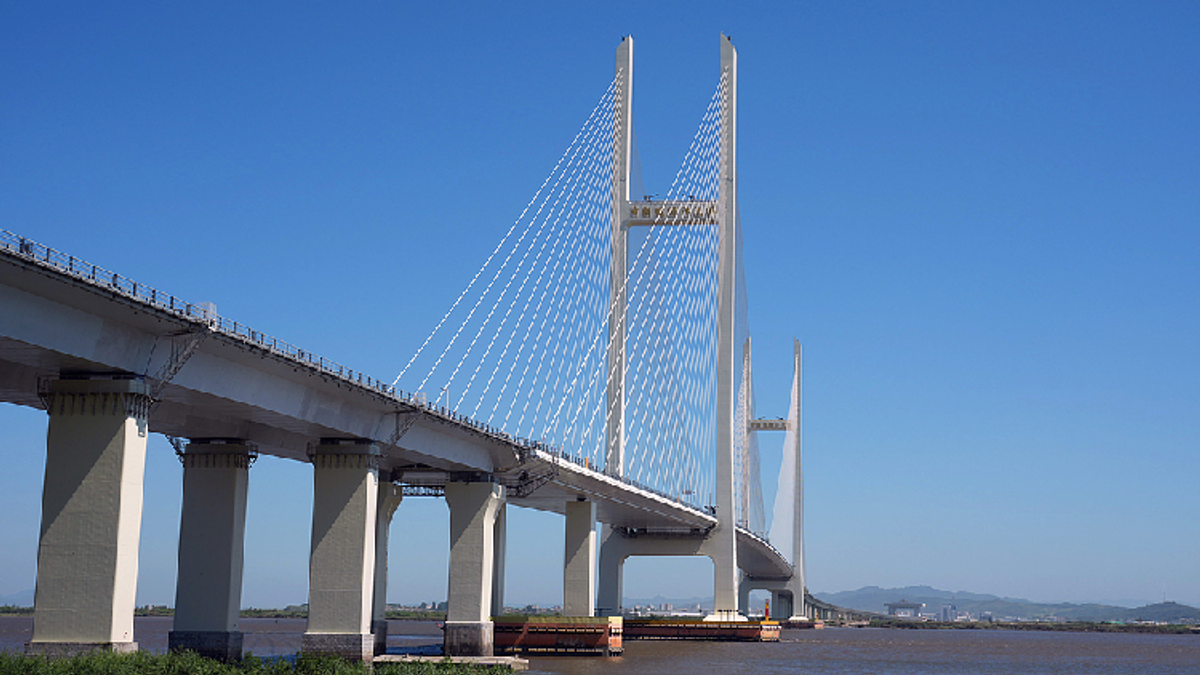
The Yalu River bridge linking Dandong in northeast China with Sinuiju in the DPRK opened to traffic on Thursday after a joint ceremony attended by officials from both sides. Chinese Foreign Ministry spokesperson Mao Ning framed the structure as a catalyst for trade and people‑to‑people exchanges, emphasizing mutual well‑being. The span replaces a decades‑old ferry crossing and is the latest physical manifestation of the two countries' long‑standing, albeit opaque, partnership.
China’s push for the bridge fits neatly into its broader Belt and Road vision, turning a remote border into a logistical node that can feed southern supply chains. By cementing a permanent overland link, Beijing reduces its reliance on maritime routes that are vulnerable to U.S. naval presence in the East China Sea. The bridge also gives Chinese authorities a more controlled environment for monitoring cross‑border movement, which dovetails with its security‑first stance in the region.
For the DPRK, the bridge is a lifeline that can funnel hard currency and essential goods despite the tightening of international sanctions. The regime’s economy, already strained by energy shortages and limited export options, can now tap into Chinese wholesale markets more directly. This infrastructure also serves a political purpose: it signals to the world that the Kim government remains a sovereign actor capable of securing major projects, bolstering its domestic legitimacy.
From a geopolitical angle, the bridge subtly shifts the balance of influence on the Korean Peninsula. While the United States and its allies push for denuclearization, China quietly expands its leverage by deepening economic interdependence with the North. The structure also provides a potential conduit for military logistics, a point that remains unspoken in official statements but is closely watched by regional defense analysts.
In Dandong, a city of roughly 2.5 million, the bridge promises a surge of commercial activity. Small‑scale traders hope for higher profits, but the influx also threatens to inflate rents and push out long‑time residents. Local factories, already operating at capacity, may face labor shortages as workers shift to logistics and customs roles that pay more.
Across the river, Sinuiju residents anticipate new jobs in customs, transport, and hospitality. Yet many of these positions are filled by North Korean laborers who are subject to state‑controlled wages and limited freedom of movement. The bridge could also accelerate family reunifications that have been stalled for decades, but the state may use such reunions as propaganda tools, limiting genuine emotional relief.
A permanent crossing inevitably fuels informal trade. While some of this activity provides vital goods to isolated communities, it also opens channels for contraband, including illicit weapons parts and luxury items that bypass sanctions. Communities that rely on black‑market income may see increased law‑enforcement pressure, leading to arrests and further hardship.
Official narratives celebrate the bridge as a humanitarian project, yet both China and the DPRK view it as a backdoor for sanctions evasion. The overland route allows for the discreet movement of oil, refined fuels, and dual‑use technologies that are harder to track than maritime shipments. While Chinese customs officials publicly pledge strict enforcement, internal directives likely prioritize economic gains over full compliance.
Construction of the bridge required dredging of the Yalu River and the relocation of several villages on both banks. Environmental assessments were rushed, and many residents received inadequate compensation. Downstream ecosystems, crucial for local fisheries, face altered water flow and increased pollution, threatening food security for river‑dependent families.
By opening the bridge without consulting neighboring South Korea or the United States, Beijing and Pyongyang send a clear message: regional infrastructure decisions will be made on their own terms. This omission downplays the potential for increased military mobility, a factor that NATO and the U.S. Indo‑Pacific Command monitor closely but rarely acknowledge publicly.
The bridge’s true impact will be measured in traffic data, customs records, and the pace of ancillary projects such as rail extensions and industrial parks. Analysts should track any uptick in Chinese investment in the DPRK, especially in sectors barred by sanctions, as a sign of deeper economic entanglement. Meanwhile, the United States may respond with tighter secondary sanctions targeting firms that facilitate bridge‑related trade. On the ground, watch for shifts in local employment patterns, housing prices in Dandong, and any grassroots protests over displacement or environmental damage. The bridge is more than concrete; it is a barometer of how China and the DPRK navigate global pressure while reshaping daily life for millions.
The bridge creates a permanent overland route that lowers transport costs and speeds up the movement of goods, allowing the DPRK to access Chinese wholesale markets more directly despite sanctions.
Beyond economic ties, the bridge could facilitate the covert movement of military equipment and dual‑use technology, giving China and the DPRK a logistical advantage that concerns the United States and its allies.
Editor's Note: Analysis based on publicly available statements and historical patterns; on‑the‑ground impacts may evolve as traffic data emerges.
Source referenced: CGTN
This brief was synthesized by our Editorial Engine and reviewed by The Ground Narrative team.


