TRENDING

Thursday, 15 October 2026
----------------------
4 Jumada Al-Awwal 1448 AH
Donald Trump's 2026 midterm strategy revives a decades-old playbook of 'positive polarization,' deliberately deepening societal divides to secure political power. This approach, first championed by Vice President Spiro Agnew in 1970, prioritizes demonizing opponents over offering a positive vision, with significant human and democratic costs.
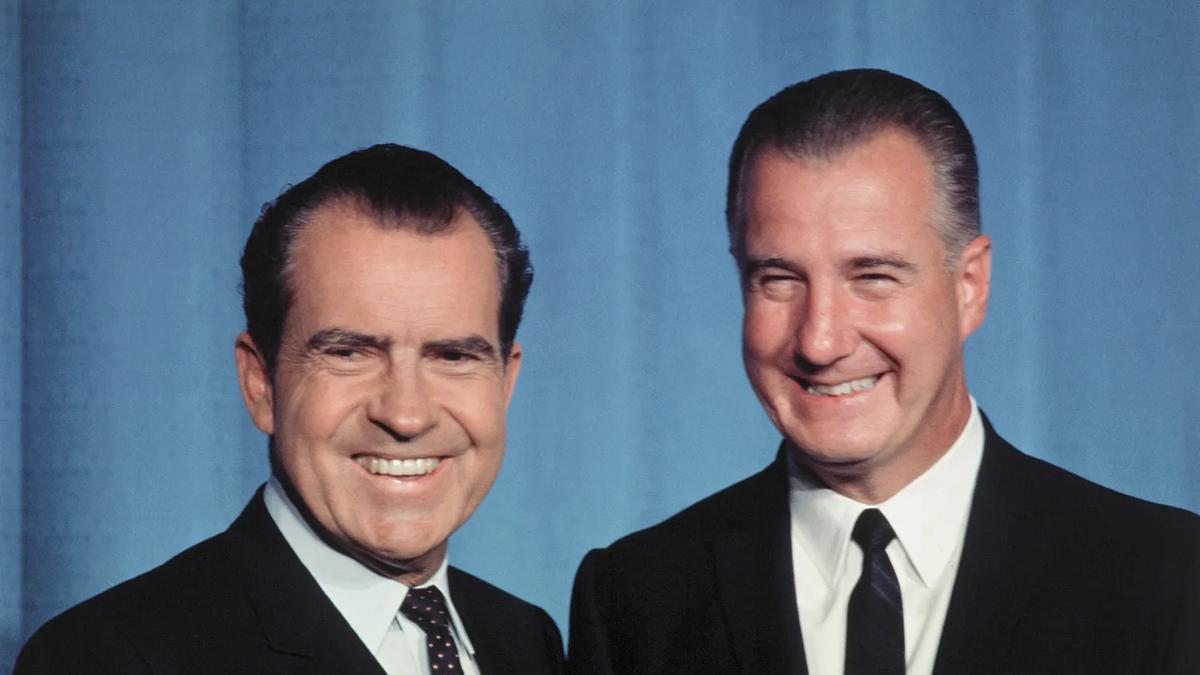
As the 2026 midterm elections approach, President Donald Trump and the Republican Party have unveiled a campaign strategy that eschews traditional appeals to unity or a positive future vision. Instead, it leans heavily into a tactic of aggressive rhetoric and opponent vilification, drawing direct parallels to the 1970 midterm campaign of Vice President Spiro Agnew. This approach, which Agnew famously termed "positive polarization," centers on exacerbating partisan divisions and cultivating animosity towards political rivals rather than persuading the public through policy or performance. Recent examples include a controversial, government-funded advertisement featuring Trump declaring a "final battle" against perceived enemies like "communists, Marxists, fascists, and the fake news media," alongside a blistering speech by Vice President JD Vance labeling Democrats as the "party of hatred" and extremists who despise America. This strategy emerges amidst reports of historically low approval ratings for Trump and struggles for the GOP in traditionally safe states, indicating a calculated shift away from broad appeal towards intensely galvanizing a base through fear and anger.
The adoption of "positive polarization" is a clear demonstration of power dynamics at play when traditional avenues of political persuasion falter. For leaders facing low approval ratings or a challenging electoral landscape, the incentive shifts from winning over undecided voters to intensely mobilizing a core base and demobilizing the opposition through fear and resentment. This strategy is not accidental; it is a deliberate, cynical calculation designed for political survival and expansion of power.
The historical precedent set by President Richard Nixon and Vice President Spiro Agnew in 1970 provides a stark blueprint. Nixon, having won the 1968 election by a narrow margin, sought to weaken the liberal Democratic majorities in Congress. Agnew, initially a moderate, transformed into a firebrand, leveraging the anxieties of working-class white voters with "law and order" rhetoric in the wake of urban unrest. He systematically attacked liberal intellectuals, the anti-war movement as "effete snobs," and the media as "nattering nabobs of negativism," framing Democrats as radical, unpatriotic, and immoral. This created a stark "us vs. them" narrative, where the "silent majority" was urged to see their opponents not as political rivals, but as existential threats to the nation's fabric. The architect of much of this rhetoric, Pat Buchanan, understood that drawing sharp lines of division could consolidate support, even if it meant alienating others.
At its core, this strategy weaponizes human emotions – primarily fear, anger, and resentment – to bypass rational policy debate. When a positive vision for the future is difficult to articulate or sell, the alternative becomes to make the electorate hate the other side more than they dislike the incumbent. This is a powerful, albeit destructive, mechanism. It allows leaders to deflect criticism from their own performance, particularly on issues like the economy, by redirecting public frustration towards a designated enemy. The use of government funds for a partisan political advertisement, as reported with Trump's "final battle" spot, further highlights a willingness to blur ethical lines and leverage state resources for electoral advantage, demonstrating a clear abuse of institutional power for partisan ends.
The fact that this strategy has been revived decades later, influencing figures from Newt Gingrich to the Tea Party movement, underscores its perceived effectiveness within certain political circles. It suggests that while the 1970 midterms yielded limited gains for Republicans, the underlying principle of "positive polarization" laid the groundwork for future electoral successes, most notably Nixon's landslide re-election in 1972. This historical lineage reveals a consistent thread in a segment of American politics: when consensus is elusive, division can be a potent, if corrosive, path to power.
The mechanics of "positive polarization" are not abstract; they impose tangible and often severe human costs, impacting the very fabric of society and the well-being of its citizens.
The most immediate cost is the deliberate erosion of social cohesion. When political leaders actively promote an "us vs. them" narrative, portraying opponents as "villains" or "haters of our country," it fosters deep-seated distrust and animosity among citizens. This makes genuine dialogue, compromise, and collective problem-solving increasingly difficult. Neighbors, friends, and even family members can find themselves on opposing sides of an unbridgeable chasm, leading to social fragmentation and a breakdown of community bonds. The constant barrage of demonizing rhetoric creates an environment where empathy is replaced by suspicion, and shared national identity is overshadowed by partisan tribalism.
Labeling entire groups of people – whether defined by political affiliation, ideology, or perceived social standing – as "communists, Marxists, fascists," or "enemies of the state" is a form of dehumanization. This rhetoric strips individuals of their dignity and legitimacy, making it easier to justify hostility, discrimination, or even violence against them. Historically, such language has preceded periods of intense social unrest and political persecution. While the immediate outcome might be electoral, the long-term consequence is a society where political differences are no longer seen as legitimate disagreements but as moral failings or existential threats, increasing the risk of real-world aggression and intolerance.
Another significant human cost is the diversion of attention and resources from pressing societal issues. As in 1970, when voters were more concerned with inflation, unemployment, and the Vietnam War despite Agnew's focus on "radiclibs," today's citizens face complex challenges like economic instability, climate change, healthcare, and global conflicts. When political discourse is dominated by culture wars and the demonization of opponents, these substantive issues are often downplayed or ignored. This means that the real problems affecting people's lives go unaddressed, or solutions are delayed, leading to continued suffering and stagnation for the wider population, especially the most vulnerable.
The relentless exposure to hateful and divisive rhetoric has a measurable impact on the mental and emotional well-being of citizens. Constant political conflict, the feeling of living in a perpetually polarized society, and the fear of an "other" can contribute to increased stress, anxiety, depression, and a sense of hopelessness. For individuals who are directly targeted by such rhetoric, whether due to their political beliefs, identity, or profession (like journalists, often labeled "fake news"), the psychological burden can be particularly heavy, leading to feelings of isolation and vulnerability.
While political actors championing "positive polarization" present it as a necessary defense against perceived enemies, they invariably downplay or omit several critical aspects of this strategy and its broader implications.
What is often omitted from the narrative is the profound and potentially irreversible damage inflicted upon democratic norms and institutions. The strategy explicitly calls for abandoning traditional bipartisanship and civility, replacing them with a "smashmouth style of partisanship." This isn't just about winning elections; it's about fundamentally altering the rules of engagement in a democracy. When political opponents are cast as enemies, the very idea of a loyal opposition, a cornerstone of democratic governance, is undermined. Powerful actors focus on the immediate electoral gain, but they rarely acknowledge the long-term cost of eroding the shared understanding and mutual respect necessary for a functioning democracy. They neglect to mention that once these norms are broken, they are incredibly difficult to restore, leaving future generations with a more volatile and less stable political system.
The transformation of figures like Spiro Agnew from a moderate Republican to a fiery demagogue, and the strategic pivot by Donald Trump away from a positive vision when approval ratings are low, reveals a deep-seated cynicism that is rarely admitted. This isn't about genuine ideological conviction for all involved; it's often a calculated, pragmatic choice to adopt a winning strategy, regardless of its ethical implications. Leaders who embrace this approach rarely confess that their rhetoric is a tactical maneuver rather than a heartfelt belief. They present themselves as authentic voices of the people, fighting for a righteous cause, while the underlying motivation is often raw political ambition and the pursuit of power at any cost.
Both Nixon and Trump have invoked the idea of a "silent majority" – a vast, unified, and implicitly aggrieved segment of the population that their rhetoric supposedly empowers. The untold story here is that this "majority" is often a construct, a rhetorical device used to legitimize extreme positions and marginalize dissent. While such a strategy can indeed galvanize a passionate base, it often relies on mobilizing a fervent minority rather than truly representing a broad consensus. Many citizens, even those who might lean towards the party employing this strategy, are alienated by its divisive nature. This framing allows powerful actors to claim popular mandate for policies that may only appeal to a segment of the electorate, while downplaying the significant portion of the population that feels unrepresented or actively attacked.
While figures like Agnew and Trump have famously attacked the media as biased or "fake news," the untold story also involves how the media ecosystem, particularly in the age of fragmented digital platforms, can inadvertently amplify this polarization. The pursuit of engagement, clicks, and viewership often leads to a focus on the most sensational and conflict-driven narratives. Extreme rhetoric, by its very nature, generates strong reactions and thus high engagement. This creates a feedback loop where divisive politicians are rewarded with attention, and the media, despite its criticisms, becomes a vehicle for spreading the very polarization it often decries. Powerful actors are adept at exploiting this dynamic, using media attacks as a shield while simultaneously benefiting from the attention their controversial statements generate.
As the 2026 midterm elections unfold, several key indicators will reveal the true impact and trajectory of this revived strategy of "positive polarization."
First, observe the electoral outcomes. Will the strategy deliver significant gains for the Republican Party, or will voters, as in 1970, ultimately prioritize substantive issues over cultural grievances and demonization? The balance between base mobilization and alienating swing voters will be critical.
Second, pay close attention to the response of the opposing party. Will Democrats be drawn into a similar rhetorical battle, escalating the cycle of division, or will they attempt to offer a contrasting vision centered on unity, policy solutions, and a rejection of extreme rhetoric? Their approach will shape the future of political discourse.
Third, monitor the public's tolerance for sustained polarization. Will voter fatigue set in, leading to lower turnout or a demand for more moderate leadership? Or will the constant barrage of divisive messaging further entrench partisan identities, making compromise even more elusive in future elections?
Finally, watch for legal and ethical challenges to the use of government resources for partisan campaigning. The reported use of U.S. government funds for President Trump's controversial ad could trigger investigations or legal battles, potentially setting new precedents for the boundaries of political campaigning and the separation of state resources from party politics. The outcome of such challenges could either constrain or embolden future uses of similar tactics, impacting the integrity of democratic processes for years to come.
'Positive polarization' is a political strategy that deliberately exacerbates partisan divisions and fosters animosity towards opponents, rather than seeking consensus or offering a positive vision. It aims to intensely mobilize a political base by framing the opposition as an existential threat.
As Vice President under Richard Nixon, Spiro Agnew used 'positive polarization' to portray Democrats as radical and unpatriotic, while attacking the media and liberal intellectuals. His 'law and order' rhetoric appealed to specific demographics, aiming to consolidate support by creating a stark 'us vs. them' narrative.
The strategy can lead to increased societal division, dehumanization of political opponents, and erosion of democratic norms. It often distracts from substantive policy issues and can impose significant mental and emotional tolls on citizens, making compromise and collective problem-solving much harder.
Source referenced: FOREIGNPOLICY
This brief was synthesized by our Editorial Engine and reviewed by The Ground Narrative team.