TRENDING

Thursday, 15 October 2026
----------------------
4 Jumada Al-Awwal 1448 AH
Syria’s military criminal court handed death sentences to two former regime loyalists for the 2025 coastal massacres, while also convicting security officers for revenge killings. The verdicts lay bare a fragile power balance and a civilian population still bearing the brunt of sectarian bloodshed.
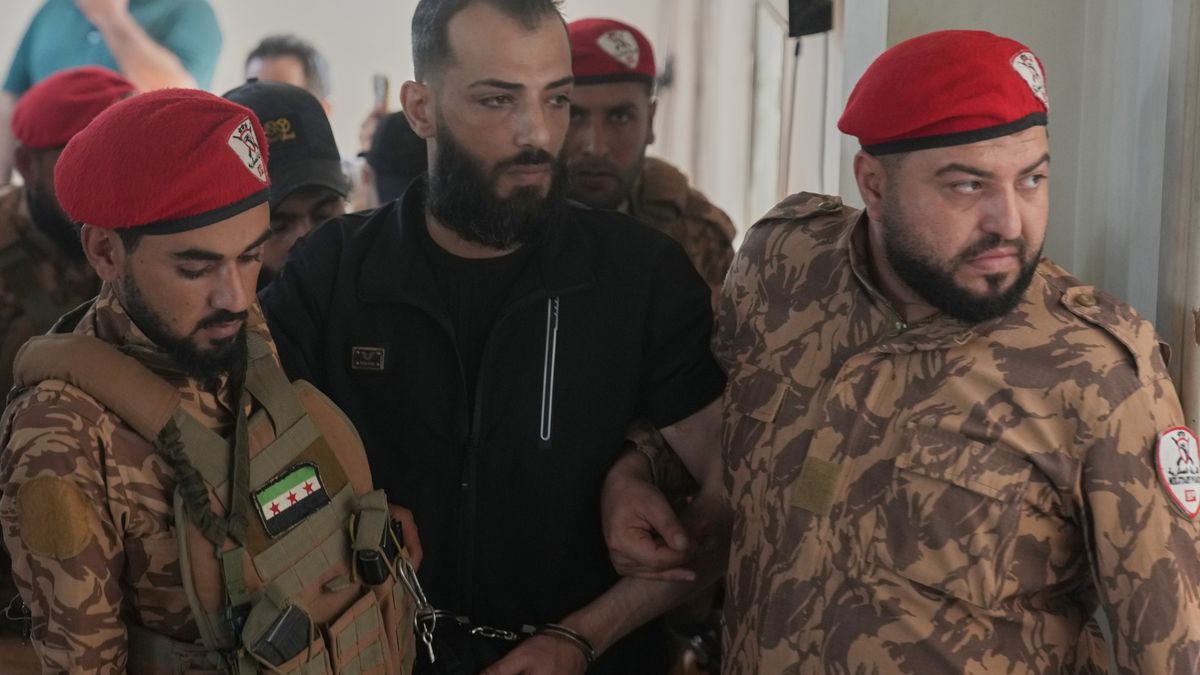
The Military Criminal Court in Aleppo sentenced Al‑Waddah Ismail and Maher Ali to death on Oct. 15, 2026, for inciting an uprising that sparked three days of sectarian slaughter in Syria’s coastal provinces in March 2025. A third defendant, Maher Othman, received a 12‑year term, while several security officers from the new government were handed long prison terms for revenge killings of Alawite civilians. The court’s rulings mark the first time government‑linked personnel have faced trial for violence in the Alawite heartland, where at least 1,426 civilians were killed and hundreds of soldiers from the former regime were slain.
After the Bashar al‑Assad regime collapsed at the end of 2024, a coalition of former opposition groups, tribal leaders, and foreign backers installed a provisional government in Damascus. The new leadership inherited a security apparatus still staffed by former regime officers, many of whom retained loyalty to the Alawite elite that had dominated Syrian politics for decades. By allowing some of these officers to remain, the government sought continuity in order to prevent a security vacuum, but it also created a parallel power structure that could act independently of civilian oversight.
The March 2025 violence erupted when displaced loyalists fled to the coastal mountains and launched attacks against the new authorities, targeting Alawite neighborhoods in Tartous, Latakia and Hama. In response, the government deployed roughly 200,000 reinforcements, who carried out retaliatory killings framed as “revenge” against the Alawite community. By prosecuting a handful of both rebel and government fighters, the regime attempts to signal a willingness to enforce law while preserving the narrative that the Alawite minority remains a legitimate target of state retribution.
Western donors and regional powers have conditioned reconstruction aid on visible accountability for war crimes. The publicized trial serves as a diplomatic tool: it allows the new government to claim progress on justice, appeasing European and UN monitors, while simultaneously deflecting scrutiny from the broader pattern of indiscriminate reprisals that continue unchecked.
The most immediate victims are the Alawite families who lost breadwinners, children, and homes during the March reprisals. Entire villages in the coastal belt remain partially abandoned, with makeshift shelters housing displaced elders and widows who lack access to basic services. The trauma is compounded by the knowledge that the perpetrators of the revenge killings enjoy legal immunity for most of their actions, despite the court’s limited convictions.
For the sentenced rebels, death looms as a stark reminder that the new order will not tolerate organized resistance. Their families, many of whom are already living in precarious refugee camps across Turkey and Lebanon, now confront the prospect of losing their primary providers, further straining already fragile humanitarian assistance.
The prolonged security presence in the coastal provinces has disrupted fishing, tourism, and agricultural cycles that once sustained the local economy. With roads damaged by clashes and checkpoints limiting movement, market prices have surged, pushing food insecurity to new heights for both Alawite and non‑Alawite residents.
Official statements emphasize that only a handful of security officers were tried, yet the committee’s own report cites “about 200,000 pro‑government military reinforcements” deployed during the retaliation. The sheer number suggests a systematic campaign rather than isolated incidents, a fact that the government downplays to avoid accusations of ethnic cleansing.
Regional allies, notably Iran and Russia, have provided logistical support to the new Syrian security forces, enabling rapid deployment to the coast. Their involvement is rarely mentioned in court narratives, allowing the Syrian leadership to portray the trials as purely domestic justice while obscuring the external military scaffolding that sustains the crackdown.
State‑run media framed the death sentences as a triumph of “national unity,” yet independent journalists report that many of the convicted security officers were merely following orders from higher‑level commanders who remain untouchable. By focusing on low‑level perpetrators, the regime diverts attention from the chain of command that orchestrated the mass reprisals.
The next months will reveal whether the court’s limited prosecutions expand into a broader accountability process or remain symbolic. Watch for any international pressure from the UN Human Rights Council demanding a comprehensive investigation into the coastal reprisals. Additionally, monitor the movement of displaced Alawite families—if they begin returning en masse, it could signal a tentative stabilization; if they remain in camps, the humanitarian crisis will deepen, potentially fueling renewed insurgency. Finally, keep an eye on the diplomatic language of Iran and Russia; any shift in their public support for the Syrian security apparatus could alter the balance of power and affect future trials.
The government aims to show limited accountability to appease international donors while protecting higher‑ranking commanders who remain essential to the security apparatus.
It signals a willingness to punish overt rebellion, but it also underscores the fragile legitimacy of the new regime, which still relies on former Assad forces to maintain order.
Source referenced: ALJAZEERA
This brief was synthesized by our Editorial Engine and reviewed by The Ground Narrative team.


