TRENDING

Friday, 16 October 2026
----------------------
5 Jumada Al-Awwal 1448 AH
The 140th China Import and Export Fair marks a high‑tech turning point for Beijing’s trade strategy. While officials tout inclusivity, the real winners and losers stretch far beyond the exhibition halls.
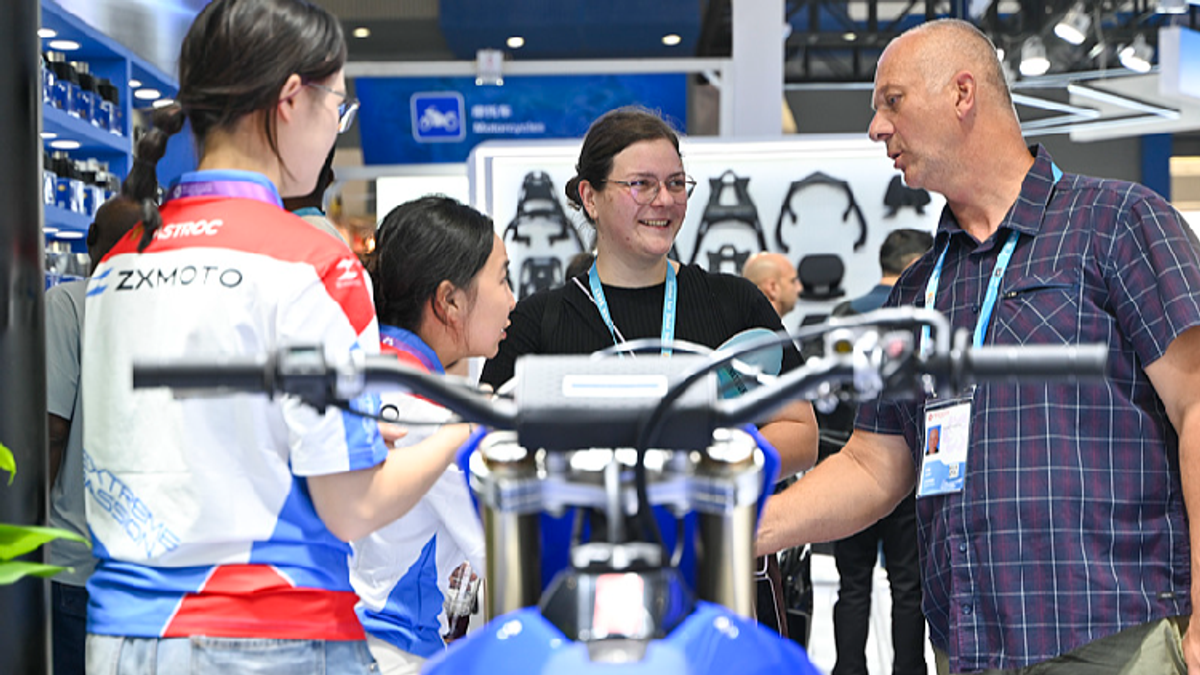
The 140th edition of the Canton Fair opened in Guangzhou on October 15, 2026, celebrating 70 years of China’s flagship trade showcase. Over 210,000 overseas buyers from 196 countries pre‑registered, and the fair introduced a suite of AI‑driven services – from QR‑code business cards to automated negotiation summaries – turning the event into a hybrid digital‑physical marketplace. Organisers highlighted 22 smart application scenarios, 16 AI features, and a dedicated zone for more than 700 new product launches, signaling a shift toward higher‑value, technology‑rich exports.
Beyond the sheer scale, the fair’s integration of artificial intelligence and big‑data analytics marks a strategic upgrade. Exhibitors can now upload product specs that AI instantly matches with buyer needs, while the platform archives customer data to flag high‑potential orders. This digital layer is presented as a public‑good, promising faster matchmaking and a more “inclusive” global trade environment.
At its core, the Canton Fair is a lever for China to project economic soft power while cementing domestic political legitimacy. By positioning the fair as a hub for “high‑standard opening up,” Beijing signals to both domestic audiences and foreign governments that it remains the engine of global supply‑chain governance. The AI enhancements serve a dual purpose: they showcase China’s technological prowess and create data‑rich ecosystems that can be leveraged for future industrial policy, such as the Made‑in‑China 2025 roadmap.
President Xi’s administration has tied trade success to its broader narrative of national rejuvenation. A successful, high‑tech fair bolsters the ruling party’s claim that China can lead the next wave of digital manufacturing without relying on Western platforms. Moreover, the fair’s emphasis on “intelligent manufacturing” dovetails with subsidies for robotics and smart factories, reinforcing a feedback loop where state‑backed firms gain export momentum, which in turn justifies further policy support.
While the fair’s glossy statistics celebrate billions in intended export deals, the benefits are unevenly distributed. Small‑scale manufacturers in inland provinces often lack the resources to meet the AI‑driven standards, leaving them sidelined in favor of larger, state‑linked conglomerates that can afford digital upgrades. Meanwhile, the surge of international buyers strains local infrastructure – traffic congestion, inflated hotel prices, and heightened demand for low‑wage service workers in Guangzhou’s peripheral districts.
The influx of visitors also pressures the city’s environmental capacity. Air quality monitors record spikes in particulate matter during the fair’s two‑week run, a byproduct of increased freight traffic and temporary construction of exhibition pavilions. Residents near the Pazhou complex report higher noise levels and limited access to public spaces, underscoring how a state‑promoted showcase can translate into everyday inconvenience for ordinary citizens.
Official narratives spotlight inclusivity and technological progress, yet they downplay several structural concerns. First, the massive data collection embedded in the AI platform raises questions about privacy and state surveillance, especially for foreign firms whose proprietary product information becomes part of a Chinese‑controlled database. Second, the fair’s push for “quality‑over‑quantity” masks an underlying drive to export surplus capacity from over‑invested sectors like steel and electronics, potentially flooding global markets and depressing prices.
Chinese state media repeatedly cite the fair’s role in “upholding the multilateral trading system,” but they omit how the event reinforces Beijing’s leverage over supply‑chain standards. By setting the terms of digital matchmaking, China can subtly steer procurement decisions toward firms that align with its industrial policy, marginalizing competitors that refuse to share data or adopt Chinese standards. This hidden agenda is rarely addressed in official briefings.
The next edition of the Canton Fair, slated for 2027, will likely deepen its AI integration, possibly introducing blockchain‑based contract verification and real‑time customs clearance. Observers should monitor whether foreign governments push back on data‑security provisions, and whether export‑dependent economies adjust their sourcing strategies in response to potential price pressures from China’s quality‑shift. Additionally, any policy shifts in the United States or European Union regarding technology transfer and fair‑level trade restrictions will be critical indicators of how the balance of power in global commerce may evolve.
Key metrics to watch include the proportion of deals involving AI‑enabled services, the number of small‑enterprise participants, and any regulatory statements from the World Trade Organization referencing the fair’s data practices. Together, these signals will reveal whether the Canton Fair remains a platform for shared prosperity or becomes a conduit for deeper Chinese dominance in the digital supply chain.
The fair deploys AI to match buyer needs with exhibitor offerings, generate negotiation summaries, and archive customer data, speeding up matchmaking and creating a data‑rich ecosystem for future trade.
Foreign firms may face data‑privacy concerns as their product information is stored in Chinese‑controlled systems, and they could be pressured to adopt Chinese standards to stay competitive.
By shifting toward higher‑value, technology‑intensive exports, China aims to offload surplus capacity, which could increase competition in certain markets and put downward pressure on global prices.
Source referenced: CGTN
This brief was synthesized by our Editorial Engine and reviewed by The Ground Narrative team.