TRENDING

Friday, 16 October 2026
----------------------
5 Jumada Al-Awwal 1448 AH
China’s foreign minister warned Israel against forced settlement expansion in the West Bank, a move that reveals Beijing’s growing diplomatic playbook in the Middle East. The warning carries weight for regional actors and ordinary people caught in the conflict.
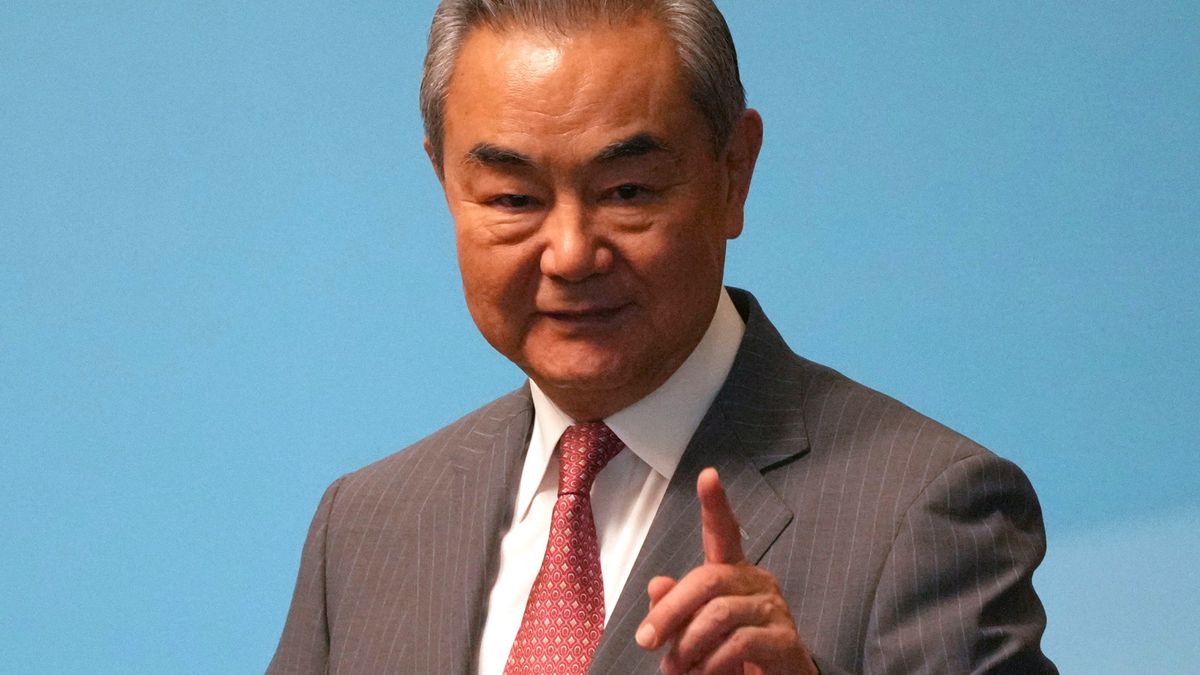
Chinese Foreign Minister Wang Yi met Israeli President Isaac Herzog in Baku, urging Israel to stop and reverse the "forced establishment" of settlements in the West Bank. The statement, released by Beijing’s foreign ministry, framed the Palestinian issue as the "greatest historical injustice" of the century and reiterated support for a two‑state solution and humanitarian access to Gaza.
China’s intervention is not merely a moral stance; it is a calculated move in a multi‑layered contest for influence. First, Beijing seeks to position itself as a neutral arbiter, contrasting with United States policies that have openly backed Israeli security concerns. By championing the Palestinian cause, China can deepen ties with Arab states that have long felt sidelined by Western diplomacy.
Second, economic leverage underpins the diplomatic overture. China remains Iran’s largest oil buyer, accounting for up to 90 % of its exports, and maintains a 25‑year strategic partnership with Tehran. Simultaneously, Beijing has cultivated trade relationships with Gulf monarchies—Saudi Arabia, Qatar, and the United Arab Emirates—that view a balanced stance on the Israeli‑Palestinian conflict as essential for regional stability.
Third, the timing aligns with Beijing’s broader Middle East agenda unveiled during President Xi Jinping’s Cairo visit. Xi called for a new security architecture free from external interference, implicitly challenging the United States‑led order that has dominated the region since the Cold War. By voicing concern over settlement expansion, China signals readiness to mediate, thereby expanding its diplomatic toolkit beyond infrastructure projects and trade deals.
Fourth, domestic politics play a subtle role. The Chinese leadership faces growing scrutiny over its own human‑rights record. Projecting a champion‑of‑justice image abroad helps deflect criticism at home, reinforcing the narrative that Beijing upholds international law while its own policies remain under the global microscope.
Finally, alliance math matters. Israel, while a close U.S. ally, also values diversification of partners to offset over‑reliance on Washington. Beijing’s outreach offers Israel a diplomatic back‑channel, especially as the U.S.‑Israel war on Iran escalates. Israel’s willingness to engage with China on settlement issues may reflect a pragmatic calculation to keep options open.
The most immediate victims are Palestinians living under occupation. Settlement expansion often involves demolition of homes, land expropriation, and restricted movement, deepening economic hardship and psychological trauma. Agricultural lands seized for new outposts reduce food security for villages that already depend on subsistence farming.
While the Israeli government frames settlements as security buffers, the reality for many settlers is increased tension and occasional violence. The cost of maintaining outposts—through military patrols and infrastructure—drains national resources that could otherwise fund public services such as education and healthcare.
Trade routes that cross the West Bank are disrupted by settlement construction, raising transportation costs for both Palestinian and Israeli businesses. Moreover, instability hampers foreign investment in the broader Middle East, discouraging firms from committing capital to sectors like renewable energy and tourism.
The ripple effect reaches consumers worldwide. Higher oil prices can result from renewed U.S.‑Israel‑Iran confrontations, which in turn affect fuel costs in Europe, Asia, and the Americas. The indirect financial strain on households underscores how distant diplomatic moves translate into everyday expenses.
Western media often portray Beijing’s statements as purely humanitarian, overlooking the strategic calculus behind them. By emphasizing the “greatest historical injustice,” China masks its desire to carve out a diplomatic niche that could later be leveraged for economic concessions or voting blocs in international bodies.
Israeli officials rarely disclose the budgetary impact of settlement expansion. The public narrative focuses on security, while the hidden cost—escalating defense spending and international criticism—remains underreported, allowing the government to sidestep accountability.
Energy firms and construction conglomerates benefit from the status quo. Oil imports from Iran sustain Chinese energy giants, while Israeli and international construction companies profit from settlement infrastructure projects. Their influence is seldom mentioned in official statements, yet they stand to lose if diplomatic pressure forces a settlement freeze.
Both China and the United States publicly endorse a two‑state framework, but each interprets it to suit its own agenda. Beijing’s emphasis on immediate humanitarian access to Gaza subtly shifts focus away from the contentious issue of settlement legality, allowing it to claim progress without confronting the core dispute.
Watch for shifts in diplomatic language at upcoming G20 meetings and the next UN General Assembly, where China may push for resolutions that tie settlement activity to broader economic incentives. Monitor Israeli policy adjustments, especially any legal challenges to settlement approvals, as they could signal Beijing’s influence taking hold. Finally, keep an eye on oil market reactions; a de‑escalation between Israel, Iran, and the U.S. could reshape global energy flows, directly affecting consumers far beyond the Middle East.
Beijing aims to boost its diplomatic clout, balance relations with Iran and Gulf states, and present itself as a neutral peace broker, all while deflecting criticism of its own human‑rights record.
A freeze could reduce daily friction for Palestinians, lower security costs for Israel, and create a more favorable environment for economic projects, but it also risks backlash from hard‑line Israeli factions.
If Chinese pressure eases tensions between Israel and Iran, the risk premium on Middle Eastern oil could fall, leading to lower prices for consumers worldwide.
Editor's Note: Analysis based on publicly available statements and established geopolitical patterns.
Source referenced: ALJAZEERA
This brief was synthesized by our Editorial Engine and reviewed by The Ground Narrative team.


