TRENDING

Friday, 16 October 2026
----------------------
5 Jumada Al-Awwal 1448 AH
Benjamin Netanyahu, Israel's longest-serving prime minister, faces re-election while under international scrutiny, having forged an opposition that largely mirrors his own right-wing ideology. His enduring influence has reshaped the nation's political landscape, embedding deep divisions and hardline policies.
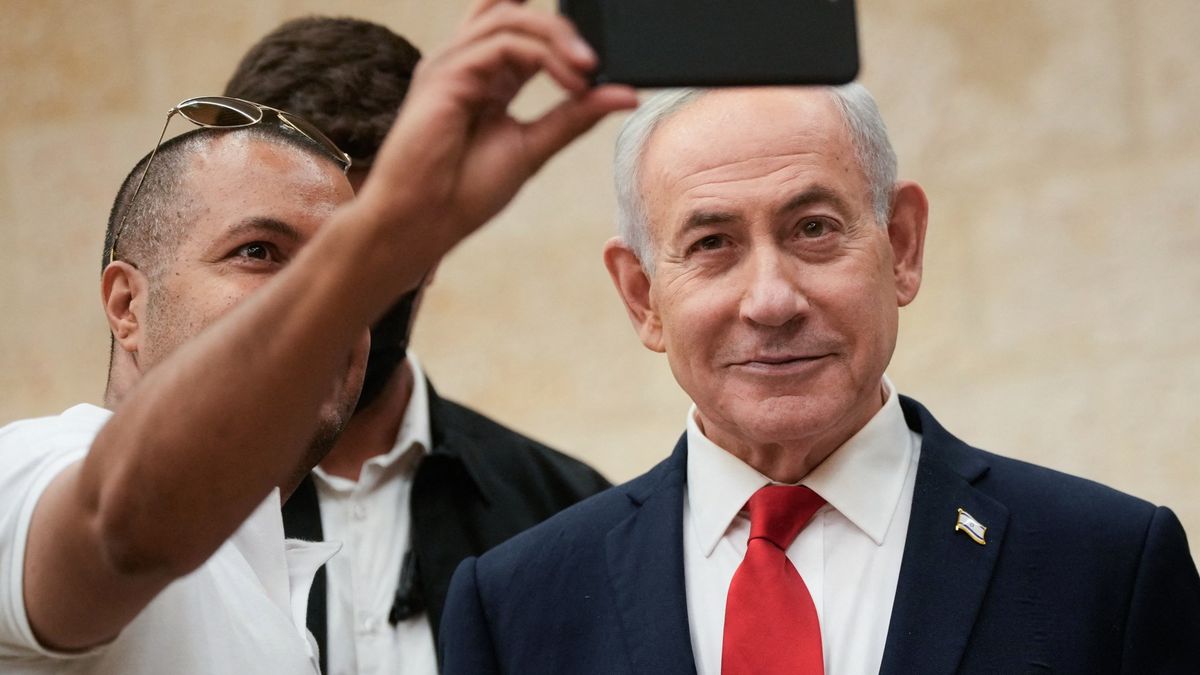
Israeli Prime Minister Benjamin Netanyahu recently faced a walkout by delegates at the United Nations General Assembly during his speech, a public display of international disapproval. Undeterred, Netanyahu, who is seeking re-election later this month and is wanted by the International Criminal Court (ICC) on charges of war crimes in Gaza, defiantly challenged the remaining delegates. This incident encapsulates his political persona: a leader who thrives on confrontation, often portraying international criticism as a badge of honor for his domestic base.
On October 27, Israel is set to hold an election where Netanyahu's Likud party faces a fragmented opposition. This diverse bloc is largely unified by its opposition to Netanyahu himself, rather than by a coherent alternative vision. His political journey, spanning decades, has seen him serve multiple terms, including a record 12-year tenure, and currently leads what is described as the most far-right government in Israel's history. This long and impactful career has fundamentally altered the country's political discourse and the nature of its leadership.
Benjamin Netanyahu's political survival is a masterclass in leveraging polarization and maintaining a perpetual campaign mode. From his early days, he has been adept at building coalitions that reflect and, crucially, steer public opinion towards his agenda. His former aide, Mitchell Barak, notes that Netanyahu "thrives in chaos," focusing on the "big picture" where ends justify means. This approach has allowed him to navigate corruption charges and domestic unrest, often by framing himself as the sole protector of Israel's interests against internal and external threats.
Central to his power strategy has been the deliberate shift of Israel's political center to the right. Under his leadership, the prospect of a two-state solution to the Israel-Palestine conflict, once a cornerstone of international diplomacy, has been systematically undermined. This has been achieved through the accelerated expansion of illegal settlements in the occupied West Bank and the passage of legislation like the Nation-State Law in 2018. This law declared the right to national self-determination "unique to the Jewish people," stripped Arabic of its official language status, and enshrined the development of Jewish settlements as a national value. Such moves consolidate his right-wing base while marginalizing dissenting voices.
Netanyahu's current coalition exemplifies this rightward lurch, bringing figures like National Security Minister Itamar Ben-Gvir and Finance Minister Bezalel Smotrich into the heart of power. These individuals, known for their extreme pro-settlement views and past convictions for incitement, are not merely allies but integral components of his governing strategy. As analyst Nimrod Flaschenberg observes, Netanyahu "is very good at building coalitions that reflect public opinion, as well as steering that opinion in his own direction." This isn't just about personal power; it's about institutionalizing a particular ideological framework for the state.
The attempt to overhaul the judiciary in 2023 further illuminated the mechanics of his power. Dogged by corruption cases, Netanyahu and his allies sought to curb the courts' oversight of government actions. This move, which sparked unprecedented mass protests, was widely seen as an effort to insulate himself from legal accountability. While he eventually walked back some of the most contentious elements, the episode underscored his willingness to challenge established democratic norms to secure his position. His ability to link even the October 7, 2023, attack to the divisions caused by his own reforms, however controversially, demonstrates a strategic use of blame and deflection to maintain control of the narrative.
The nature of the opposition itself is a testament to Netanyahu's enduring influence. While united in their desire to unseat him, the main contenders largely share his right-wing, militaristic, and often nationalistic ideology. This phenomenon, likened by Flaschenberg to Margaret Thatcher's legacy of shifting the entire political spectrum to the right, means that even if Netanyahu departs, the fundamental policy direction of Israel may not drastically change. The opposition, in essence, has been shaped in his image, making a genuine ideological alternative difficult to find within the mainstream political landscape.
The political machinations surrounding Benjamin Netanyahu's long tenure have exacted a severe human cost, particularly for Palestinians and for the fabric of Israeli society itself. The shift towards hardline policies, driven by successive Netanyahu governments, has intensified the daily realities of occupation and conflict.
For Palestinians, the consequences are stark and immediate. The aggressive expansion of illegal settlements in the occupied West Bank, a policy consistently championed by Netanyahu, directly infringes upon their land, resources, and freedom of movement. Data from the UN Office for the Coordination of Humanitarian Affairs (OCHA) reveals a dramatic surge in settler violence, with 1,291 attacks recorded in 2023 and an alarming 1,835 in 2025. This violence, often perpetrated with impunity, has led to a significant loss of life; at least 1,071 Palestinians, including 233 children, have been killed by Israeli forces or settlers since October 7, 2023, with "virtually no accountability" according to a senior UN official. The Nation-State Law, by stripping Arabic of its official language status and declaring self-determination unique to the Jewish people, further entrenches a system of legal discrimination, impacting the identity and rights of Palestinian citizens of Israel.
Within Israeli society, Netanyahu's leadership has fostered deep and often bitter polarization. His strategy of dividing and conquering, while politically effective for him, has fragmented the national consensus. The attempts to overhaul the judiciary, seen by many as an attack on the country's democratic checks and balances, exposed a profound schism between those who fear an autocratic slide and those who prioritize governmental power. While these reforms were met with massive protests, the underlying tensions remain, threatening the cohesion of Israeli society.
The constant state of conflict and militarization, exacerbated by policies that reject peace overtures, also takes a toll. Resources are diverted, national discourse is dominated by security concerns, and the space for dissent and critical self-reflection shrinks. The case of Arab MK Sami Abu Shehadeh, barred from running in the election over his remarks about the Gaza war, highlights a system where certain voices are silenced, while a leader facing war crimes charges continues to run. This double standard underscores a worrying trend in the erosion of civil liberties and democratic participation for specific segments of the population.
Beneath the surface of headlines about Benjamin Netanyahu's political battles and the upcoming Israeli election lies a more profound, often unacknowledged narrative. What is frequently downplayed or omitted by powerful actors, both within Israel and internationally, is not just the immediate political maneuvering, but the systemic shifts that Netanyahu has either spearheaded or skillfully exploited.
The most significant untold story is the illusion of a genuine ideological choice in the upcoming election. While much attention focuses on the "anti-Netanyahu bloc," the reality, as political analyst Nimrod Flaschenberg points out, is that "all of the main contenders are right-wing, militaristic and ultimately racist." This suggests that the problem extends beyond a single leader. Netanyahu didn't invent the rightward drift in Israeli politics, but he masterfully accelerated it and made it the default. The opposition, by largely adopting similar hardline stances on security, settlements, and Palestinian rights, offers a change in personality but not necessarily a fundamental shift in policy. This dynamic effectively normalizes the far-right agenda, making it the mainstream and marginalizing any genuine left-wing or peace-oriented alternatives. The public is presented with a choice between different shades of the right, rather than a clear ideological spectrum, which limits the potential for meaningful policy change, regardless of who wins.
Another critical, often downplayed aspect is the normalization of extremist figures within the highest echelons of Israeli power. The inclusion of individuals like Itamar Ben-Gvir and Bezalel Smotrich, once considered fringe elements, into key ministerial positions is not merely a political concession by Netanyahu to form a coalition. It represents a broader societal acceptance, or at least tolerance, of their ideologies. As outgoing parliamentarian Aida Touma-Sliman states, Netanyahu "knows exactly what he's doing" by including them, and he understands the outcome. This isn't just about Netanyahu's cunning; it's about how the political center has shifted so dramatically that what was once considered extreme is now mainstream, enabling policies that further entrench occupation and discrimination. The international community, while often condemning specific actions, frequently fails to fully grasp or address the systemic nature of this normalization.
Finally, while the October 7, 2023, attack and the subsequent Gaza war are often framed as security failures attributable to Netanyahu, the deeper, long-term context of prolonged occupation, the systematic denial of Palestinian self-determination, and the economic strangulation of Gaza are frequently omitted from the mainstream narrative. Powerful actors, including governments and media, often focus on immediate events and individual culpability, rather than the structural conditions that have fueled decades of conflict. This narrow framing allows for a perpetuation of policies that avoid addressing the root causes, ensuring that cycles of violence continue. The international community's selective engagement, often prioritizing strategic alliances over consistent application of international law, further contributes to this untold story, enabling the status quo to persist.
The upcoming Israeli election on October 27 will be a critical barometer of the nation's political trajectory, but its immediate outcome may not signal a dramatic shift in policy. Readers should look beyond the personality contest to discern the deeper currents at play.
First, observe the election outcome closely. Will Benjamin Netanyahu secure another term, extending his record-breaking tenure, or will the opposition bloc manage to coalesce effectively enough to unseat him? The margin of victory or loss, and the composition of any potential coalition government, will reveal the precise strength of the hardline right and the internal divisions within the anti-Netanyahu camp. A narrow victory for either side could lead to continued political instability.
Second, pay attention to the post-election government's policy agenda, regardless of who leads it. Given that the opposition largely shares the right-wing, militaristic tenets that Netanyahu has championed, it's crucial to assess whether a new government would genuinely pursue significantly different policies regarding Palestinians, settlement expansion in the West Bank, or judicial reform. A change in leadership without a fundamental shift in ideology may mean little practical difference for the daily lives of those affected by Israeli policies.
Third, monitor the ongoing International Criminal Court (ICC) proceedings against Netanyahu. While the immediate impact on his domestic political standing might be limited, the ICC's actions could significantly affect Israel's international standing, diplomatic relations, and the legal precedent for leaders accused of war crimes. Any developments here could intensify international pressure and potentially influence future policy decisions.
Finally, watch for signs of renewed internal dissent within Israel. The mass protests against the judicial overhaul demonstrated a significant segment of the population's commitment to democratic principles. Should a new government, or a re-elected Netanyahu, push similar controversial legislation or escalate conflicts, the potential for widespread civil unrest remains high. The aftermath of the Gaza war and its domestic implications, including the debate over accountability for security failures, could also serve as a flashpoint for renewed public protest and political realignment. These internal pressures, more than external condemnation, may ultimately force a re-evaluation of Israel's long-term direction. These dynamics will shape not only Israel's future but also the broader stability of the Middle East.
Netanyahu's legacy is marked by deep political polarization, a significant shift of Israel's political discourse to the right, and the institutionalization of hardline policies regarding settlements and Palestinian rights. He has also shaped an opposition that, while against him personally, largely adheres to similar right-wing, militaristic ideologies.
Under Netanyahu, the prospect of a two-state solution has been systematically undermined, with accelerated expansion of illegal settlements in the West Bank and the passage of the Nation-State Law. These policies have contributed to increased settler violence and intensified the conflict, particularly affecting Palestinians in the West Bank and Gaza.
The opposition, largely unified by anti-Netanyahu sentiment, primarily consists of right-wing and militaristic parties, suggesting a systemic shift in Israeli politics rather than just a leadership issue. This indicates that even without Netanyahu, the core policies regarding security, settlements, and Palestinian relations may not see significant change, reflecting a broader normalization of hardline ideologies.
Editor's Note: The analysis draws heavily from the provided raw intelligence, focusing on the described political dynamics and their human cost, while adhering to TGN's editorial doctrine.
Source referenced: ALJAZEERA
This brief was synthesized by our Editorial Engine and reviewed by The Ground Narrative team.