TRENDING

Friday, 16 October 2026
----------------------
5 Jumada Al-Awwal 1448 AH
A US appeals court has ruled that President Trump's policy to expel transgender troops from the military is unconstitutional, but the decision is split among the judges, leaving room for further appeals.
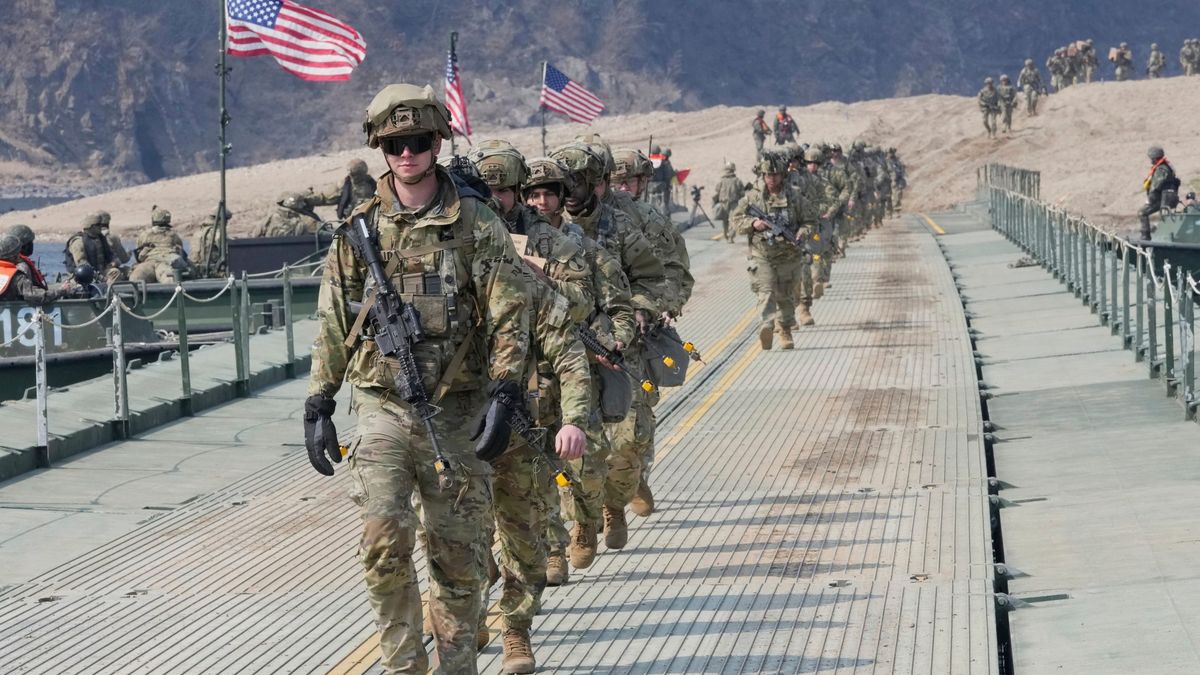
The recent ruling by the US appeals court for the District of Columbia has significant implications for the transgender community and the US military. The case revolves around President Trump's executive order, issued in January 2025, which aimed to expel transgender troops from the military. The order was based on Trump's assertion that being transgender is 'not consistent with the humility and selflessness required of a service member.'
The Trump administration's policy was rooted in a 13-page Pentagon memorandum, issued in February 2025 under Defense Secretary Pete Hegseth. The memorandum declared that any service member who has 'symptoms' of gender dysphoria or has used hormone therapy or surgery to affirm their gender would be 'disqualified from military service.' This policy was met with widespread criticism, with many arguing that it was discriminatory and unconstitutional.
The US appeals court's ruling was a split decision, with one judge, Robert Wilkins, upholding a lower court ruling rejecting the Trump administration's policy as it pertains to already enlisted service members. A second judge, Judith Rogers, agreed with Wilkins' opinion but only in part, extending it to those who seek to enlist. The third judge, Trump pick Justin Walker, issued a dissent, questioning the court's ability to second-guess US military policy.
The split decision is unlikely to have an immediate effect on US military policy, as the appeals court has stayed the preliminary injunction from the lower court. However, the ruling is a significant victory for the transgender community and a setback for the Trump administration's discriminatory policies. The decision highlights the ongoing struggle for equality and inclusion in the US military and underscores the need for continued advocacy and activism.
The ruling has implications beyond the US, as it sets a precedent for the treatment of transgender individuals in the military. It also reflects the ongoing tensions between the US and its allies on issues of LGBTQ+ rights and inclusion. The decision is likely to be closely watched by human rights organizations and governments around the world, as it sets a benchmark for the protection of transgender individuals' rights.
The US appeals court's ruling is a significant development in the ongoing struggle for equality and inclusion in the US military. While the decision is split, it is a victory for the transgender community and a setback for the Trump administration's discriminatory policies. The implications of the ruling will be closely watched by human rights organizations and governments around the world, as it sets a precedent for the treatment of transgender individuals in the military.
Editor's Note: The ruling is a significant development in the ongoing struggle for equality and inclusion in the US military, but its implications will be closely watched as the case continues to unfold.
Source referenced: ALJAZEERA
This brief was synthesized by our Editorial Engine and reviewed by The Ground Narrative team.