TRENDING

Friday, 16 October 2026
----------------------
5 Jumada Al-Awwal 1448 AH
The sudden disappearance of USAID has left Nepal scrambling to fill a critical gap in flood monitoring and community preparedness. As monsoon rains intensify, ordinary citizens bear the brunt of a weakened disaster‑risk system.
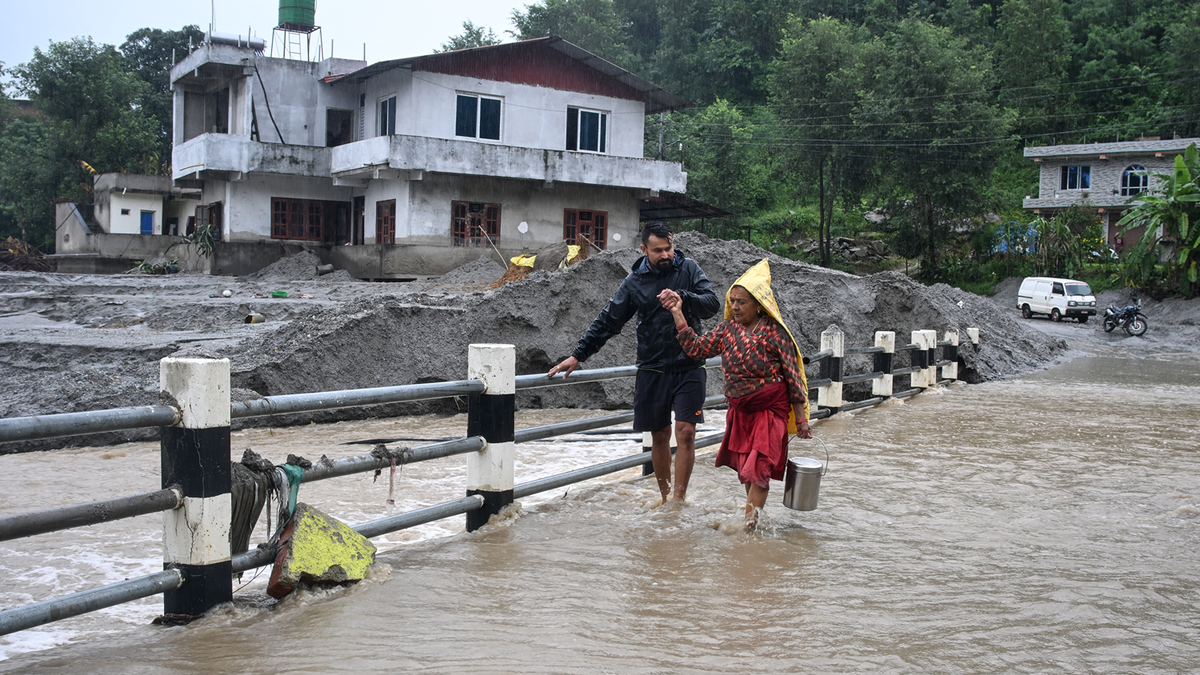
Two devastating floods swept the Bhotekoshi and Trishuli river basins in August 2026, killing dozens and displacing thousands. The disasters unfolded against a backdrop of dwindling international assistance: USAID, once the primary U.S. conduit for humanitarian aid in Nepal, had been effectively dismantled a year earlier, leaving a vacuum in early‑warning and on‑the‑ground response capabilities.
The disappearance of USAID was not an accident but the outcome of a multi‑year policy shift that began under the Trump administration’s Department of Government Efficiency. Funding freezes, staff layoffs, and a strategic re‑branding of U.S. development assistance were framed as cost‑saving measures and a pivot toward “private‑sector solutions.” In practice, the move transferred the burden of disaster risk reduction to host governments and multilateral bodies that lack comparable resources.
- Incentives for the United States: Domestic political pressure to reduce foreign aid budgets, combined with a broader “America First” narrative, made large‑scale humanitarian programs politically vulnerable. The administration calculated that the electoral payoff of cutting aid outweighed the diplomatic cost of reduced goodwill in the Global South.
- Political survival for Nepal’s elites: Nepal’s central government, already grappling with political fragmentation, has been forced to re‑allocate limited fiscal space toward emergency relief, diverting funds from long‑term development projects. The loss of USAID’s technical expertise also weakens the government’s ability to claim competence in disaster management, a key metric for maintaining public support.
- Economic trade‑offs: The $30 million annual disbursement from the Tayar Nepal program and the satellite‑data partnership under SERVIR‑HKH represented a modest but critical infusion of technology and training. Their removal forces Nepal to rely on ad‑hoc, often less accurate, forecasting tools, increasing the economic cost of each flood event through damaged infrastructure and lost agricultural output.
- Military doctrine and alliance math: While the U.S. retains a strategic interest in the Himalayas—particularly as a counterbalance to China’s growing influence—the decision to prune humanitarian capacity signals a recalibration. The U.S. continues to fund NOAA and WMO initiatives, but these are less integrated with local response networks, limiting the strategic utility of the aid.
Villagers in Nuwakot and Gorkha districts now cross ankle‑deep rivers daily, relying on makeshift rafts and community volunteers to ferry supplies. Without the early‑warning alerts once generated by SERVIR‑HKH, many families receive no notice before flash floods strike, leading to loss of life, livestock, and crops that constitute their primary livelihood.
Women, who traditionally manage household water and food stores, face heightened burdens when floods destroy storage facilities. School closures due to damaged bridges force children to travel longer distances, increasing dropout rates and eroding future human capital.
Tourism, a major revenue source for the Annapurna and Mustang regions, suffers as trekking routes are washed out and safety perceptions decline. Small‑scale traders lose inventory, and the cost of rebuilding bridges and roads diverts municipal budgets away from health and education.
U.S. State Department spokespeople emphasize that NOAA and the World Meteorological Organization continue to support flood‑warning capacity, suggesting continuity. However, insiders reveal that the SERVIR‑HKH contract, originally slated for 2026, was terminated in early 2025, cutting off a pipeline of satellite‑derived, locally calibrated forecasts.
American tech firms that provide commercial satellite imagery have stepped into the gap left by USAID, offering data on a fee‑for‑service basis. While this creates a market, it also transfers critical safety information from a public‑good model to a profit‑driven one, potentially pricing out the poorest municipalities.
Government officials often cite “weak institutional memory” as a reason for program discontinuities. This framing obscures the reality that donor‑driven projects were never fully integrated into national systems; once external funding vanished, the knowledge transfer halted, leaving a skeletal capacity that cannot scale.
- Funding negotiations at the 2027 G‑20 summit: Nepal will lobby for a multilateral disaster‑risk fund that could partially replace the lost USAID budget. The outcome will indicate whether the international community is willing to fill the gap left by U.S. retrenchment.
- China’s outreach in the Himalayas: Beijing has increased climate‑adaptation assistance to Nepal, including joint hydropower projects and technical training. Observers should monitor whether this aid comes with strategic strings that could shift Nepal’s geopolitical alignment.
- Domestic policy reforms: The Nepalese parliament is debating a bill to institutionalize community‑based early‑warning committees. Successful passage could mitigate some of the capacity loss, but implementation will hinge on sustained financing.
- Private‑sector data services: Track the emergence of subscription‑based flood‑forecast platforms targeting Nepali municipalities. Their pricing structures and data accessibility will directly affect how many villages receive timely alerts.
The convergence of climate change, donor withdrawal, and regional power competition creates a precarious landscape for Nepal’s most vulnerable citizens. As monsoon rains grow more erratic, the question is not whether the next flood will occur, but whether the people on the riverbanks will have the tools—and the political will—to survive it.
USAID’s major disaster‑risk initiatives, including the Tayar Nepal program and the SERVIR‑HKH satellite‑monitoring partnership, were terminated in 2025 after funding freezes and staff cuts, leaving a gap in early‑warning and community training.
Local volunteers and provincial authorities are improvising with limited resources, but without reliable flood forecasts many villages receive no advance warning, leading to higher casualties, property loss, and economic disruption.
China has increased climate‑adaptation outreach, and private satellite firms now offer paid data services, but neither provides the same integrated, capacity‑building approach that USAID once delivered.
Editor's Note: Analysis based on publicly available reports and expert interviews; on‑the‑ground verification limited.
Source referenced: FOREIGNPOLICY
This brief was synthesized by our Editorial Engine and reviewed by The Ground Narrative team.