TRENDING

Friday, 16 October 2026
----------------------
5 Jumada Al-Awwal 1448 AH
Ethiopian forces are consolidating control in Tigray, but a new and dangerous dynamic is emerging as Ethiopia accuses former ally Eritrea of backing a fresh rebel alliance. This sudden shift has led to Eritrean troop withdrawals and an Ethiopian military buildup at the border, raising fears of renewed regional conflict.
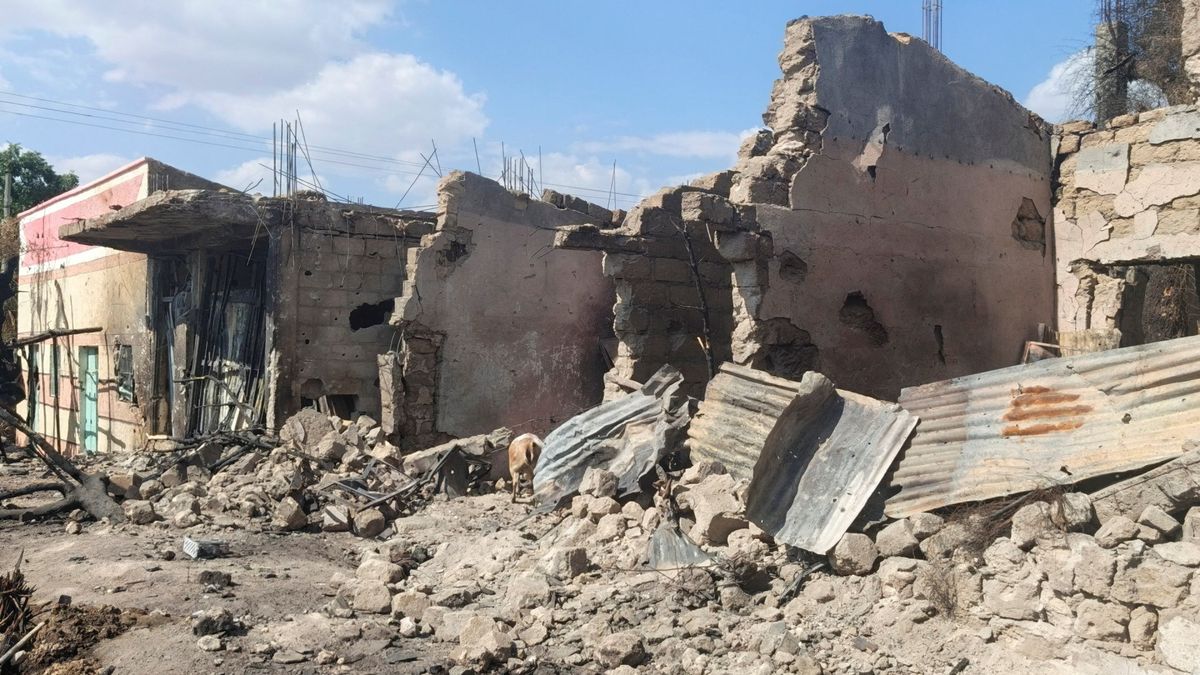
Ethiopian federal forces, alongside their allied Tigray Peace Force (TPF), have significantly expanded their control across the Tigray region. This offensive has seen them reclaim strategic towns including Aksum, Adwa, and Adigrat, and push the Tigray People's Liberation Front (TPLF) out of its regional capital, Mekelle. However, this consolidation of power has been overshadowed by a sudden and alarming escalation of tensions with Eritrea, a nation that previously fought alongside Ethiopia against the TPLF. Ethiopia now accuses Eritrea of supporting a new alliance of rebel groups, leading to reports of Eritrean troop withdrawals from Tigray and a subsequent buildup of Ethiopian heavy weaponry near their shared border, culminating in the severance of diplomatic ties.
The shifting sands of the Horn of Africa are once again demonstrating the fluid and often transactional nature of alliances, particularly when national interests and the survival of political regimes are at stake. Ethiopian Prime Minister Abiy Ahmed is in a critical phase of asserting and cementing federal authority after the devastating 2020-2022 Tigray War. His government's primary objective is to neutralize the TPLF as a political and military force, perceiving it as a threat to the unity and stability of the Ethiopian state. The deployment of the TPF alongside the Ethiopian National Defence Force (ENDF) is a clear strategy to leverage local support while projecting federal power.
Eritrea's President Isaias Afwerki operates from a deep-seated historical animosity towards the TPLF, which dominated Ethiopian politics for decades and was Eritrea's primary adversary during the 1998-2000 border war. The previous alliance with Abiy's government was a marriage of convenience, aimed at crushing this common enemy. The current accusations, however, suggest a complex strategic calculus by Asmara. Eritrea might be concerned about a too-strong and unified Ethiopia under Abiy, which could potentially overshadow its own regional influence or even revive old territorial claims. By allegedly backing new rebel groups, Eritrea could be attempting to keep Ethiopia destabilized, preventing it from becoming an overwhelming regional hegemon. Alternatively, Eritrea might view Ethiopia's recent advances in Tigray as a direct threat to its own security interests, prompting a pre-emptive or retaliatory move.
The Ethiopia-Eritrea border itself is a historical scar, a legacy of unresolved territorial disputes and proxy conflicts that have simmered for decades. Both nations view this frontier as critical for their national security and economic lifelines. The movement of Ethiopian tanks and heavy weapons towards this border signals a serious escalation, transforming a fragile peace into a potential new flashpoint. The international community, particularly the United States, as evidenced by Secretary of State Marco Rubio's call for de-escalation, is acutely aware of the potential for wider regional instability. However, external influence often struggles against the deeply entrenched historical grievances and internal political imperatives driving these nations.
Accusations by Addis Ababa against Sudan and Egypt of also backing the new rebel alliance further complicate the power dynamics. This expands the conflict beyond a bilateral dispute, weaving it into the broader regional competition for influence, particularly concerning the Grand Ethiopian Renaissance Dam (GERD) on the Nile River, a project that deeply concerns downstream nations like Egypt and Sudan. This suggests that the current conflict in Tigray is not merely an internal Ethiopian affair but a nexus of interconnected regional rivalries, where each actor seeks to gain leverage or prevent a rival from becoming too powerful.
In the grand calculus of geopolitical maneuvering, the lives of ordinary citizens often become mere footnotes. The renewed and shifting conflict in Tigray and along the Ethiopia-Eritrea border is exacting a devastating toll on populations already reeling from years of war and instability. The 2020-2022 conflict displaced millions, created widespread famine, and left deep psychological scars. This new phase threatens to exacerbate an already dire humanitarian crisis.
For residents of towns like Zalambessa, near the Eritrean border, the reality is one of profound vulnerability and anxiety. Eyewitness accounts describe being
After a period of alliance against the TPLF, Ethiopia now accuses Eritrea of backing new rebel groups within Tigray. This shift reflects deep-seated historical rivalries, unresolved border issues, and a struggle for regional influence, leading to renewed tensions and troop movements.
The conflict is causing severe humanitarian distress, including displacement, civilian casualties from drone strikes, and a lack of essential services like power and water in border towns. Communities are experiencing deep anxiety and economic devastation, exacerbating a crisis from previous conflicts.
Beyond the immediate conflict, Ethiopia's accusations likely serve to deflect from internal dissent and are tied to broader regional power struggles, particularly over the Grand Ethiopian Renaissance Dam (GERD). These claims may be used to rally internal support and frame opposition as external interference, rather than addressing complex domestic and regional grievances.
Source referenced: ALJAZEERA
This brief was synthesized by our Editorial Engine and reviewed by The Ground Narrative team.