TRENDING

Saturday, 10 October 2026
----------------------
29 Rabi' Al-Thani 1448 AH
CCTV captured an ICE convoy opening fire on a car carrying a child, sparking citywide protests. The incident reveals how immigration enforcement collides with urban politics and ordinary lives.
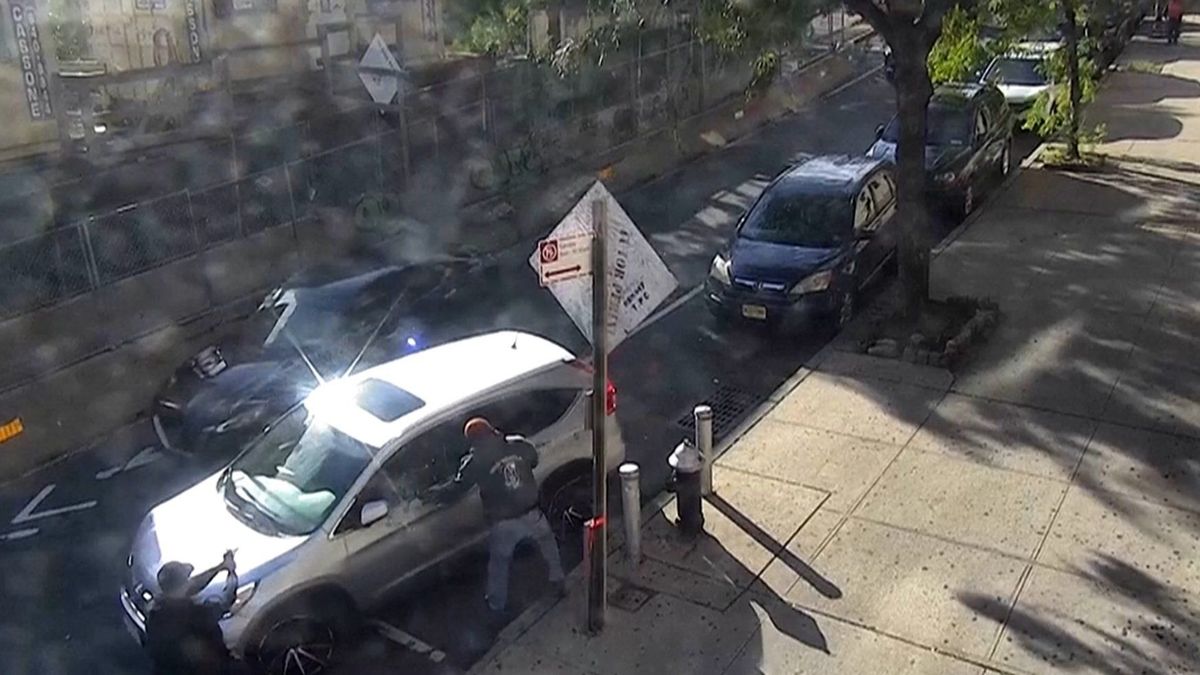
CCTV footage released by local media shows ICE agents in a marked vehicle opening fire on a civilian car as it turned onto a Manhattan street. The driver, a 32‑year‑old immigrant father, was attempting to flee a checkpoint while his six‑year‑old daughter sat in the backseat. One bullet struck the vehicle’s rear door; the child was unharmed but visibly shaken. The incident, captured in a single 60‑second clip, quickly spread on social platforms, prompting immediate protests outside the agency’s New York office and calls for the agency to cease operations in the city.
ICE operates under the Department of Homeland Security, tasked with enforcing immigration law across the United States. In recent years, the agency has expanded its presence in high‑density urban centers, using mobile enforcement teams to conduct sweeps in neighborhoods with large undocumented populations. New York’s mayoral administration, while publicly supporting public safety, has repeatedly clashed with federal officials over the agency’s tactics, arguing that aggressive raids undermine community trust and economic stability.
The current administration frames strict immigration enforcement as a political necessity, appealing to a voter base that links national security with border control. Congressional appropriations for ICE have risen by 12 % over the past two fiscal years, tying agency budgets to visible enforcement actions. For local politicians, appearing tough on immigration can translate into campaign donations and media coverage, even when the city’s own demographics are overwhelmingly immigrant‑rich.
Federal law grants ICE broad discretion to detain individuals suspected of immigration violations, but the agency’s authority to use lethal force is limited to situations where officers face an imminent threat. The New York shooting raises questions about the interpretation of “imminent threat” when the target was a civilian vehicle, not an armed suspect. Courts have historically deferred to agency judgment in such cases, creating a legal shield that discourages accountability.
The immediate victims are the driver and his daughter, whose lives have been upended. The father now faces potential criminal charges for fleeing, while his child bears psychological trauma that can affect schooling and long‑term mental health. Neighborhood residents report heightened anxiety, fearing that any routine traffic stop could turn deadly.
Local businesses in the affected precinct have seen a 7 % drop in foot traffic since the shooting, as customers avoid an area perceived as unsafe. Immigrant entrepreneurs, who constitute a sizable share of the district’s economy, risk losing wages and employment if they are detained or if community trust erodes.
The incident deepens mistrust between immigrant communities and law‑enforcement agencies. Residents are less likely to report crimes or cooperate with investigations, undermining public safety and increasing the burden on emergency services that rely on community tips.
Official statements from ICE emphasize that agents acted in self‑defense, citing “unusual vehicle maneuvers” as evidence of a threat. The agency’s press release omits any reference to the child in the backseat, a detail that human‑rights groups argue is central to assessing proportionality. Meanwhile, city officials have downplayed the incident’s impact on broader immigration policy, framing it as an isolated event rather than a symptom of systemic overreach.
National outlets have largely reproduced the agency’s narrative, focusing on the driver’s alleged illegal status while giving scant attention to the child’s presence. Local journalists, however, have highlighted eyewitness accounts that describe the agents firing without warning. This divergence illustrates how media ownership and editorial lines can shape public understanding of state violence.
Real‑estate developers and hospitality firms have quietly lobbied for stricter enforcement, arguing that undocumented residents depress property values and strain municipal services. Their influence is rarely disclosed, yet it fuels a policy environment where aggressive sweeps are justified under the guise of “economic stability.”
The next weeks will reveal whether the city’s mayor will formally request that ICE suspend operations in New York, a move that could set a precedent for other sanctuary‑leaning municipalities. Legal challenges are likely to surface, focusing on the agency’s use‑of‑force guidelines and the applicability of the Fourth Amendment in traffic stops. Watch for statements from congressional oversight committees, which may use the incident to push for broader reforms or, conversely, to double down on funding. Finally, monitor community organizing efforts; the protests have already coalesced into a broader coalition demanding immigration policy overhaul, and their momentum could reshape local elections.
ICE agents may use lethal force only when they face an imminent threat of death or serious injury. Courts have historically given agencies wide discretion, but recent incidents are prompting calls for clearer guidelines.
The mayor could request a suspension of ICE operations, echoing sanctuary‑city policies. If successful, it would limit federal enforcement in the city and could inspire similar moves elsewhere.
Source referenced: ALJAZEERA
This brief was synthesized by our Editorial Engine and reviewed by The Ground Narrative team.


