TRENDING

Saturday, 10 October 2026
----------------------
29 Rabi' Al-Thani 1448 AH
The 2026 Nobel Peace Prize awarded to Navi Pillay, a jurist who led a UN panel concluding Israel committed genocide in Gaza, has ignited a fierce global debate. The United States responded by imposing new sanctions on the International Criminal Court, highlighting a fundamental clash between international justice and sovereign power.
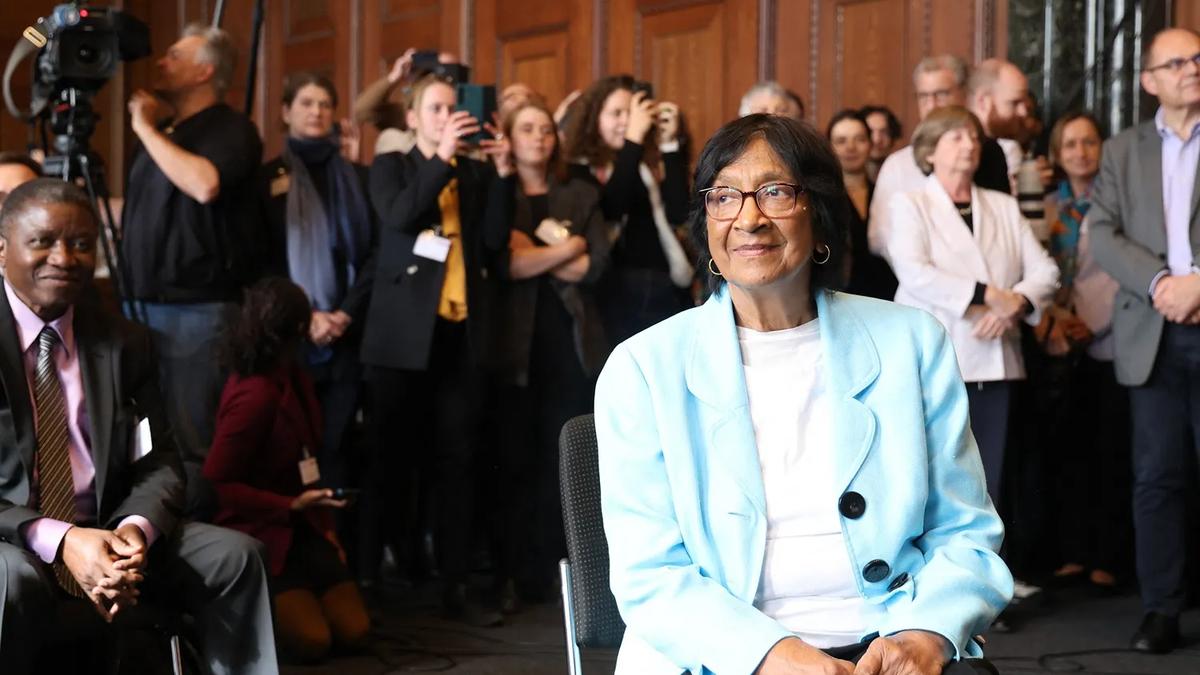
On October 9, 2026, the Norwegian Nobel Committee awarded the Nobel Peace Prize to Navi Pillay, a distinguished South African jurist. Pillay was recognized for her decades-long career in human rights and international law, which included defending Nelson Mandela, serving on the International Criminal Tribunal for Rwanda and the International Criminal Court (ICC), and holding the position of UN High Commissioner for Human Rights. Her most recent and controversial work involved leading a United Nations panel that concluded Israel had committed genocide in Gaza, finding "an intent to destroy the Palestinians in Gaza through acts that meet the criteria set forth in the Genocide Convention." This decision immediately drew sharp condemnation from both Israel and the United States. In response, the US government, under President Donald Trump, imposed new sanctions on the ICC, citing its alleged bias against the US and Israel, neither of which are members of the court. This move followed a prior US withdrawal from the UN Human Rights Council in response to the panel's findings. The Nobel Committee defended its choice by stating that "Peace requires justice" and emphasizing the importance of the rule of law, while Pillay herself warned that efforts to weaken international criminal justice "endanger the progress painstakingly made since Nuremberg."
The awarding of the Nobel Peace Prize to Navi Pillay and the subsequent reaction from the United States and Israel lays bare a fundamental tension in the global order: the clash between sovereign power and the aspirations of international law. For powerful states, the concept of universal jurisdiction, particularly when it touches upon their national security interests or actions, is often viewed as an infringement on sovereignty. The US, historically, has maintained a complex and often contradictory stance towards international legal bodies. While it played a pivotal role in establishing many post-World War II international institutions, it has consistently resisted external oversight of its own military and political actions. Its refusal to ratify the Rome Statute establishing the ICC, and its subsequent imposition of sanctions against the court, are clear demonstrations of this "America First" approach to international justice. This stance allows the US to selectively engage with global norms, upholding them when convenient but dismissing them when they challenge its perceived interests or those of its allies.
Israel, a close US ally, operates from a similar position of perceived national security imperative. Its actions in Gaza, framed by its government as self-defense against militant groups, are viewed through the lens of an existential struggle. Any international body that questions this narrative or suggests violations of international law is seen as biased and hostile. The conclusion by the UN panel, led by Pillay, that Israel committed genocide in Gaza directly challenged this core narrative, triggering an immediate and forceful rejection. For both the US and Israel, discrediting the messengers and the institutions of international justice becomes a strategic imperative to maintain their freedom of action and control the narrative surrounding their conduct.
The Nobel Committee, in granting the prize to Pillay, asserted a different kind of power: the power of moral recognition and symbolic validation. By honoring a jurist who has championed accountability for atrocity crimes, even when it means confronting powerful states, the committee sought to reinforce the principle that no nation is above the law. This act serves as a reminder that international law, despite its enforcement challenges, represents a collective aspiration for a more just and peaceful world. However, the committee's power is largely symbolic. It can highlight issues and individuals, but it cannot compel states to comply with international legal judgments or prevent them from imposing retaliatory measures, as seen with the US sanctions on the ICC. This creates a dynamic where the pursuit of justice can be recognized, but its practical application remains subject to the political will and power calculations of sovereign nations. The underlying power dynamic is clear: while international bodies can issue findings and moral declarations, the ultimate power to enforce, or resist enforcement, still largely resides with the most powerful nation-states.
The repercussions of this clash between international justice and state power are not abstract; they manifest as tangible human costs, particularly for those caught in the crosshairs of conflict and those who rely on the promise of universal justice.
At the immediate heart of this controversy are the Palestinians in Gaza. The UN panel's conclusion of "intent to destroy" them through acts meeting the criteria of the Genocide Convention is a devastating assessment. For a population already enduring immense suffering, displacement, and loss, such a finding, even if disputed by powerful states, validates their experience and provides a legal framework for their grievances. When the very institutions meant to investigate and potentially prosecute such grave allegations are undermined or sanctioned, it sends a chilling message to victims everywhere: that their suffering might not matter enough to powerful actors. The discrediting of Navi Pillay and the ICC by the US and Israel effectively diminishes the perceived legitimacy of avenues for redress for Palestinians, leaving them feeling further abandoned and without recourse in the face of alleged atrocities. This erosion of accountability can perpetuate cycles of violence and impunity, as those who commit alleged crimes face fewer credible threats of international legal consequences.
Beyond the immediate conflict, the broader human cost lies in the weakening of the international legal framework itself. The ICC and other international tribunals were established precisely to ensure that perpetrators of genocide, war crimes, and crimes against humanity could not act with impunity, especially when national courts are unwilling or unable to act. When a major global power like the United States imposes sanctions on the ICC for pursuing investigations, it directly undermines the court's ability to function, deter, and deliver justice. This action signals to other states that they, too, can disregard or actively obstruct international justice mechanisms if it suits their political agenda. The consequence is a world where the rule of law becomes increasingly selective, applied only to the weak or to those without powerful patrons. This creates a dangerous precedent, potentially emboldening authoritarian regimes and actors who might otherwise be deterred by the prospect of international prosecution. The "progress painstakingly made since Nuremberg," as Pillay noted, is jeopardized, risking a return to a system where "power, rather than law, determines whose suffering matters."
The most profound human cost is borne by future victims of atrocity crimes around the world. If international institutions are consistently defanged or delegitimized by powerful states, the global safety net for human rights collapses. Whether in Myanmar, where Pillay is currently involved in a genocide case, or in other regions plagued by conflict and mass violence, the ability of victims to seek justice and accountability hinges on the credibility and operational capacity of bodies like the ICC and ICJ. The current actions by the US and Israel create a chilling effect, making it harder for these institutions to conduct investigations, gather evidence, and ultimately hold perpetrators accountable. This impunity not only denies justice to victims but also fails to deter future crimes, leaving countless individuals vulnerable to the worst forms of human cruelty without any reliable international mechanism to protect them or provide recourse.
While the immediate headlines focus on the Nobel Prize and the ensuing political firestorm, several deeper narratives and historical contexts are often downplayed or omitted by powerful actors in their public statements.
The US and Israel's rejection of the UN panel's findings and the ICC's authority is not an isolated incident or a sudden reaction to Navi Pillay's prize. It is part of a long-standing pattern. The United States, despite its rhetoric about human rights and the rule of law, has consistently shielded itself and its allies from the full reach of international criminal justice. It famously signed, but never ratified, the Rome Statute that created the ICC, fearing that its soldiers or officials could be prosecuted. Over the years, the US has used various legislative and executive measures, including the American Servicemembers' Protection Act, to actively prevent its citizens from being brought before the ICC and to punish countries that cooperate with the court against US personnel. This history reveals that the current sanctions are not merely a reaction to the Gaza genocide finding but a reassertion of a deeply ingrained policy of exceptionalism. Similarly, Israel has consistently rejected the jurisdiction of international bodies over its actions in the Palestinian territories, viewing such attempts as politically motivated and undermining its sovereign right to self-defense. This narrative of victimhood and exceptionalism is crucial to understanding their current posture.
What is often unsaid in the condemnations from Washington and Jerusalem is the implicit argument for a selective application of international law. The US and Israel readily invoke international law when it serves their interests – for instance, condemning actions by adversaries – but reject it when it scrutinizes their own conduct or that of their allies. This double standard fundamentally undermines the universality of international law, transforming it from a framework for global justice into a tool for geopolitical leverage. When powerful states can pick and choose which aspects of international law to adhere to, they erode the very foundation of the system. This creates a precedent that other powerful nations, such as China or Russia, can easily exploit to justify their own disregard for international norms, further destabilizing the global order and making accountability for human rights abuses even more elusive.
The intensity of the Trump administration's reaction, particularly President Trump's personal attack on Pillay and his assertion that he deserved the prize, also reveals a significant domestic political dimension. For Trump and his base, international institutions are often viewed with suspicion, as encroaching on national sovereignty and embodying a "globalist" agenda. His rhetoric plays well with an isolationist, "America First" constituency that is skeptical of multilateralism. By attacking Pillay and the ICC, Trump reinforces his image as a strong leader willing to stand up to perceived external threats and defend US interests without compromise, regardless of international opinion. This allows him to rally political support at home, even as it alienates international allies and undermines global norms. The focus shifts from the merits of the UN panel's findings or the principles of international justice to a domestic political spectacle, effectively deflecting serious scrutiny.
Finally, the narrative often downplays the inherent limitations of the Nobel Peace Prize itself. While it carries immense symbolic weight and can shine a spotlight on critical issues, it possesses no enforcement power. The committee's decision to award Pillay is a powerful statement about the importance of justice, but it does not alter the geopolitical realities that enable powerful states to resist accountability. The prize highlights the ideal, but the subsequent sanctions and condemnations underscore the harsh reality that ideals often struggle against the raw exercise of state power. This gap between aspiration and reality is a critical, yet often unaddressed, aspect of the story, shaping public perception of what international justice can truly achieve.
The fallout from Navi Pillay's Nobel Peace Prize and the subsequent US sanctions on the ICC will reverberate across several critical fronts.
First, observe the International Criminal Court itself. Will the sanctions significantly impair its operations, investigations, or ability to attract cooperation from other states? The US has considerable financial and diplomatic leverage, and its actions could deter other nations from fully engaging with the ICC, especially those reliant on US aid or security guarantees. The court's resilience in the face of such pressure will be a key indicator of the future viability of independent international justice.
Second, monitor the broader international response to the UN panel's findings on Gaza. While the US and Israel have rejected them, will other nations, particularly within the European Union or the Global South, begin to lend more weight to the panel's conclusions? Increased diplomatic pressure or further investigations by other international bodies could keep the issue of accountability for actions in Gaza alive, despite the current pushback.
Third, pay close attention to the rhetoric and actions of other major powers regarding international institutions. The US precedent of sanctioning the ICC could embolden countries like Russia or China to adopt similar tactics when their own actions, or those of their allies, come under international scrutiny. This could accelerate a broader trend of powerful states opting out of or actively undermining multilateral frameworks, leading to a more fragmented and less accountable global order.
Finally, observe the long-term impact on human rights advocacy and the work of international jurists. Navi Pillay's award, despite the controversy, could galvanize human rights defenders and legal scholars, reaffirming their commitment to universal justice. However, the aggressive pushback from powerful states might also create a chilling effect, making it more difficult for independent experts to conduct investigations and publish findings that challenge established power structures. The balance between these forces will determine the future landscape for international accountability.
Navi Pillay, a South African jurist, received the 2026 Nobel Peace Prize for her decades of work in human rights and international law. Her recognition specifically highlighted her role in a UN panel that concluded Israel committed genocide in Gaza, emphasizing the Nobel Committee's belief that 'Peace requires justice'.
The United States, under President Donald Trump, sanctioned the ICC in response to the Nobel Peace Prize awarded to Navi Pillay and her role in the UN panel's Gaza findings. The US, which is not a member of the ICC, accused the court of bias against itself and Israel, viewing the investigation as politically motivated.
This event highlights a significant clash between sovereign power and international legal authority. The US sanctions risk undermining the credibility and operational capacity of the ICC and other international justice mechanisms, potentially setting a dangerous precedent where powerful states can selectively disregard global norms, weakening the rule of law for future atrocity crimes.
Source referenced: FOREIGNPOLICY
This brief was synthesized by our Editorial Engine and reviewed by The Ground Narrative team.