TRENDING

Saturday, 10 October 2026
----------------------
29 Rabi' Al-Thani 1448 AH
Often viewed as a cultural museum, Italy has quietly served as a critical laboratory for the modern far-right, pioneering political trends that have spread across Europe and the United States. This analysis unpacks how figures like Silvio Berlusconi laid the groundwork for today's populist movements.
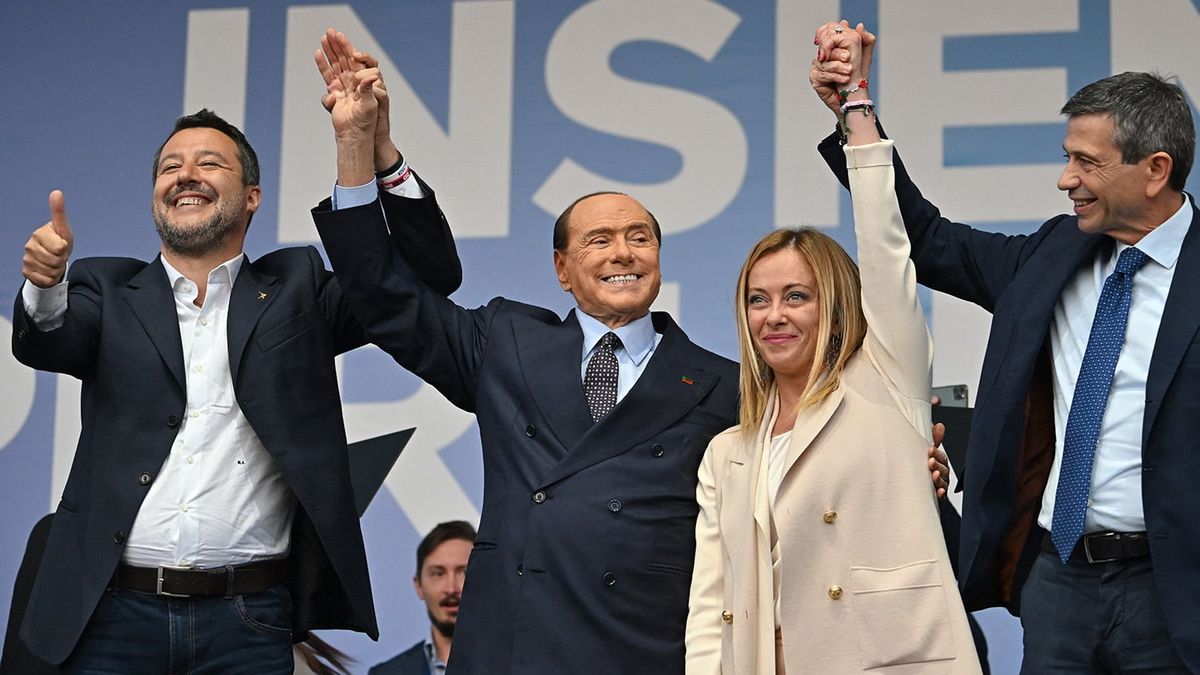
For decades, Italy has been perceived by many as a cultural treasure trove, rich in history and art, but politically marginal on the global stage. However, a recent book by American journalist Jason Horowitz, *The Italian Job*, argues a different reality: Italy has functioned as a critical laboratory for political trends, particularly the rise of the modern far-right, which have subsequently influenced nations across Europe and the United States. From the media-savvy populism of Silvio Berlusconi to the ascent of Giorgia Meloni's post-fascist Brothers of Italy party, Italy's political evolution has provided a blueprint for similar movements, challenging the conventional understanding of its global significance.
The story of Italy's role as a political incubator for the far-right is fundamentally about the mechanics of power: how individuals exploit existing vulnerabilities, how established norms are dismantled, and how fringe ideologies are brought into the mainstream. At the heart of this narrative is Silvio Berlusconi, a media mogul who first became prime minister in the mid-1990s. Berlusconi, with his Forza Italia party, dominated Italian politics for two decades, pioneering a new form of leadership that would resonate globally.
Berlusconi's rise demonstrated that a weakened political mainstream was susceptible to takeover by a brand-name businessman with a messianic complex. He presented himself as the sole figure capable of
Silvio Berlusconi normalized the far-right by bringing post-fascist parties into his coalition governments, breaking a long-standing political firewall. He also pioneered a populist leadership style, leveraging media and a 'messianic complex' that influenced future leaders like Donald Trump.
The human cost includes the curtailment of abortion rights and a ban on surrogacy, impacting women's autonomy. Increased police powers and anti-immigrant rhetoric also affect marginalized communities and contribute to greater social polarization and a decline in public trust.
Similar far-right and populist trends are evident across Europe, with parties gaining ground or entering governments in Sweden, the Netherlands, Germany (AfD), and France (National Rally). These movements often draw inspiration from Italy's political trajectory.
Source referenced: FOREIGNPOLICY
This brief was synthesized by our Editorial Engine and reviewed by The Ground Narrative team.