TRENDING

Friday, 9 October 2026
----------------------
28 Rabi' Al-Thani 1448 AH
Mali's military government has announced the recapture of Kidal, a strategic northern city, from Tuareg separatists. This move, a symbolic victory for the junta, comes amidst a significant realignment of foreign alliances and a deepening humanitarian crisis in the Sahel.
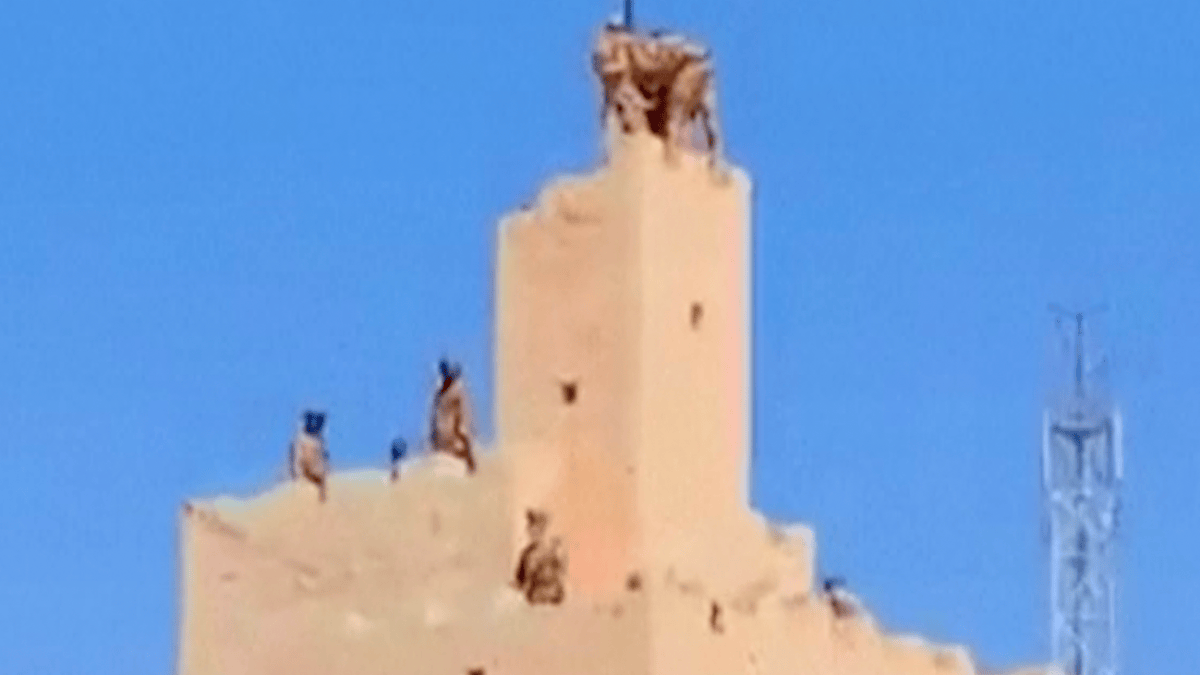
Malian armed forces, under the command of the military government in Bamako, have reportedly re-entered and secured the northern city of Kidal. Video footage, circulated recently, purports to show Malian soldiers establishing control over the strategic desert outpost, which had been held by Tuareg separatist groups for the past six months. This recapture represents a significant symbolic and operational gain for the junta, which has consistently vowed to restore the nation's territorial integrity following a series of military coups and the withdrawal of international peacekeeping forces.
The recapture of Kidal is not merely a battlefield success; it is a complex display of shifting alliances, nationalistic fervor, and external influence. For Mali's military government, consolidating control over the north is paramount to its legitimacy. Since seizing power, the junta has framed its actions as a reclamation of national sovereignty, a narrative heavily reliant on demonstrating control over its entire territory. Losing Kidal six months prior was a significant blow to this image, and its recapture allows the military to project strength and fulfill a core promise to its populace.
Historically, Kidal has been a focal point for Tuareg aspirations for autonomy, often referred to as Azawad. The region's vast, arid landscape and its historical inhabitants, the Tuareg people, have long felt marginalized by successive central governments in Bamako. This deep-seated grievance has fueled multiple rebellions, with Kidal frequently serving as a stronghold for separatist movements. The power of these groups stems from their intimate knowledge of the terrain, local support, and their ability to exploit the perceived weakness or absence of state authority.
The most critical shift in the power dynamics, however, lies in Mali's pivot away from its traditional Western partners, particularly France, and towards Russia. The departure of French counter-terrorism forces (Operations Serval and Barkhane) created a significant security vacuum. This vacuum was swiftly filled by Russian private military contractors, widely believed to be elements of the Wagner Group. These contractors have brought new military hardware, training, and a different operational doctrine to the Malian army, significantly enhancing its capabilities against both separatist and jihadist groups. This new partnership has allowed Bamako to pursue a more aggressive military strategy, less constrained by Western human rights concerns or political conditionalities.
Furthermore, the ongoing withdrawal of the United Nations Multidimensional Integrated Stabilization Mission in Mali (MINUSMA) has removed a crucial buffer and monitoring presence. While MINUSMA's mandate was peacekeeping, its presence often served to de-escalate conflicts and provide a degree of civilian protection. Its departure has left the Malian army and its Russian allies with greater freedom of action, potentially enabling more decisive, albeit potentially brutal, military operations. The economic incentives are also at play; control over northern Mali offers access to lucrative smuggling routes, potential mineral resources, and regional trade networks, all of which contribute to the financial sustainability of any governing authority.
Behind the headlines of military gains and strategic victories, the people of Kidal and the wider northern Mali region bear the brunt of this perpetual conflict. For generations, they have been caught in a cycle of violence, displacement, and instability, their lives dictated by the shifting allegiances and military campaigns of various armed actors.
The most immediate human cost is mass displacement. Each shift in control, each new offensive, sends waves of people fleeing their homes, often with little more than they can carry. Families are uprooted, sometimes multiple times, seeking refuge in already overcrowded camps or with relatives in safer areas. This constant movement disrupts livelihoods, separates families, and creates a profound sense of insecurity. Children miss years of schooling, and communities lose their social fabric, leading to long-term psychological trauma and economic hardship.
Even when a city like Kidal is
Source referenced: ALJAZEERA
This brief was synthesized by our Editorial Engine and reviewed by The Ground Narrative team.