TRENDING

Thursday, 8 October 2026
----------------------
27 Rabi' Al-Thani 1448 AH
Peru's new Chancay deepwater port, primarily funded and built by China, has established a direct maritime route to Shanghai, significantly accelerating trade between South America and Asia. This development promises to reshape regional trade flows and geopolitical influence.
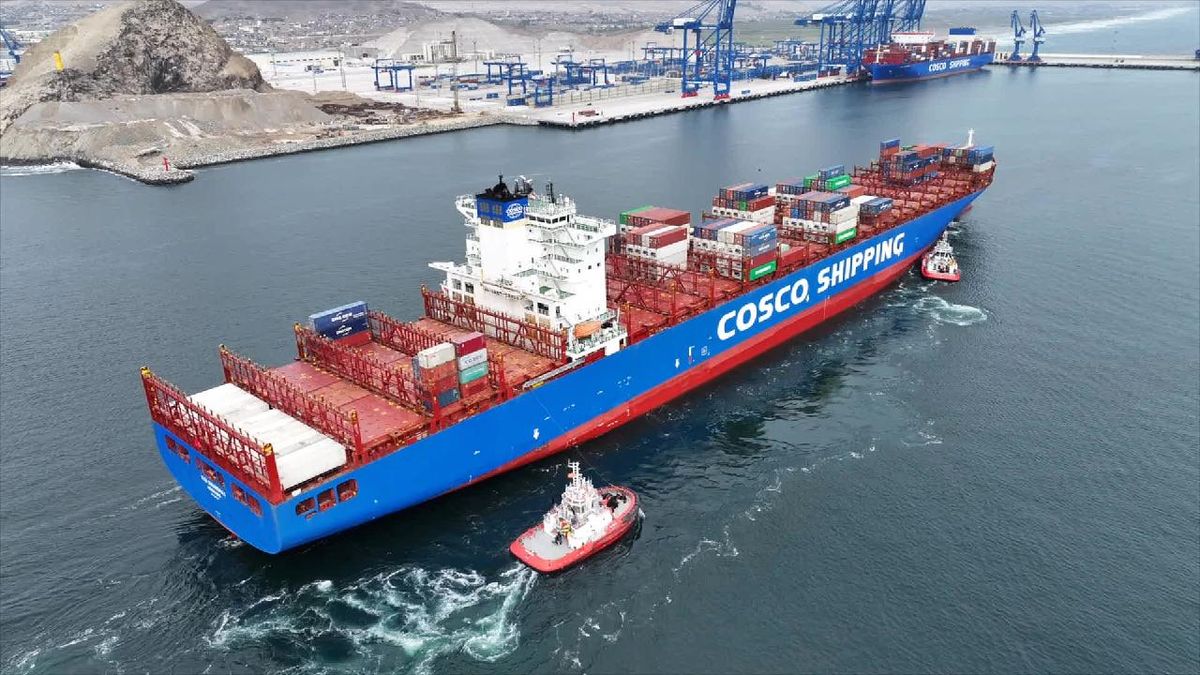
Peru's Chancay port, a newly operational deepwater mega-port primarily funded, built, and operated by China's COSCO Shipping Ports, has established a direct maritime route to Shanghai. This new artery is significantly accelerating trade between Peru and China, facilitating faster export of Peruvian agricultural products and quicker import of Chinese manufactured goods, such as vehicles, machinery, and electrical equipment, into South America. The port is poised to become a major regional hub for Pacific trade, bypassing traditional routes and reducing transit times for goods across the continent.
The Chancay port is more than just a logistical upgrade; it is a profound re-engineering of power dynamics in the Pacific and Latin America. At its core, this project is a tangible manifestation of China's Belt and Road Initiative (BRI), extending Beijing's economic and strategic reach deep into the Western Hemisphere. For China, the port offers a crucial strategic advantage: direct, unhindered access to the rich resources and burgeoning markets of South America. This reduces China's reliance on established, often US-controlled, shipping lanes and chokepoints, most notably the Panama Canal. By creating an alternative, faster, and larger-capacity route, China enhances its supply chain security for critical raw materials, particularly minerals from Peru and neighboring countries, while simultaneously opening new avenues for its vast manufacturing output.
For Peru, the incentives are primarily economic and aspirational. The port promises to transform the nation into a regional trade leader, attracting investment, creating jobs in logistics and related industries, and boosting its overall economic output. It positions Peru as a pivotal gateway, not just for its own goods, but for landlocked neighbors like Bolivia and resource-rich giants like Brazil, offering them a direct Pacific outlet to Asian markets. This potential for regional leadership is a powerful draw for Peruvian political elites, who seek to elevate their nation's standing on the global stage.
However, this newfound prominence comes with a significant shift in influence. The project deepens Peru's economic dependence on China, a relationship where Beijing often holds the stronger hand due to its financial leverage and market size. The port's ownership structure, with COSCO Shipping Ports holding a controlling stake, grants China significant operational control and a long-term presence on Peru's Pacific coast. This model of
Source referenced: CGTN
This brief was synthesized by our Editorial Engine and reviewed by The Ground Narrative team.