TRENDING

Thursday, 8 October 2026
----------------------
27 Rabi' Al-Thani 1448 AH
Saudi Arabia launched a wave of air and missile attacks that hit a factory in Sana’a, while Yemen’s internationally recognised government announced a new “battle of liberation”. The clash deepens regional rivalries and pushes ordinary Yemenis into harsher hardship.
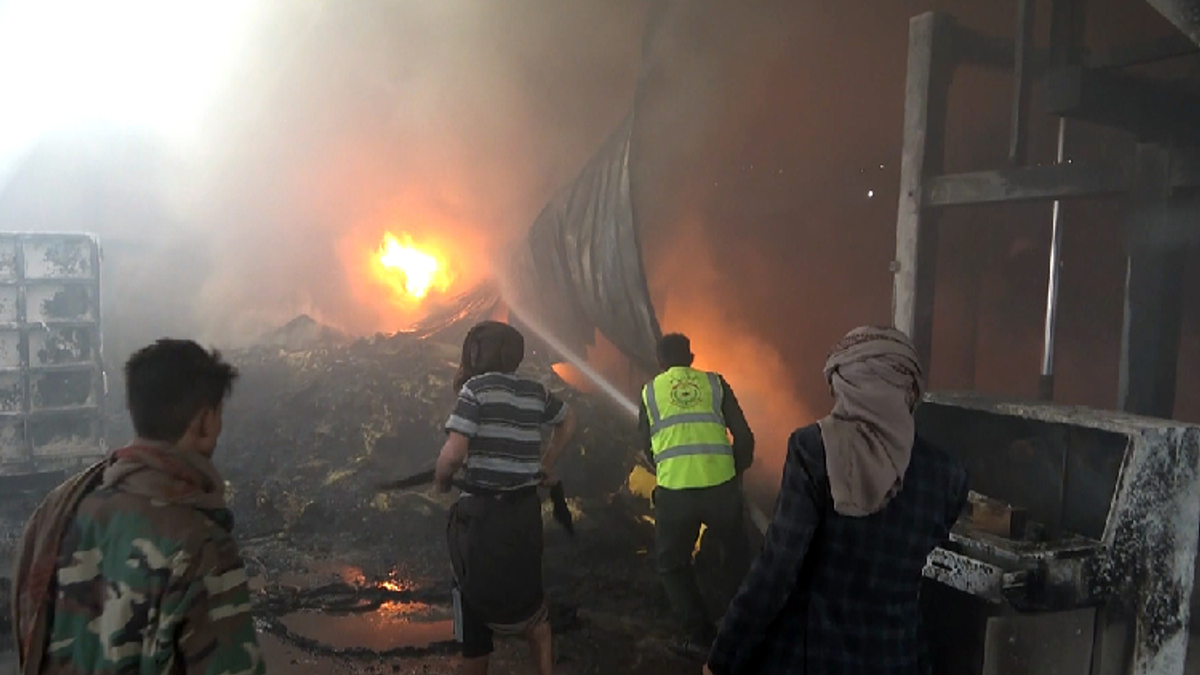
The Houthi movement reported that Saudi Arabia carried out 106 air and missile strikes across its held territories in the past 24 hours, including a hit on a civilian factory in Sana’a. On the same day, Yemen’s internationally recognised government declared the start of a “battle of liberation”, a fresh offensive aimed at recapturing Houthi‑controlled areas, notably in the south‑west province of Taiz. The Houthis also claimed a territorial gain in At Turbah, marking their first control of the city since the conflict erupted in 2014.
The renewed Saudi barrage cannot be read in isolation; it is a direct response to the Houthi‑Iranian axis that Tehran has nurtured for over a decade. Iran positions itself as the Houthis’ patron, supplying missiles, drones, and political backing, while Saudi Arabia views the group as a proxy threatening its southern border and the legitimacy of the Yemeni government it backs. Both powers use Yemen as a low‑intensity theater to signal resolve without risking a full‑scale war that could draw in the United States or other coalition members.
For the Saudi monarchy, projecting a hard line against the Houthis serves internal audiences worried about the Crown Prince’s reform agenda and the perception of weakening authority. A visible military response reassures conservative factions and the kingdom’s security establishment. Conversely, Yemen’s recognised government, still fragile after years of fragmentation, needs a decisive victory to cement its claim as the legitimate authority, especially ahead of upcoming parliamentary elections that could reshape power balances in the capital.
The conflict’s spillover into the Strait of Hormuz underscores the broader economic calculus. Iran’s recent claim that the waterway’s security hinges on U.S. actions ties Yemen’s battlefield to global oil flows. Any prolonged Saudi‑Iran confrontation threatens shipping lanes, prompting markets to price in risk premiums that affect fuel prices worldwide. Saudi Arabia’s willingness to intensify strikes may also be a signal to protect its own oil export routes through the Red Sea and the Bab al‑Mandab.
The strike on the Sana’a factory ignited a blaze that forced firefighters to battle flames for hours. While official casualty numbers remain unverified, eyewitnesses describe workers trapped inside, many of whom were low‑wage laborers from rural areas. The loss of the facility not only deprives families of income but also erodes a scarce source of locally produced goods, pushing more Yemenis toward reliance on costly imports.
The “battle of liberation” has pushed fighting into Taiz’s countryside, where farms and small towns are being shelled. Residents report destroyed irrigation systems, loss of harvests, and the displacement of thousands who flee to makeshift camps in the highlands. Food insecurity, already acute after years of blockade, spikes as supply routes become contested.
Hospitals in Sana’a and Taiz are already overwhelmed with trauma cases from previous battles. The new wave of strikes adds to a backlog of untreated injuries, while the destruction of medical supply warehouses hampers the delivery of essential medicines. International NGOs warn that a surge in casualties could push Yemen’s health sector past the point of recovery.
While the Houthis publicly listed strike counts, Saudi Arabia has neither confirmed nor denied the specific attacks, a pattern that allows the kingdom to maintain plausible deniability. By avoiding acknowledgment, Saudi officials can downplay civilian casualties and sidestep potential investigations by the United Nations or human‑rights bodies.
Iranian officials, speaking from Doha and Tehran, framed the conflict as a dialogue‑driven process, urging both sides to return to a previously agreed peace roadmap. This rhetoric masks Tehran’s material support for the Houthis and serves to portray Iran as a peacemaker, deflecting criticism over its role in arming the rebels.
U.S. involvement is largely absent from public statements, yet the United States continues to provide intelligence, logistical support, and limited arms to the Saudi‑led coalition. By keeping its role low‑profile, Washington avoids direct accountability for civilian harm while preserving leverage over both Riyadh and Tehran in broader Middle‑East negotiations.
International media often highlight oil price fluctuations and shipping risks, relegating the lived realities of Yemeni civilians to background statistics. This framing diverts public attention from the humanitarian crisis, allowing governments and corporations to pursue strategic interests with limited scrutiny.
The next weeks will reveal whether Saudi air power can sustain pressure without provoking a larger Iranian retaliation, especially in the Strait of Hormuz where recent tanker attacks hint at escalating maritime risks. Observers should monitor diplomatic overtures from Qatar and Oman, which may broker back‑channel talks between Riyadh and Tehran. Humanitarian agencies will also signal the conflict’s trajectory through aid delivery metrics; a sharp decline would indicate a worsening security environment for civilians. Finally, global oil markets will reflect any shift in the balance of power, as price spikes often precede intensified military posturing in the region.
Saudi Arabia aims to pressure the Houthis, demonstrate resolve to domestic audiences, and protect its regional influence amid rising Iran‑U.S. tensions.
The strike destroys jobs, reduces local production, and adds to food insecurity, forcing families to rely on expensive imports and humanitarian aid.
Editor's Note: Analysis based on publicly reported statements and expert commentary; on‑ground verification of strike numbers remains limited.
Source referenced: CGTN
This brief was synthesized by our Editorial Engine and reviewed by The Ground Narrative team.