TRENDING

Thursday, 8 October 2026
----------------------
27 Rabi' Al-Thani 1448 AH
Three years after the October 7 attacks, the Middle East has undergone a profound reordering of power, alliances, and regional security. The perceived stability offered by traditional powers has fractured, forcing states to redefine their allegiances and seek new protectors.
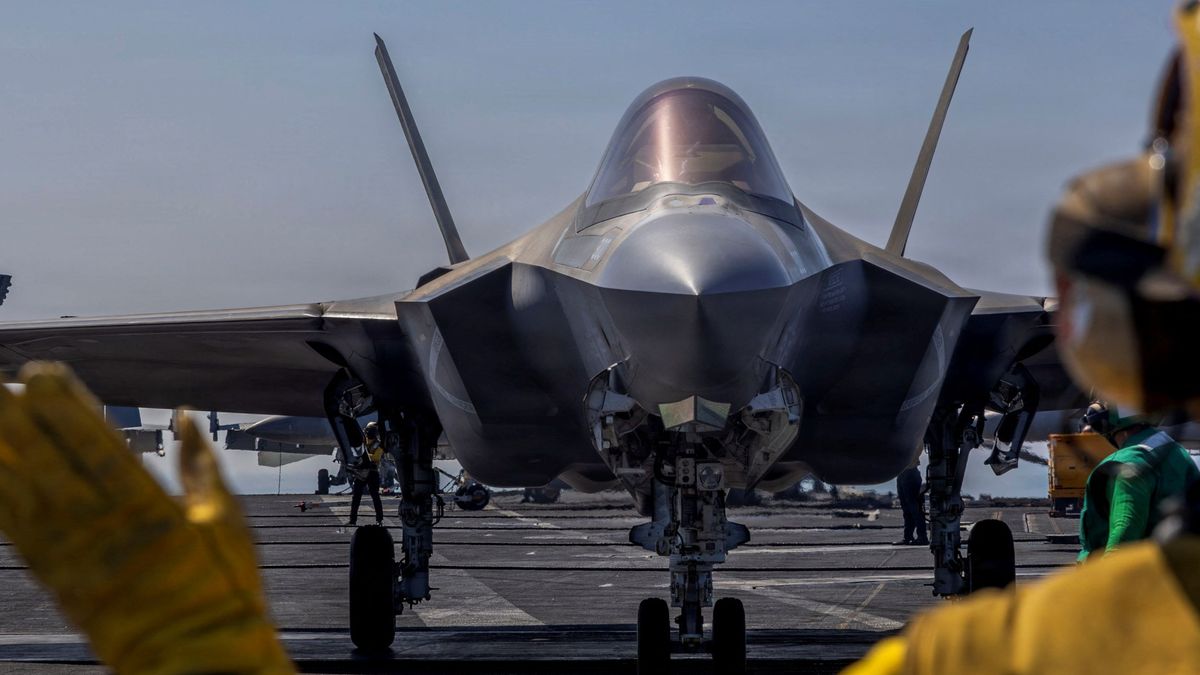
The Middle East has been fundamentally reshaped in the three years following the October 7 attacks on Israel and the subsequent extensive military campaign in Gaza. This period has witnessed widespread conflict, severe economic disruption, and a dramatic rebalancing of regional power. Key events include the assassination of Iranian Supreme Leader Ayatollah Ali Khamenei in February 2025, the onset of a direct war between the United States and Iran in the same year, and repeated Israeli military incursions into Lebanon and the seizure of Syrian territory. Simultaneously, Yemen's Houthi rebels have expanded their control over vital maritime chokepoints, while Gulf states have begun forging new security pacts, signaling a profound shift away from reliance on a singular external guarantor.
The structural forces at play reveal a region in flux, where traditional certainties have dissolved, and new centers of influence are emerging. At the core of this reordering is the dramatic erosion of United States' credibility as the region's primary security guarantor.
Before October 7, Washington's regional policy was largely anchored in the Abraham Accords, aiming to normalize Israel's presence and integrate it into a US-led security architecture. Israel's response to the October 7 attacks, however, shattered this framework. The subsequent US entry into a war with Iran, coupled with Tehran's successful targeting of US allies across the Gulf, exposed the limitations of the American security umbrella. Attacks on critical infrastructure like Qatar's Ras Laffan gas hub and Dubai's airport demonstrated that even with a significant US military presence, regional assets remained vulnerable. This perceived failure has led many states, particularly in the Gulf, to question the efficacy of their long-standing security arrangements with the US. The result is a pragmatic diversification of security partnerships, exemplified by the Mecca security pact between Saudi Arabia, Turkiye, and Pakistan, which signals a move towards multi-alignment rather than exclusive reliance on any single power.
Despite suffering significant setbacks—including the assassination of its Supreme Leader and the weakening of key proxies like Hezbollah and Hamas—Iran has demonstrated a remarkable capacity for strategic adaptation. While its traditional network of alliances has been hit hard, Tehran has found new ways to project influence and exert leverage. The Houthi rebels in Yemen stand out as a notable exception to the general weakening of Iran's proxies; their surge down the Red Sea coast and control over the Bab al-Mandeb strait have provided Iran with substantial economic leverage over global trade and energy supplies. Coupled with its long-standing ability to threaten the Strait of Hormuz, Iran now possesses a dual chokehold on critical maritime arteries. This economic power, capable of disrupting global markets, offers Tehran a potent tool for deterrence and negotiation, even as it navigates internal instability and external pressure.
Israel has emerged as a revisionist power, aggressively pursuing military objectives and crossing previously established red lines, such as the 2025 attack on Doha, Qatar. Its military campaigns have resulted in significant gains, including the elimination of key Hamas and Hezbollah leaders, and the occupation of much of Gaza. However, these military successes have come at a steep diplomatic and reputational cost. Israel's actions have isolated it from traditional allies and rendered it globally unpopular, even within the United States. While it remains the preponderant military power in the Middle East, its inability or unwillingness to project stability undermines its long-term regional influence. The prospect of further normalization deals with Arab countries, a cornerstone of pre-October 7 US policy, now appears remote, leaving Israel militarily strong but increasingly diplomatically vulnerable.
The perceived vacuum left by the US's diminished guarantor role has created fertile ground for other external actors. China, driven by its own energy security needs, has actively engaged in negotiations to end the war on Iran, signaling its growing diplomatic and strategic footprint in the region. Turkiye has also increased its leverage, particularly in Syria, following the ouster of Bashar al-Assad in 2024. The Middle East has always been characterized by complex, multi-aligned relationships, but the post-October 7 landscape has intensified this trend. Regional states are no longer content with binary choices, instead seeking to cultivate multiple partnerships to safeguard their interests, creating a more fragmented and unpredictable geopolitical chessboard.
The human toll of this reordered Middle East is staggering, borne primarily by ordinary citizens caught in the crosscurrents of shifting power dynamics and escalating conflicts.
The most immediate and profound human cost has been exacted on the Palestinian population in Gaza. Over 74,000 Palestinians have been killed, and much of the enclave has been reduced to rubble, rendering it largely uninhabitable. This scale of destruction has led to mass displacement, widespread famine, and an enduring humanitarian catastrophe. The psychological scars on survivors, particularly children, will last for generations, fundamentally altering the social fabric of an already besieged population. The destruction of infrastructure, from hospitals to schools, means that even if the conflict were to cease, recovery would be a decades-long endeavor, requiring immense international intervention.
Beyond Gaza, the expansion of conflict has directly impacted civilian populations across the region. Lebanon has endured repeated Israeli invasions, leading to displacement, destruction of property, and a constant state of fear for its citizens. In Syria, the brief power vacuum following Bashar al-Assad's ouster allowed Israel to seize additional territory, further destabilizing a country already ravaged by years of civil war and forcing more people from their homes. The Houthi surge in Yemen, while strategically significant, also exacerbates an already dire humanitarian crisis, prolonging a conflict that has left millions on the brink of famine and devastated the nation's infrastructure. Each military action, each territorial gain, translates directly into lost lives, shattered livelihoods, and an pervasive sense of insecurity for millions.
While global markets, particularly in the West, have largely been cushioned from the full economic impact of the regional disruptions through emergency reserves and diversified energy sources, the economic pain has been acutely felt in the Gulf states. Significant cuts to growth forecasts for countries like Saudi Arabia and Qatar mean reduced investment, fewer job opportunities, and increased cost of living for their populations. The disruption to shipping lanes through the Strait of Hormuz and Bab al-Mandeb translates into higher import costs and reduced export revenues, impacting small businesses and ordinary consumers. For those living in the region, the promise of economic prosperity tied to global trade has been replaced by uncertainty and the burden of increased living expenses, further fueling social discontent.
Powerful actors often frame events in ways that serve their strategic narratives, downplaying inconvenient truths or omitting critical context. In the post-October 7 Middle East, several key narratives are being carefully managed.
Governments, particularly in the West, often publicly reaffirm their unwavering support for Israel's security. However, the untold story is how Israel's aggressive actions and subsequent international isolation have increasingly rendered it a strategic liability for its primary patron, the United States. With the West's reduced dependence on Gulf oil—thanks to increased US domestic production and alternative suppliers—Israel's traditional strategic value as a stable anchor in an oil-rich region has diminished. Its continued military campaigns, which destabilize the region and alienate potential Arab allies, now impose significant diplomatic and military costs on Washington, forcing it into a war with Iran and undermining its broader regional objectives. This internal calculation, where a key ally becomes a net drain on resources and diplomatic capital, is rarely articulated in official statements.
While US officials may speak of continued engagement and robust alliances, the profound loss of faith in the United States as a singularly sufficient security guarantor is often downplayed. The failure of the US security umbrella to prevent attacks on Gulf allies, or to de-escalate the broader regional conflict, has created a deep-seated skepticism among states that once relied almost exclusively on Washington. This erosion of trust is not merely a diplomatic inconvenience; it represents a fundamental shift in regional strategic thinking, forcing states to actively seek out alternative security arrangements and diversify their partnerships. The long-term implications for US influence and its ability to shape regional outcomes are far more significant than official rhetoric suggests.
Official Israeli statements often frame their military actions as purely defensive responses to existential threats. What is frequently omitted or downplayed are the powerful internal political dynamics driving Israel's aggressive posture. The survival of its leadership, often facing domestic pressure and coalition fragilities, can be intrinsically linked to projecting strength and pursuing maximalist military objectives, even at the cost of international isolation. This internal political calculus, rather than solely external threats, often dictates the scale and nature of military campaigns, making diplomatic off-ramps more difficult to achieve and prolonging conflict despite widespread global condemnation.
While China's economic presence in the Middle East is well-known, its increasing role in regional security and diplomacy is often understated. As the US grapples with the fallout of its own interventions, Beijing is quietly stepping into the void, positioning itself as a neutral mediator and a reliable partner for energy security. Its involvement in negotiations to end the war on Iran, driven by its own energy supply vulnerabilities, signifies a strategic expansion beyond economic ties. China's patient, non-interventionist approach, contrasted with the US's more forceful military presence, offers an attractive alternative for regional states seeking stability without entanglement in great power rivalries. This subtle but significant shift in security architecture, with China as a rising player, is a critical untold story of the region's reordering.
The Middle East remains a volatile region, and several key indicators will reveal the trajectory of its reordered power dynamics.
First, observe the continued diversification of alliances among Gulf states. The Mecca security pact is a significant development, but watch for further bilateral or multilateral agreements that exclude the United States or involve new external partners like China and India. These arrangements will signal the true extent of the region's move towards multi-alignment.
Second, monitor Iran's ability to sustain its economic leverage through the Strait of Hormuz and Bab al-Mandeb. Any significant challenge to its control or the Houthis' influence in these waterways could trigger a new phase of conflict and test the resilience of its strategic adaptations.
Third, pay close attention to the internal political stability of Israel. The long-term viability of its military-first approach, especially in the face of sustained international isolation and domestic dissent, will be a critical factor. Any shift towards a more diplomatic or less aggressive stance would signal a profound internal re-evaluation.
Finally, watch for China's expanding role beyond economic engagement. Its diplomatic initiatives, particularly in mediating regional disputes or offering alternative security frameworks, will indicate the extent to which it intends to fill the perceived power vacuum left by the United States, fundamentally reshaping the long-term geopolitical landscape of the Middle East.
The US's role as the primary security guarantor has significantly eroded. Its Abraham Accords policy fractured, and the US security umbrella was perceived as failing to protect allies, leading regional states to seek diversified security partnerships beyond Washington.
Regional states are increasingly pursuing multi-alignment. A notable example is the Mecca security pact between Saudi Arabia, Turkiye, and Pakistan, signaling a move away from exclusive reliance on the US and towards broader regional cooperation.
While the West has largely been cushioned, Gulf exporters have faced significant economic setbacks due to trade disruptions in vital waterways like the Strait of Hormuz and Bab al-Mandeb. These disruptions, driven by Iran and Houthi actions, pose a threat to global energy and trade flows.
Source referenced: ALJAZEERA
This brief was synthesized by our Editorial Engine and reviewed by The Ground Narrative team.


