TRENDING

Thursday, 8 October 2026
----------------------
27 Rabi' Al-Thani 1448 AH
Ethiopian Prime Minister Abiy Ahmed has secured a new five-year term, with his Prosperity Party dominating parliamentary elections. This mandate arrives as Ethiopia grapples with the aftermath of a devastating internal conflict and profound questions about its future.
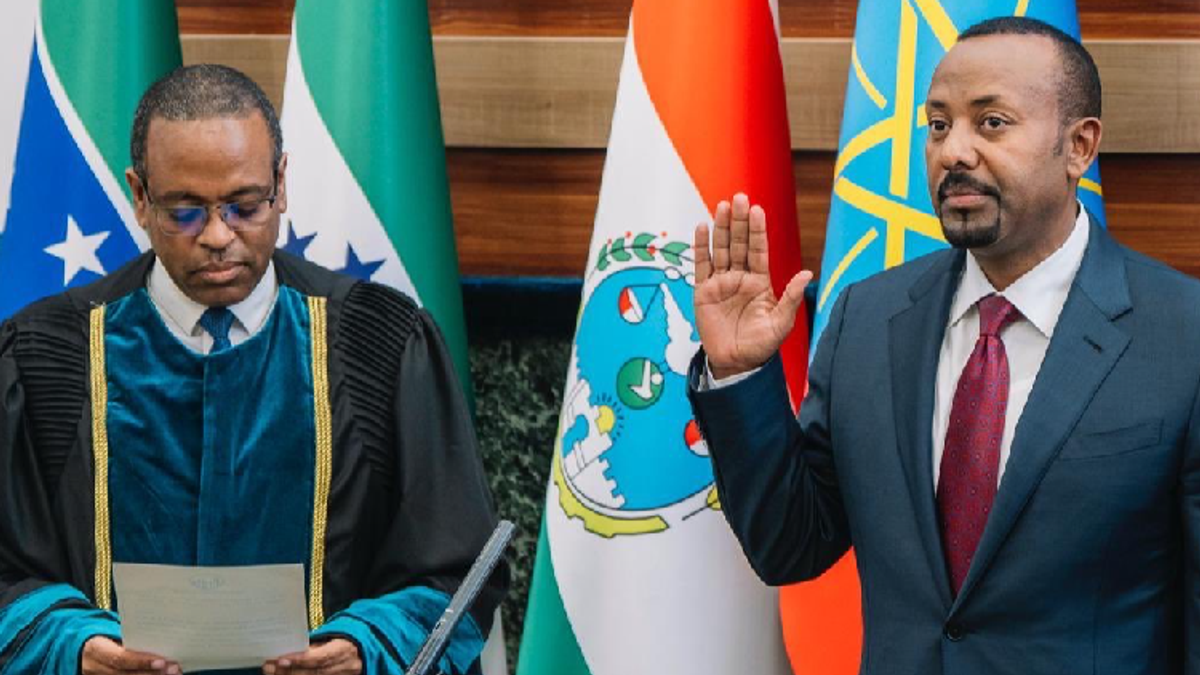
Ethiopian Prime Minister Abiy Ahmed was officially re-elected for a new five-year term on October 5, 2026. The swearing-in ceremony took place in Addis Ababa as the newly elected House of Peoples’ Representatives convened its seventh parliamentary term. His ruling Prosperity Party secured an overwhelming majority in the June 1, 2026 general election, claiming 438 out of 547 seats, thereby granting him a clear constitutional mandate to form and lead the executive government. In his address, Prime Minister Abiy reiterated his administration's commitment to advancing national unity, infrastructure development, and economic transformation.
Abiy Ahmed's re-election is more than a simple parliamentary formality; it represents a profound consolidation of power within Ethiopia, a nation of over 120 million people at the strategic heart of the Horn of Africa. His journey from a Nobel Peace Prize laureate in 2019 to a leader overseeing a devastating internal conflict and now securing a dominant electoral mandate reveals a complex interplay of political survival, national ambition, and regional realpolitik.
The foundation of Abiy's power shift began with the dismantling of the Ethiopian People's Revolutionary Democratic Front (EPRDF), a coalition that had governed Ethiopia for nearly three decades, largely dominated by the Tigray People's Liberation Front (TPLF). Abiy replaced it with the unified Prosperity Party, a move designed to transcend ethnic federalism in favor of a more centralized, pan-Ethiopian identity. While framed as a step towards unity, this restructuring was also perceived by some as an attempt to dilute the power of ethnically-aligned regional parties, including the TPLF, ultimately contributing to the outbreak of the Tigray War in November 2020.
The election itself, held in June 2026, occurred in the shadow of this brutal conflict, which officially ended with the Pretoria Agreement in November 2022. The timing and circumstances of the vote are critical to understanding the mandate. A significant portion of the country, particularly Tigray, was either still recovering from the war, under transitional administration, or experiencing ongoing instability in other regions like Oromia and Amhara. This context inherently shaped voter participation, opposition capacity, and international observation, allowing the Prosperity Party to achieve its landslide victory with minimal significant challenge.
Ethiopia's strategic importance cannot be overstated. Its large population, military strength, and geographic position bordering Eritrea, Djibouti, Somalia, Kenya, South Sudan, and Sudan make it a linchpin for regional stability and a prize for global powers. Abiy's focus on
Abiy Ahmed's re-election consolidates his power and provides a mandate for his Prosperity Party to pursue a more centralized, unified vision for Ethiopia. It marks a formal transition after a period of intense internal conflict, setting the stage for his administration's economic and political agenda.
His new term faces significant challenges, including the lingering aftermath of the Tigray War, unresolved ethnic tensions in regions like Oromia and Amhara, and severe economic pressures such as high inflation and national debt. He must balance promises of unity and development with demands for justice and inclusive governance.
The Tigray conflict significantly impacted the election by creating an environment where opposition parties were weakened or absent, and parts of the country were excluded from voting. While the conflict officially ended, its devastating human and infrastructural toll heavily influenced the political landscape, allowing the ruling party to secure a dominant majority.
Editor's Note: The analysis relies on external knowledge of the Tigray War and Ethiopian internal politics to provide the necessary context for 'untold story' and 'human cost' sections, as the raw intelligence was limited to the re-election event itself.
Source referenced: CGTN
This brief was synthesized by our Editorial Engine and reviewed by The Ground Narrative team.