TRENDING

Friday, 9 October 2026
----------------------
28 Rabi' Al-Thani 1448 AH
The Kremlin accuses the EU of an 'obsession' with militarization following a French missile test, signaling Europe's shift towards a military-political bloc. This move redefines European security, driven by geopolitical shifts and the pursuit of strategic autonomy.
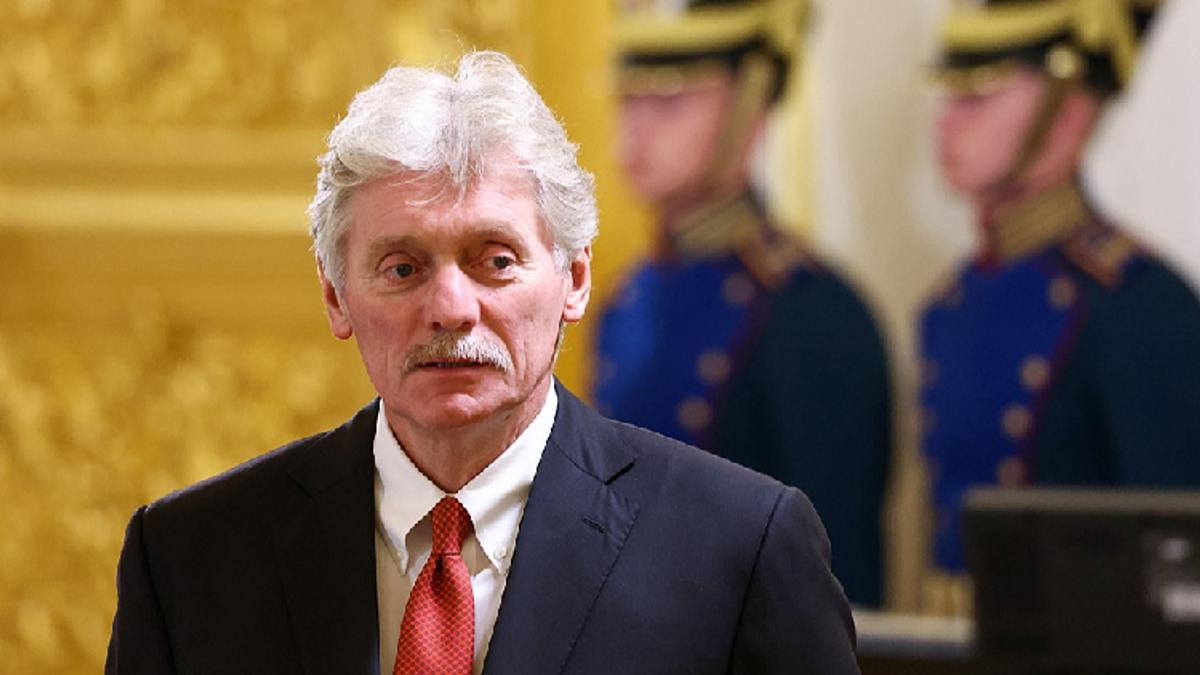
Kremlin spokesman Dmitry Peskov recently accused the European Union of being "obsessed" with militarization, asserting that the economic bloc is transforming into a military-political entity. This statement followed a significant event: France successfully test-fired a strategic ballistic missile from a submarine off its western coast. While the missile carried no nuclear warhead, French President Emmanuel Macron characterized the test as a "loud and clear message," signaling a hardening stance on European defense and security.
The Kremlin's accusation of EU "militarization" is not an isolated complaint but a direct response to a fundamental shift in European strategic thinking, accelerated by recent geopolitical events. For decades, the EU primarily functioned as an economic and political union, relying heavily on NATO and, by extension, United States military power for its security. The concept of "strategic autonomy" — the ability for Europe to act independently in defense and foreign policy — has long been debated, but it has now moved from theoretical discussion to practical implementation.
The primary driver behind this shift is the perceived threat from Russia. The full-scale invasion of Ukraine in 2022 shattered long-held assumptions about post-Cold War European security and the feasibility of a cooperative relationship with Moscow. This event forced EU member states to confront their vulnerabilities, particularly their reliance on external security guarantees and their depleted military stockpiles. The immediate incentive for EU nations, especially those bordering Russia or with historical ties to the Soviet Union, is national survival and deterrence. They see a direct link between robust defense capabilities and their ability to protect their sovereignty and way of life.
France, as the EU's only nuclear power and a permanent member of the UN Security Council, plays a pivotal role in this reorientation. Its recent missile test serves multiple purposes. Firstly, it is a demonstration of national capability, reinforcing France's position as a serious military actor. Secondly, it sends a clear signal of resolve to potential adversaries, particularly Russia, that Europe is serious about its defense. President Macron's "loud and clear message" is not just about French prowess; it's about projecting a collective European will to defend its interests. The fact that the missile was non-nuclear underscores a message of conventional deterrence, but the underlying capability points to the ultimate guarantor of French sovereignty.
The EU's move towards a "military-political bloc" involves several interconnected power dynamics. Economically, it means a significant increase in defense spending across member states, diverting resources from other sectors. Politically, it necessitates greater coordination and integration of defense policies, procurement, and even military operations among diverse nations with varying strategic cultures and priorities. This integration challenges traditional notions of national sovereignty in defense matters, pushing towards a more unified European defense identity. The goal is to pool resources, achieve economies of scale in defense manufacturing, and present a more credible deterrent.
For Russia, this EU pivot is viewed through the lens of encirclement and an expansion of hostile military infrastructure. Moscow's narrative consistently frames NATO expansion and now EU militarization as aggressive acts, justifying its own security measures. This perspective is deeply rooted in Russia's historical experiences and its perception of a unipolar world dominated by the United States and its allies. The Kremlin's statements, therefore, serve to legitimize its own military posture and to sow discord within Europe by portraying the EU's actions as provocative rather than defensive. It attempts to position Russia as the aggrieved party, reacting to an "obsessed" Europe.
The alliance math is also critical. While NATO remains the cornerstone of collective defense for many European nations, the push for EU strategic autonomy reflects a desire for Europe to shoulder more of its own security burden and potentially act independently when NATO consensus is elusive or US interests diverge. This doesn't necessarily mean abandoning NATO but rather complementing it with a stronger European pillar. However, it also introduces potential friction, as some NATO members, particularly the United States, might view a fully autonomous EU defense as redundant or even competitive. The balance between NATO solidarity and EU autonomy is a delicate act of power projection and resource allocation.
The shift towards EU militarization, while framed as essential for security, carries significant human costs that often remain abstract in official statements. These costs manifest in various forms, impacting ordinary citizens, national economies, and the broader social fabric.
Increased defense spending, a cornerstone of EU militarization, means public funds are redirected. These funds could otherwise be invested in social welfare programs, healthcare, education, infrastructure, or green energy initiatives. For citizens, this translates into potential cuts in public services, higher taxes, or slower progress on pressing domestic issues. Every euro allocated to a new missile system or a larger army is a euro not spent on improving living standards or addressing societal challenges. In economies already grappling with inflation, cost-of-living crises, and post-pandemic recovery, this re-prioritization can exacerbate economic hardship for vulnerable populations. The promise of security comes with a tangible price tag that directly impacts household budgets and quality of life.
The rhetoric of "confrontation" and the visible increase in military capabilities, such as France's missile test, inherently raise the risk of miscalculation and escalation. While deterrence aims to prevent conflict, a rapid arms buildup in a volatile region can also heighten tensions, making accidental or intentional conflict more probable. For populations living near borders or in strategically sensitive areas, this means living under a constant shadow of potential conflict. The psychological toll of increased militarization, with its associated drills, deployments, and the omnipresent threat of war, can be immense, leading to anxiety, stress, and a pervasive sense of insecurity, even in the absence of direct conflict.
A significant investment in military industries can also divert scientific, technological, and engineering talent and resources away from civilian sectors. While military innovation can sometimes have dual-use applications, the primary focus remains on destructive capabilities. This means fewer resources are dedicated to developing solutions for climate change, medical breakthroughs, or sustainable technologies that directly benefit humanity. Bright minds might be drawn to defense research rather than tackling global challenges that have a more direct and positive impact on human well-being. The long-term societal cost of this redirection of intellectual capital is difficult to quantify but potentially profound.
When the emphasis shifts heavily towards military solutions, diplomatic pathways can become secondary. The Kremlin's accusation of a "dead-end path" for EU foreign policy, while self-serving, highlights a genuine risk: that a focus on military strength can overshadow and even undermine efforts to find peaceful resolutions through dialogue and negotiation. For citizens who desire stability and cooperation, the hardening of positions and the emphasis on confrontation can feel like a narrowing of options, making a return to more peaceful relations seem increasingly distant. The human cost here is the loss of trust, the entrenchment of animosity, and the diminishing prospects for future reconciliation.
Behind the official statements and the visible displays of military power, several critical aspects of EU militarization and Russia's reaction remain downplayed or entirely omitted by powerful actors on all sides. These untold stories reveal deeper complexities and potential long-term consequences.
While the narrative often presents a unified EU moving towards greater defense integration, the reality is far more nuanced. Not all EU member states share the same level of enthusiasm or urgency for a robust common defense policy. Nations with strong historical pacifist traditions, those with deep economic ties to Russia (prior to the Ukraine invasion), or those heavily reliant on US security guarantees might view rapid militarization with caution. The process of integrating diverse national defense doctrines, procurement systems, and strategic priorities is fraught with political challenges. Official statements often gloss over these internal debates, presenting a facade of unanimous resolve that can mask significant disagreements and potential future fault lines within the bloc. The specific contributions and commitments of individual member states are often generalized, obscuring the fact that some are doing more, and others less, to advance the collective defense agenda.
A significant, yet often unspoken, beneficiary of EU militarization is the European defense industry. Major arms manufacturers and their associated supply chains stand to gain immensely from increased defense budgets, new procurement contracts, and the push for European-made equipment. While governments frame this as strengthening European industrial capacity and creating jobs, the profit motives of these powerful corporations are rarely highlighted. The influence of the defense lobby in shaping policy decisions, advocating for larger budgets, and promoting specific weapon systems is a powerful, yet often opaque, force in the background. The narrative focuses on national security, but the economic interests of a powerful industrial sector are a significant, unstated driver.
The push for EU strategic autonomy, while driven by European security concerns, also reflects a deeper anxiety about the long-term reliability of United States security guarantees, particularly in a changing global political landscape. The "loud and clear message" from France isn't just for Russia; it's also a subtle signal to Washington that Europe is prepared to take more responsibility for its own defense. However, official discourse rarely acknowledges the underlying tension this creates within NATO. While EU defense is often presented as complementary to NATO, a truly autonomous European military bloc could, in the long run, alter the dynamics of the transatlantic alliance, potentially leading to questions about resource duplication, command structures, and even the ultimate purpose of NATO itself. The powerful actors prefer to maintain the narrative of a unified Western front, rather than exposing potential future divergences.
Peskov's statement about EU "obsession" with militarization, while publicly directed at Europe, also serves a crucial internal purpose for the Kremlin. It reinforces the narrative of an external threat, justifying Russia's own military actions and domestic policies to its population. By portraying the EU as aggressive and confrontational, Moscow seeks to rally domestic support, distract from internal challenges, and legitimize its continued military buildup. This propaganda component is rarely acknowledged by Russian officials, who present their statements as objective assessments of European intentions. The "dead-end path" accusation is meant to deter EU unity and to suggest that Russia is merely reacting to European provocations, rather than being an instigator of regional instability.
The trajectory of EU militarization will be defined by several key indicators in the coming months and years.
Firstly, observe the EU's budget allocations and the specific defense procurement plans of individual member states. A sustained increase in defense spending, coupled with a focus on joint European projects rather than purely national ones, will signal a deeper commitment to integration. Look for progress on initiatives like the European Defence Fund and Permanent Structured Cooperation (PESCO) projects.
Secondly, pay close attention to the rhetoric and actions of France and Germany, the two economic and political heavyweights of the EU. Their alignment or divergence on defense matters will be crucial. Any significant joint projects, military exercises, or strategic statements from Paris and Berlin will be strong indicators of the pace and direction of EU defense integration.
Thirdly, monitor the evolving relationship between EU defense initiatives and NATO. Will EU autonomy be truly complementary, or will it begin to create friction within the transatlantic alliance? Watch for statements from Washington regarding European defense efforts and any signs of shifting US commitment to European security.
Finally, keep an eye on Russia's responses. Beyond rhetoric, observe any changes in its military posture, deployments, or strategic alliances. The Kremlin's actions will directly influence the pace and nature of Europe's rearmament, potentially creating a feedback loop of escalating military competition. The balance between deterrence and provocation will be a constant, delicate act.
The EU's increased focus on military capabilities is primarily driven by the perceived threat from Russia, particularly after the 2022 invasion of Ukraine. This has accelerated the long-standing debate on 'strategic autonomy,' aiming for Europe to take more responsibility for its own defense and reduce reliance on external security guarantees.
France's strategic ballistic missile test, described by President Macron as a 'loud and clear message,' signifies a demonstration of national military resolve and a commitment to European defense. As the EU's only nuclear power, France plays a key role in projecting a collective European will to deter potential adversaries and strengthen the bloc's security posture.
The human costs of EU militarization include the redirection of public funds from social services to defense, potentially leading to cuts in welfare, healthcare, or education. It also raises the risk of escalation and increased psychological stress for populations in sensitive regions, while diverting scientific talent from civilian innovation to military development.
Source referenced: CGTN
This brief was synthesized by our Editorial Engine and reviewed by The Ground Narrative team.