TRENDING

Thursday, 8 October 2026
----------------------
27 Rabi' Al-Thani 1448 AH
Former Venezuelan President Nicolas Maduro and his wife, Cilia Flores, now face US federal charges for conspiring to commit torture, adding to existing drug trafficking indictments. This unprecedented legal action against a former head of state highlights the complex interplay of international law, power projection, and the enduring human cost in Venezuela.
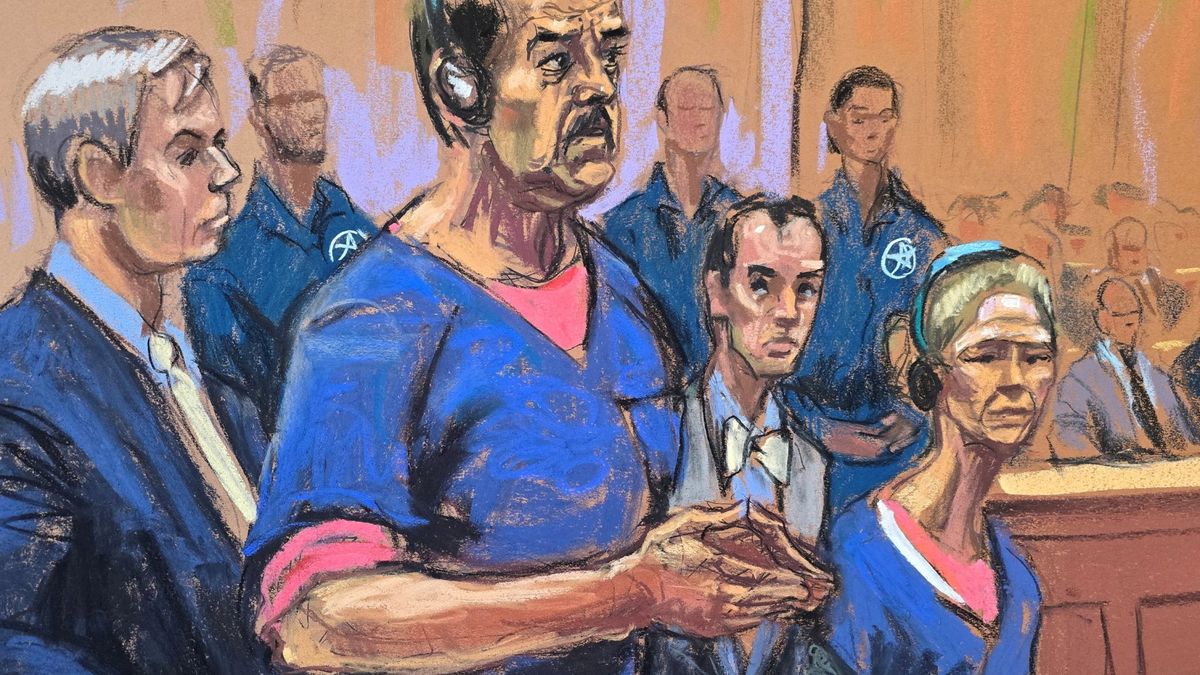
Former Venezuelan President Nicolas Maduro and his wife, Cilia Flores, have been charged in a US federal court in Manhattan, New York, with conspiracy to commit torture. This new indictment supplements existing charges of narco-terrorism, drug trafficking, and money laundering that the couple already faced. Both Maduro and Flores pleaded not guilty to the drug charges and are currently detained at Brooklyn's Metropolitan Detention Center, with their trial slated for June 1. The charges allege that the couple conspired to use torture against political opponents to maintain their grip on power in Venezuela.
The charging of a former head of state and his spouse in a foreign court is a potent display of extraterritorial power, underscoring the United States' willingness to leverage its legal system as a tool of foreign policy. This action against Maduro and Flores is not merely a criminal prosecution; it is a strategic move within a long-standing campaign by the US to delegitimize and dismantle the Chavista government in Venezuela.
The US asserts universal jurisdiction over certain crimes, particularly those involving terrorism, drug trafficking, and severe human rights abuses, especially when there is a perceived link to US national security interests or citizens. By bringing these charges, the US is projecting its legal authority far beyond its borders, sending a clear message to leaders globally that they may not be immune from prosecution if they cross certain lines as defined by Washington. This demonstrates a unilateral assertion of judicial power, allowing the US to act as a global arbiter of justice, selectively applying its laws to foreign actors.
For years, the US has employed a multifaceted approach to pressure Maduro's government, including economic sanctions, diplomatic isolation, and the recognition of opposition leader Juan Guaidó as Venezuela's legitimate interim president. The legal pursuit of Maduro and Flores represents an escalation of this pressure, shifting from economic and political sanctions to direct criminal accountability. It aims to further erode the legitimacy of the Chavista movement and remove key figures from the political landscape, potentially paving the way for a more US-aligned government. This strategy seeks to incapacitate the leadership, rather than merely constrain the regime, by removing them from the equation entirely.
The charges of torture and drug trafficking align with widely accepted international norms against severe human rights abuses and transnational crime. By prosecuting Maduro on these grounds, the US positions itself as a champion of human rights and the rule of law. However, the selective application of such prosecutions is a critical aspect of the power mechanics. The US has a history of engaging with and even supporting regimes with questionable human rights records when it serves its strategic interests, leading to accusations of hypocrisy. This selectivity highlights that while the charges themselves relate to universal crimes, the decision to prosecute a specific individual often intertwines with broader geopolitical objectives and the pursuit of national interests.
Within Venezuela, the trial of Maduro and Flores will undoubtedly reverberate through the already fractured political landscape. For the opposition, it may be seen as a vindication of their long struggle and a step towards justice for victims. It could provide a morale boost and a renewed sense of purpose. However, for the remaining Chavista loyalists, it could galvanize support around the idea of a foreign power interfering in Venezuela's sovereignty, potentially hardening their resolve and making internal reconciliation even more challenging. The trial could also influence the military, a crucial pillar of power in Venezuela, by signaling the potential consequences for those who support leaders accused of such crimes.
While the legal proceedings unfold in a New York courtroom, the true weight of the alleged crimes and the broader geopolitical struggle falls squarely on the shoulders of the Venezuelan people. Their lives have been profoundly shaped by the political turmoil, economic collapse, and human rights abuses that form the backdrop of these charges.
At the heart of the torture allegations are real individuals who endured immense suffering. These are not abstract political opponents but people whose lives were irrevocably altered by physical and psychological abuse, often at the hands of state security forces. Their families also bear a profound cost, living with the trauma, uncertainty, and often the disappearance or death of loved ones. For these victims, the trial represents a potential avenue for justice and accountability, a rare moment where their suffering might be officially acknowledged on an international stage. However, the trial's focus on Maduro and Flores does not automatically guarantee reparations or healing for the countless individuals affected.
Beyond the direct victims, the entire Venezuelan population has paid a steep price for years of political instability and economic mismanagement, exacerbated by international sanctions. The country has experienced hyperinflation, widespread shortages of food and medicine, and a severe decline in public services. Millions have fled Venezuela in one of the largest displacement crises in modern history, seeking refuge and opportunities in neighboring countries and beyond. This trial, while targeting specific leaders, does little to immediately alleviate the daily struggles of ordinary citizens who grapple with poverty, insecurity, and a crumbling infrastructure. The focus on high-profile legal battles can sometimes overshadow the urgent need for humanitarian aid and long-term economic recovery that directly impacts the majority of Venezuelans.
The allegations of torture to maintain power speak to a deeper erosion of democratic institutions and the rule of law within Venezuela. When state power is used to suppress dissent through violence, it undermines the very foundations of a just society. This breakdown of institutions has long-term consequences, making it difficult to rebuild trust in governance, establish independent judiciary, or ensure the protection of human rights, regardless of who is in power. The human cost here is the loss of a functioning state that protects its citizens, replaced by one where fear and arbitrary power can dictate daily life.
Official statements from the US government often frame the prosecution of Maduro and Flores as a straightforward pursuit of justice against criminals. However, this narrative frequently downplays or omits several critical layers of context and implications that reveal deeper power dynamics and potential complexities.
The raw intelligence mentions Maduro and Flores as
Source referenced: ALJAZEERA
This brief was synthesized by our Editorial Engine and reviewed by The Ground Narrative team.


