TRENDING

Saturday, 10 October 2026
----------------------
29 Rabi' Al-Thani 1448 AH
A US federal judge has ruled the Justice Department's attempt to use a federal immigration database to identify and remove voters from state rolls was unlawful. This decision marks a significant pushback against the Trump administration's efforts to expand federal oversight of elections and raises critical questions about who controls access to the ballot box.
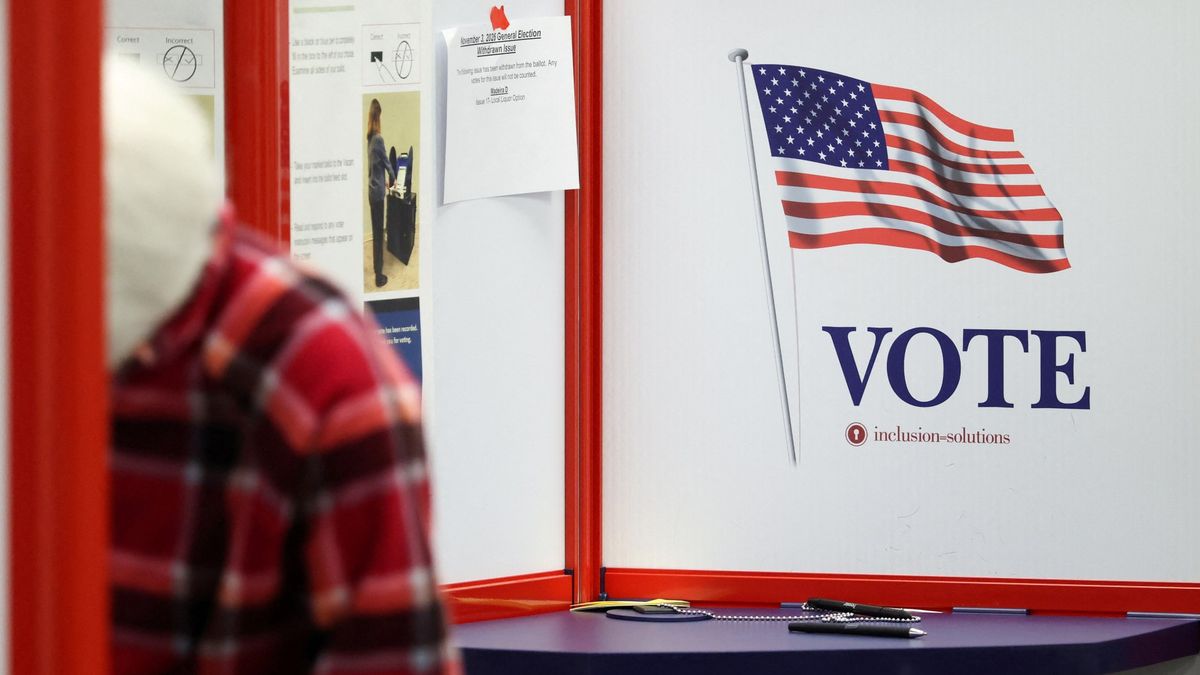
A United States federal judge has ruled that the Justice Department acted unlawfully in its attempt to compel states to provide voter rolls for cross-referencing against a federal immigration database. US District Judge Sparkle Sooknanan's decision specifically found that the Trump administration's policy understated the risk of wrongly removing eligible citizens from voter rolls due to inaccuracies in the Systematic Alien Verification for Entitlements (SAVE) database. This ruling represents a significant setback for the administration's broader push to expand federal oversight of elections and crack down on perceived voter fraud, an effort that has seen the Justice Department demand unredacted voter data from nearly all 50 states and initiate lawsuits against those that refused.
This ruling peels back the layers of a fundamental power struggle within the American federal system: the tension between federal executive authority and state sovereignty over elections. Historically, the administration and oversight of elections, including voter registration and eligibility, have been firmly within the purview of individual states. Judge Sooknanan's decision explicitly reinforced this long-standing principle, stating that Congress had left the authority to decide who votes to the states, not the federal government.
The Trump administration's actions, driven by a stated aim to combat voter fraud, represent a strategic attempt to centralize and federalize aspects of election management. This move can be understood as an exercise in executive power to shape the electorate, rather than merely secure it. By demanding state voter data and attempting to purge rolls based on a federal database, the administration sought to exert influence over who is deemed eligible to cast a ballot. Such efforts are often viewed through a partisan lens, as changes to voter eligibility or access disproportionately affect certain demographics and can shift electoral outcomes.
The judiciary, in this instance, acted as a crucial check on executive overreach. The lawsuit brought by watchdog groups like Common Cause and the ACLU leveraged the legal system to defend established constitutional divisions of power. The judge's focus on the unreliability of the SAVE database highlights another critical power dynamic: the use of data and technology as tools of governance, and the inherent risks when these tools are flawed or misapplied. The potential for the federal government to misidentify naturalized citizens as ineligible, based on outdated or inaccurate records, underscores the danger of unchecked federal power infringing upon individual rights and state autonomy. The split among states – with some complying and others resisting or suing – further illustrates the fragmented nature of power within the US, where states can and do push back against federal directives they deem unlawful or overreaching.
The most direct and significant human cost of policies like the one struck down by Judge Sooknanan falls squarely on eligible citizens who face the risk of disenfranchisement. Naturalized US citizens, in particular, are vulnerable to being wrongly flagged by databases like SAVE due to outdated records or bureaucratic errors. For these individuals, the act of voting is not just a right but often a deeply personal affirmation of their citizenship and belonging. Being arbitrarily removed from voter rolls can be a humiliating and alienating experience, effectively silencing their voice in the democratic process.
Beyond direct disenfranchisement, such measures create a chilling effect on voter participation. When the integrity of voter rolls is publicly questioned, and the process of registration and eligibility becomes fraught with federal scrutiny, it can deter eligible citizens – especially those from minority communities or immigrant backgrounds – from registering to vote or showing up at the polls. The fear of being challenged, investigated, or having their citizenship questioned can be a powerful disincentive, leading to self-censorship and reduced civic engagement. This erosion of trust in the electoral system itself is a profound human cost, as it undermines the very foundation of democratic participation.
Furthermore, the constant narrative of widespread voter fraud, often unsubstantiated, contributes to a climate of suspicion and division. This narrative, while serving political ends, can lead to increased polarization and a weakening of social cohesion. Citizens begin to doubt the legitimacy of election outcomes, fostering distrust not only in government institutions but also in their fellow citizens. For state election officials, the demands for data and the subsequent legal battles impose significant administrative burdens and divert resources that could otherwise be used to facilitate voter access and ensure smooth election operations. Ultimately, the human cost is measured in lost votes, diminished trust, and a more fragile democracy.
The most significant untold story here is the persistent downplaying of the actual rarity of voter fraud by powerful actors. The Trump administration's repeated assertions of widespread voter fraud, which served as the primary justification for its aggressive voter roll scrutiny, are largely unsupported by empirical evidence. Numerous studies and investigations by non-partisan organizations, academic researchers, and even past government agencies have consistently found that instances of in-person voter impersonation or non-citizen voting are exceedingly rare, certainly not on a scale that would alter national election outcomes. This narrative, therefore, functions less as a factual assessment of election security and more as a powerful political tool.
The narrative of
Source referenced: ALJAZEERA
This brief was synthesized by our Editorial Engine and reviewed by The Ground Narrative team.


