TRENDING

Saturday, 10 October 2026
----------------------
29 Rabi' Al-Thani 1448 AH
The rapid melting of the Arctic ice caps is opening new strategic and economic frontiers, but the United States finds itself critically unprepared, hampered by industrial decline and self-sabotaging rhetoric towards key allies like Canada.
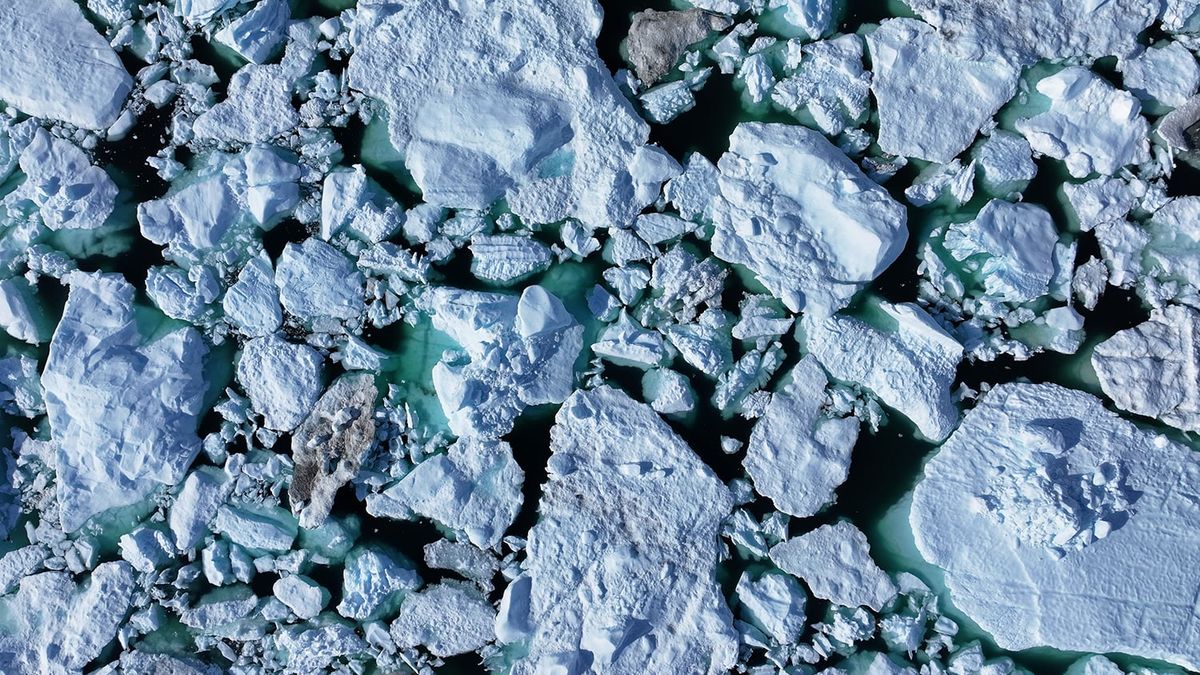
The Arctic is warming at an unprecedented rate, four times faster than the rest of the planet. This rapid ice melt is transforming the region from a frozen frontier into a new zone of intense economic and strategic competition. Vast reserves of energy, minerals, and fish stocks are becoming accessible, alongside critical new shipping lanes and routes for communications cables. While Russia and China are aggressively expanding their presence with robust fleets of icebreakers and infrastructure, the United States lags significantly, possessing only one purpose-built Arctic-ready icebreaker in regular service, and grappling with a strained relationship with its crucial northern neighbor, Canada.
The scramble for the Arctic is a stark demonstration of shifting global power dynamics, driven by economic opportunity and strategic necessity. The receding ice reveals a new playing field where control translates directly into influence and wealth.
The economic stakes are immense. Estimates suggest potential investments running into hundreds of billions, possibly trillions, of dollars in infrastructure alone. This includes access to vast oil and natural gas reserves, critical rare earth minerals, and burgeoning fisheries. More critically, the opening of the Northern Sea Route along Russia's coast and the Northwest Passage through Canada's archipelago promises significantly shorter shipping times between Asia, Europe, and North America, reshaping global trade routes and reducing transit costs. For nations like China, which labels itself a 'near Arctic state' despite no territorial claim, these routes offer a strategic bypass to choke points like the Suez and Panama canals, enhancing its global logistical reach.
At the heart of Arctic power projection are icebreakers. These specialized vessels are not merely ships; they are indispensable platforms for scientific research, commercial navigation, resource extraction, and military operations. They enable year-round access, mapping, and surveillance in an otherwise impenetrable environment. Russia currently operates over 40 icebreakers, many nuclear-powered, allowing it unparalleled access and control over its extensive Arctic coastline. China has at least five, rapidly expanding its capabilities. Canada, with its vast Arctic territory, maintains nine. In stark contrast, the United States Coast Guard relies on a single operational heavy icebreaker, the USCGC Healy, which has suffered repeated mechanical failures and fires, leaving the US with critical capability gaps. The promised construction of 11 new US icebreakers is years away, highlighting a profound strategic vulnerability.
The US's icebreaker deficit is not an isolated issue; it is a symptom of a deeper, systemic decline in its industrial capacity, particularly in shipbuilding. As highlighted by Rana Foroohar's analysis, the post-Cold War era saw a prioritization of short-term cost savings through offshoring and financialization. This market-driven logic led to the dismantling of domestic shipbuilding infrastructure, the loss of skilled labor, and the erosion of complex supply chains. While the US remains a preeminent naval power, its ability to build and maintain its own commercial and support fleets has atrophied. This industrial decay means that even when political will exists to rebuild strategic capabilities, the foundational knowledge, infrastructure, and workforce are no longer readily available. The reliance on foreign shipbuilders, even for critical national security assets, underscores this profound vulnerability. National security, as the analysis points out, ultimately 'lives downstream from industrial capacity'.
The US's strategic misstep is further compounded by its strained relationship with Canada. Despite sharing the world's longest undefended border and being deeply intertwined economically (Canada supplies 4 million barrels of crude oil daily, electricity, aluminum, and auto parts), political rhetoric from some US leaders has been openly antagonistic. This is particularly self-defeating in the Arctic, where Canada is a vital ally with significant Arctic territory and a functioning icebreaker fleet. The Icebreaker Collaboration Effort with Canada and Finland acknowledges this interdependence, yet the underlying political friction risks undermining practical cooperation when it is most needed. The US needs its allies to navigate the Arctic, both literally and diplomatically, making any antagonistic stance an act of self-harm.
The grand strategic maneuvers and economic calculations in the Arctic come at a tangible cost, often borne by those with the least power to influence the decisions being made.
The most immediate human cost falls upon the Indigenous communities of the Arctic, from the Inuit in Canada and Greenland to the Yup'ik and Inupiat in Alaska and the indigenous peoples of Siberia. These communities have inhabited the Arctic for millennia, their cultures, livelihoods, and spiritual practices intrinsically linked to the ice and its unique ecosystems. Increased shipping traffic brings noise pollution, the risk of oil spills, and disruptions to marine life that are vital for subsistence hunting and fishing. Resource extraction projects, while promising jobs, often lead to environmental degradation, contamination of traditional lands, and social upheaval, forcing communities to adapt to rapid, externally driven changes that erode their traditional ways of life and self-determination. The promise of economic development often bypasses these communities, leaving them to bear the environmental and social burdens.
For the United States, the human cost of industrial decline is measured in lost jobs, eroded skills, and diminished economic resilience in communities that once thrived on manufacturing and shipbuilding. When shipyards close, entire towns can suffer, leading to unemployment, out-migration, and a loss of identity. The inability to quickly reconstitute a skilled workforce and complex supply chains means that even when new contracts are awarded, the benefits may not flow to the communities that bore the brunt of past offshoring decisions. This creates a cycle of dependency on foreign production, weakening the domestic economic base and leaving workers vulnerable to global market shifts.
Beyond the immediate Arctic, the rapid warming has profound global human costs. The melting ice contributes to sea-level rise, threatening coastal communities worldwide and displacing millions. The release of long-frozen methane from permafrost creates a dangerous feedback loop, accelerating global warming and intensifying extreme weather events. These changes disproportionately affect vulnerable populations, leading to climate migration, food insecurity, and increased humanitarian crises far from the Arctic Circle. The pursuit of new fossil fuel reserves in the Arctic, while economically attractive in the short term, exacerbates the very climate crisis that is opening the region, creating a dangerous paradox for humanity.
Powerful actors often frame narratives to suit their immediate interests, downplaying inconvenient truths or omitting critical context. In the Arctic, several key aspects are frequently overlooked or deliberately obscured.
The most significant untold story is the illusion of unilateral strength propagated by some US political figures. Statements like
Source referenced: FOREIGNPOLICY
This brief was synthesized by our Editorial Engine and reviewed by The Ground Narrative team.