TRENDING

Saturday, 10 October 2026
----------------------
29 Rabi' Al-Thani 1448 AH
Across three continents, street protests, sudden elections, and a fresh Ebola case expose how governments and rival powers juggle survival, legitimacy, and control, while ordinary people bear the brunt.
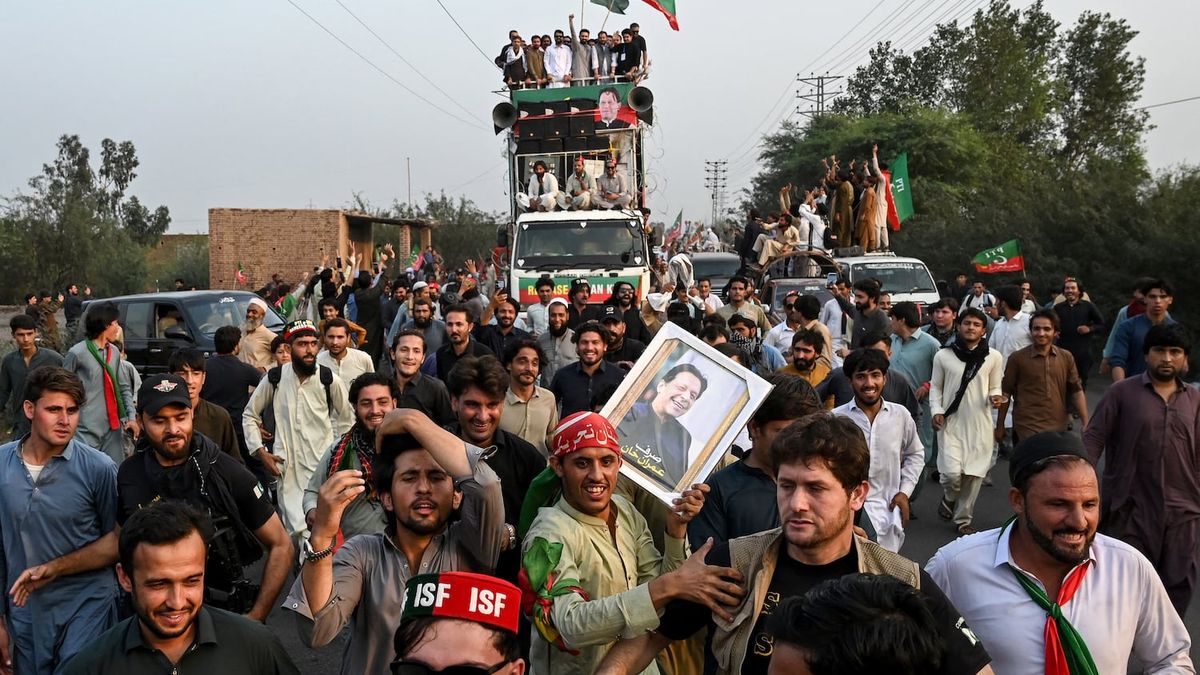
A wave of unrest swept through Imran Khan’s Pakistan as supporters marched toward Islamabad demanding the former prime minister’s release after three years behind bars. At the same time, Pedro Sánchez announced snap elections in Spain, a gamble to reset a coalition that failed to pass emergency measures on soaring energy costs. In East Africa, Ethiopia confirmed its first Ebola case, raising alarms about a disease already ravaging the Democratic Republic of Congo. Smaller but no less significant moves unfolded elsewhere: Lithuania’s parliament voted to lift a ban on hosting nuclear weapons, North Korea blamed the United States for stoking Taiwan Strait tensions, and Brazil’s students rallied over the cost of living. Together these events sketch a portrait of a world where political survival, security anxieties, and public health crises intersect.
The underlying currents driving each episode share a common logic: leaders and regimes prioritize the preservation of power, often at the expense of transparency. In Pakistan, the military‑backed government leverages security forces to contain dissent while offering a thin veneer of negotiation, a tactic that buys time and projects a façade of openness. Pakistan Army officials calculate that a controlled protest can be managed without igniting a broader civil‑military clash that would threaten their own institutional dominance.
Spain’s snap election call is a classic case of political calculus. Sánchez’s socialist coalition, weakened by internal fractures and a faltering economy, faces a confidence vote on emergency energy legislation. By resetting the parliamentary clock, the prime minister hopes to capitalize on short‑term voter fatigue with opposition parties, betting that a fragmented right will split the vote. The move also signals to European partners that Spain remains capable of decisive governance, a crucial factor for continued EU funding.
Lithuania’s constitutional amendment reflects a security‑driven response to Russia’s aggression in Ukraine. By opening the door to European Union‑backed nuclear deterrence on its soil, the Baltic state seeks to embed itself deeper into NATO’s strategic architecture, extracting security guarantees that can be leveraged in future negotiations with Moscow.
In Ethiopia, the Ebola case triggers a public‑health emergency that forces the government to allocate scarce resources away from development projects. The health ministry’s response is constrained by limited infrastructure and the need to maintain political stability in a nation already grappling with ethnic tensions.
North Korea’s accusation against the United States over Taiwan is less about the specific military aid to the island and more about positioning Pyongyang as a counter‑balance to U.S. influence in East Asia. By framing Washington as the provocateur, the regime seeks to justify its own missile tests and to extract concessions from China, its primary patron.
Brazil’s student protests over the cost of living are rooted in macro‑economic pressures: global oil price spikes, war‑driven commodity disruptions, and domestic fiscal strain. The government’s response—often limited to symbolic gestures—aims to defuse immediate unrest while preserving broader economic reforms.
Across these cases, the common denominator is the calculation of risk versus reward: leaders weigh the immediate cost of repression or concession against the longer‑term preservation of authority, often delegating the human fallout to marginalized groups.
The marchers in Khyber Pakhtunkhwa and the surrounding provinces are not merely political activists; they are daily‑wage laborers, teachers, and small‑business owners whose livelihoods are already squeezed by inflation. A prolonged protest can trigger curfews, market closures, and a crackdown that disproportionately harms informal workers who lack social safety nets.
Spain’s middle‑class families, already burdened by rising energy bills, face uncertainty as the election draws near. A fragmented parliament could delay further relief measures, pushing households toward debt or energy poverty. The political elite’s gamble risks turning a fiscal crisis into a social one.
In Ethiopia’s remote regions, where health facilities are sparse, the Ebola outbreak threatens to overwhelm an already fragile system. Past outbreaks have left deep psychological scars; communities fear isolation, loss of income, and stigmatization, which can exacerbate food insecurity and displacement.
If Lithuania hosts nuclear weapons, nearby towns will become potential targets in any future great‑power confrontation. Residents would live under heightened alert status, with possible restrictions on movement and increased military presence.
The regime’s rhetoric about U.S. provocation often translates into intensified missile drills near the Chinese border, disrupting trade routes that many North Koreans rely on for essential goods, further tightening the regime’s grip on an already starved populace.
The protests highlight how inflation erodes the purchasing power of students and their families. Tuition fees, transport costs, and basic necessities become unaffordable, forcing many to drop out or seek informal work, perpetuating cycles of poverty.
Governments and state‑aligned media routinely downplay the depth of popular discontent. In Pakistan, official statements emphasize “national security” while omitting the fact that many protesters are demanding not just Khan’s release but also an end to alleged electoral manipulation and military overreach. The narrative of a single‑issue protest masks broader demands for civilian supremacy.
Spain’s leadership frames the snap election as a democratic reset, yet internal memos leaked to investigative journalists reveal that the coalition is also buying time to renegotiate EU recovery funds, a detail largely omitted from public briefings. The urgency of the energy crisis is thus partially a bargaining chip.
Lithuania’s amendment is presented as a defensive measure, but strategic analysts note that the move also opens the door for private defense contractors to profit from infrastructure upgrades, a commercial incentive rarely discussed in parliamentary debates.
Ethiopia’s health ministry reports the Ebola case as “contained,” but independent NGOs warn that surveillance in border regions is inadequate, and that the true number of infections may be higher. The official narrative seeks to preserve investor confidence and avoid tourism bans.
North Korea’s accusation sidesteps its own role in regional destabilization, namely the expansion of its missile program, which has prompted neighboring countries to increase defense spending, indirectly feeding the very arms race Pyongyang claims the U.S. is provoking.
Brazil’s student movement is portrayed as a reaction to “global price hikes,” yet many activists argue that domestic policy failures—such as tax reforms favoring the wealthy—are the primary drivers. This nuance is absent from mainstream coverage that attributes unrest to external shocks.
- In Pakistan, monitor whether the government shifts from negotiation to a broader crackdown, especially if the protest gains momentum in urban centers.
- Spain’s election results will indicate whether the socialist coalition can retain power or if a right‑leaning bloc capitalizes on energy‑cost fatigue, reshaping EU policy on climate subsidies.
- Lithuania’s nuclear debate will surface in NATO’s strategic documents; any formal agreement with the United States could trigger a Russian diplomatic response.
- Ethiopia’s health ministry will release weekly updates; a surge in cases could prompt WHO intervention and affect regional trade routes.
- North Korea’s rhetoric may precede missile tests; satellite imagery will be key to confirming any escalation.
- Brazil’s student protests could spill into broader labor unrest if inflation remains unchecked, potentially influencing the upcoming presidential runoff.
By tracking these threads, observers can see how elite calculations ripple down to streets, classrooms, and clinics, shaping the lived reality for millions.
Khan called for a delay after being temporarily moved out of Islamabad, allowing his team to avoid a heavy security clampdown while still signaling resistance.
The socialist government failed to pass emergency measures on soaring energy costs, prompting Prime Minister Pedro Sánchez to seek a new parliamentary mandate.
Source referenced: FOREIGNPOLICY
This brief was synthesized by our Editorial Engine and reviewed by The Ground Narrative team.


