TRENDING

Saturday, 10 October 2026
----------------------
29 Rabi' Al-Thani 1448 AH
China’s foreign ministry accused Japanese nationalists of feeding false World War II data into AI models. The move reveals a clash of memory politics, tech power, and regional rivalry.
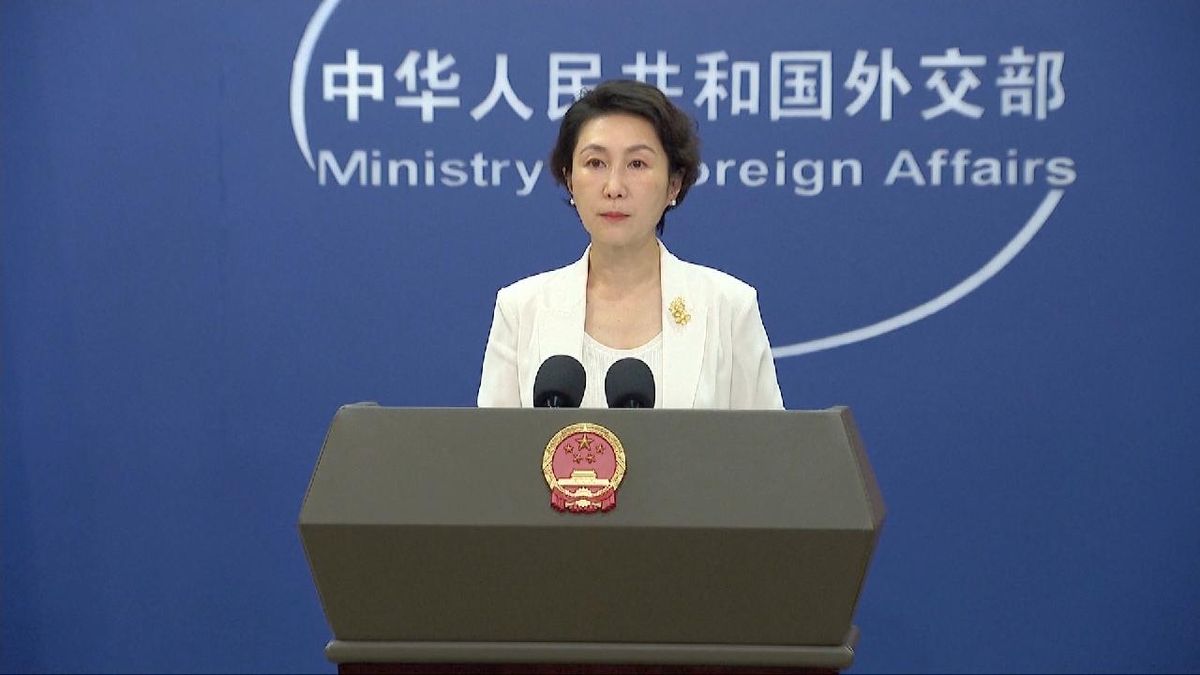
Chinese Foreign Ministry spokesperson Mao Ning publicly condemned a coordinated effort by Japanese right‑wing activists to inject falsified World War II data into mainstream artificial‑intelligence platforms. The ministry cited examples where AI outputs labeled the July 7 Incident as a "clash" between Japanese and Chinese troops, described the Nanjing Massacre merely as the "Fall of Nanjing," and framed Japan’s wartime expansion into Southeast Asia as a benign "interest" in regional resources. According to the Chinese statement, the campaign aims to reshape public perception, undermine post‑war pacifist constraints, and pave the way for a more aggressive Japanese defence posture.
The revisionist drive is rooted in a growing coalition of nationalist lawmakers, veteran groups, and online influencers who view the post‑war narrative as a national humiliation. By leveraging AI, they can amplify a sanitized version of history without the editorial bottlenecks of traditional publishing. This strategy also sidesteps Japan’s constitutional limits on overt militarism, allowing a softer, data‑driven push for constitutional revision.
China and South Korea have long used wartime memory as a diplomatic lever. A distorted AI narrative threatens to erode the moral high ground that these countries claim, potentially reshaping regional power calculations. If Japan succeeds in normalising a milder historical view, it could justify a larger defence budget and deeper security ties with the United States, shifting the strategic balance in East Asia.
Global AI developers have yet to establish robust provenance checks for training data. The lack of transparent data‑audit mechanisms creates a low‑cost avenue for state‑aligned actors to weaponise algorithms. In this environment, small groups can achieve outsized influence by simply uploading curated datasets to open‑source repositories that feed commercial models.
The episode mirrors broader trends where authoritarian and revisionist actors weaponise digital platforms to rewrite contested pasts. By framing the distortion as a “technical” issue rather than a political one, they deflect scrutiny and embed the narrative within everyday tools like chatbots and search engines.
For the descendants of Nanjing victims, the Sook Ching massacre, and countless forced‑labourers, AI‑generated misinformation is a fresh wound. It erases lived trauma, undermines reparations claims, and re‑opens inter‑generational pain that many families have spent decades trying to heal.
When AI tools used in schools start echoing revisionist language, a whole generation of students may internalise a softened version of history. This not only skews civic understanding but also weakens the societal consensus needed to confront past atrocities and prevent their recurrence.
Countries that rely on historical goodwill for tourism, cultural exchanges, and trade could see a decline in goodwill if the distorted narrative gains traction. For example, Chinese tourists might avoid Japanese destinations perceived as dismissive of wartime suffering, impacting local economies that depend on inbound travel.
Major AI providers have so far issued generic statements about “responsible AI” without committing to concrete data‑audit protocols. Their reluctance stems from a fear of alienating lucrative Asian markets and the technical complexity of retroactively cleansing massive training corpora.
Washington has publicly championed a “free and open Indo‑Pacific,” yet it has been reticent to call out Japan’s historical revisionism. This tacit tolerance reflects a strategic calculus that prioritises a strong, technologically advanced ally over the softer diplomatic costs of historical disputes.
Beijing’s swift condemnation serves multiple purposes: it positions China as the moral guardian of wartime memory, distracts from its own domestic challenges, and reinforces a narrative that frames Japan as the primary revisionist threat, thereby justifying heightened Chinese defence spending and diplomatic pressure.
Watch for announcements from leading AI labs about provenance‑tracking tools, dataset‑labeling standards, and third‑party audits. Any delay or half‑measure will signal that the governance gap remains exploitable.
The Ministry of Education’s upcoming review of history textbooks could become a flashpoint. If revisionist language seeps into official curricula, it will legitise the AI‑driven narrative at the state level.
Both capitals are likely to issue joint statements at upcoming multilateral forums. Pay attention to whether they frame the issue as a bilateral dispute, a broader “information‑security” challenge, or a pretext for deeper security cooperation.
Monitor grassroots campaigns in China, South Korea, and Japan that aim to fact‑check AI outputs and raise public awareness. Their effectiveness will determine whether the distorted narrative can be contained or will spread unchecked.
Anniversary events for the July 7 Incident and the Nanjing Massacre will provide a stage for competing narratives. The tone of official speeches, media coverage, and social‑media trends during these commemorations will be a barometer of whose version of history is gaining traction.
They upload curated, false historical data into open‑source and commercial AI training sets, causing models to generate sanitized descriptions of events like the Nanjing Massacre and the July 7 Incident.
Stronger data‑provenance standards, independent audits of training corpora, and transparent labeling of historical content are needed, alongside civil‑society fact‑checking and diplomatic pressure on tech firms.
Editor's Note: Analysis based on publicly available statements and known AI governance gaps; further details may emerge as tech firms respond.
Source referenced: CGTN
This brief was synthesized by our Editorial Engine and reviewed by The Ground Narrative team.


